
Happy, Happy Birthday A probably too-deep dive into the song most likely to accompany your lava cake
by Alice Laussade
Illustrations by Iris Gottlieb
As a server-in-training at Bennigan’s, “a high-energy neighborhood restaurant and tavern” in the Galleria Dallas mall in the 1990s, you must learn every ingredient in every dish on the menu before you can earn your apron.
Twenty-five years later, you can still recite the ingredients in Broccoli Bites (“Every true Irishman knows about Broccoli Bites! These gluten-forward balls of broccoli, bacon, and cheese are lightly breaded and dusted with parmesan garlic herbs! You’ll love ’em!”), but you won’t be able to get from your driveway to Target without using GPS.
Perhaps more importantly, you’ll learn the company’s unique birthday celebration process and their rendition of “The Happy Birthday Song.” This process includes, but is not limited to, scrambling around and begging other busy servers to leave their current tasks to offer backup singing, breaking out in a cold sweat because your other tables need iced teas refilled, and clapping. There’s going to be lots of clapping. If you cannot sing the Bennigan’s “Happy Birthday Song,” you cannot work here. This is customer service.
Most servers hated this process from nose to tail. They hated the singing. They hated the clapping. They regularly hated guests for being born, and further hated them for having friends, and hated those friends for making them sing on a Friday when we’d just been triple sat.
But I didn’t hate it.
To me, it felt like magic. It was a taste of power.
When I got to clap-sing and make someone laugh before they rode the escalator past Hot Topic to go ice-skating indoors, I felt like a real adult. If being grown-up was scream-singing to earn a 16 percent tip, sign me all the way up.
Publicly singing the “Happy Birthday Song” in a restaurant is a terribly wonderful tradition that brings us all together in celebration of embarrassment. There are no politics while you’re singing the “Happy Birthday Song.” Everyone is smiling and happy together for one moment in time. There’s no breaking news, no reality television, only wonderful.
Every restaurant has its unique way of celebrating a birthday: Texas Roadhouse has you sit on a saddle while they sing to you. At Mariano’s Mexican Cuisine, home of the first-ever frozen margarita, they’ll put a giant sombrero on your head and serenade you. Benihana will light a stack of sliced onions on fire while they sing and then serve you a bowl of rainbow sherbet.
Twenty years ago, when I worked at Bennigan’s, they kept it relatively simple, singing diners a bouncier rendition of the classic happy birthday song: “Happy, happy birthday/It’s your special day/Happy, happy birthday/That’s all we’re here to say (hey!) /Happy, happy birthday/May all your dreams come true/Happy, Happy birthday/From Bennigan’s to you (hey!)”
If you cannot sing the Bennigan's "Happy Birthday Song," you cannot work here. This is customer service.
Restaurants often have their own version of the “Happy Birthday Song,” because the classic song didn’t enter the public domain until the 2010s. While there’s no longer a legal reason to have their own version of the song, Bennigan’s tradition of happy-happy-birthday-ing still stands.
Lucas Dudley, vice president of franchise operations at Legendary Restaurant Brands, which owns Bennigan’s, confirms that this is still The Way: “I’m happy to tell you, it’s still the same birthday song you remember.”
Dudley has been with Bennigan’s for twenty-five years and says, “It goes back to the beginning of Bennigan’s [in 1976]. I’m sure someone on Norman Brinker’s team created that birthday song. I tried to do some digging amongst our archives to see if I could find the author, but I couldn’t find a specific person.”
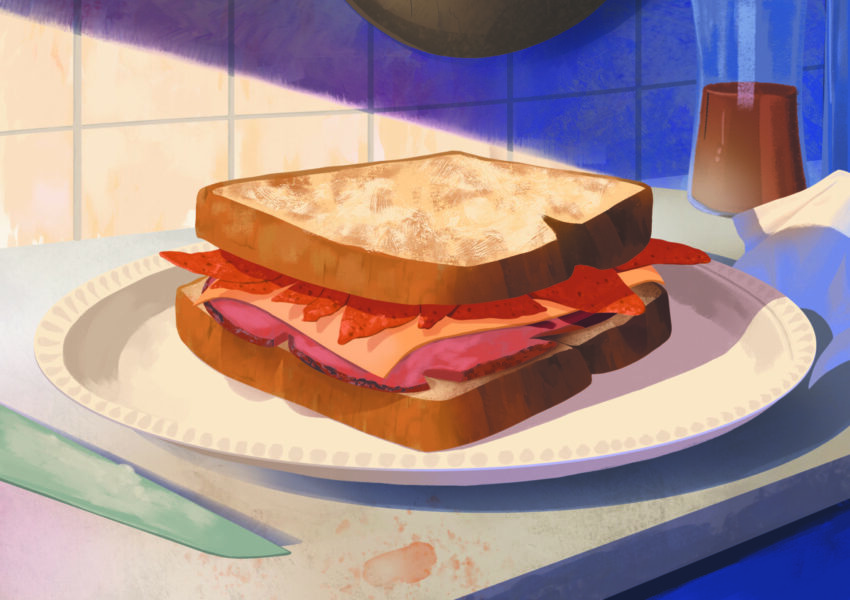
The Bennigan’s archives, y’all. I’m picturing the library from Beauty & The Beast, journal after journal filled with drawings of the restaurant’s World Famous Monte Cristo sandwiches.
The lyrics to the original Happy Birthday song were written in the early 1900s. According to the 1998 Guinness World Records, it’s the most recognized song in the English language. Its lyrics have been translated into at least eighteen languages.
Educators Mildred and Patty Hill wrote songs to practice daily with children at their kindergarten in Kentucky. They wrote “Good Morning to All” (to the tune we now know as “Happy Birthday to You”), which they published in 1893. The song became so popular that the Hills often changed the lyrics to match the occasion. So, instead of “Good morning to all,” they might sing “Happy Tuesday to you,” or “Get your dang shoes on right now,” or “We don’t pee on our friends.”
Legend has it that the Hill sisters spontaneously sang “Happy Birthday to You” for the first time at a birthday party in the early 1900s, and it took off like Taylor Swift leaving an awards show after losing her category.
In 1988, Warner Chappell Music purchased the rights and started making up to $2 million yearly on “Happy Birthday to You.” Because, obviously, we can’t have a birthday celebration without singing “happy birthday.” We sing it to children at school and adults at work. In The South, some of us even sing “happy birthday” to Jesus on Christmas, and he is arguably very deceased.
Companies regularly used alternate happy birthday songs to avoid paying licensing fees. Bennigan’s added some pizazz with on-beat claps and a tambourine. And the rest is restaurant history.
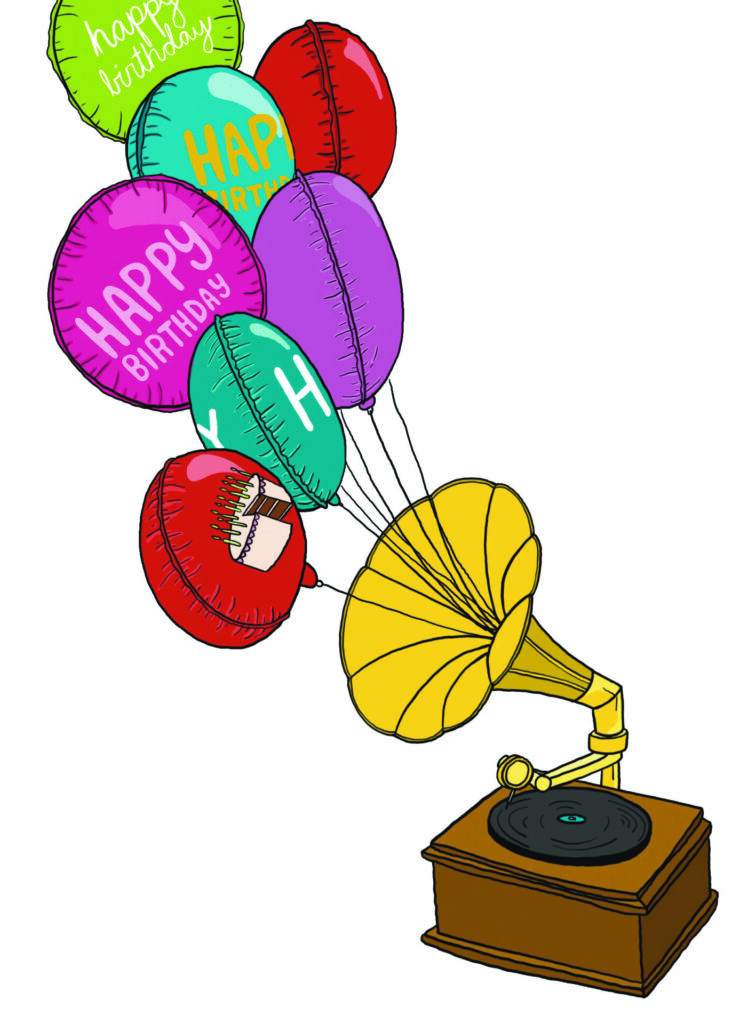
Soon, the sight of a six-top with a balloon bouquet could send a wave of dammits through the front of house. But I loved it. Probably, that’s some kind of marker for a sociopath. “Do you feel endorphins boost like Thanos getting another Infinity Stone when you see someone experience full embarrassment?” YES. Exactly that.
Taught by the self-described “Best Coke Dealer in Dallas,” I birthday-staged with one of the greats. If he was working a shift, you wanted him to participate in your birthday singing because he was 100 percent into it. He flirted with the birthday moms. He chest-bumped the birthday dads. At Bennigan’s on a Friday night, this guy was crushing it.
As I recall, he taught me that birthdays were more than a chore you had to get through during your shift: “You can do The Salt and Pepper. That’s where you have the guest hold the salt and pepper shakers—make sure they have their palms covering the top of the shakers—and then tell them they have to ‘shake it’ during the entire song, or we start over.” Or, “You can do Jurassic Park, where they have to act like a T. rex while everyone sings. It’s best if you are also a dinosaur, so they don’t feel alone.”
The better the birthday singing went, the better your tip would be at the end of the meal. Putting in the extra effort could mean twenty or thirty bucks by the end of your shift. Do you know how many scrunchies you could buy in the 1990s at Wet Seal with that kind of money?
And then, after you’ve sung the song and it’s finally over—that thing happens. Suddenly, another person remembers they have a birthday. They, too, would like the scream-clap-sing treatment. Immediately. And then, another table. And another.
Dudley calls this The Mudslide Theory. “Somebody sees a beautiful mudslide or some kind of fancy cocktail going over to a table, and they’re like, ‘Ooh, what is that? I want one of those.’”
You are now a slave to the birthday beast, and it can only be appeased with the sacrifice of candlelit Legendary Death by Chocolate, served piping hot with a side of disdain. Every time you hear the song in the future, you’ll break out in a cold sweat.
High-end restaurants offer a quieter take, seemingly to avoid the mudslide effect. Here, you won’t see a group of servers clapping. You’ll get no tambourine. If you’re fortunate, you’ll get a sparkler shoved into the top of a slice of chocolate cake and a glare for even mentioning your birthday.
Why isn’t it fancy to sing someone well-wishes on their birthday? When you get to the top—the fanciest of the fancy restaurants—why is good customer service about preserving the quiet for everyone equally? Is writing my name in chocolate syrup on the rim of a plate the best they can do? They’ll spend ten minutes plating a dish so it’s Michelin-star worthy, but they can’t put any creative effort into celebrating a person on the day they were thrust into this cruel world. Did we hit peak-restaurant-birthday-celebration with opera singers serenading you and writing your name upside down on the table at Macaroni Grill? (OK, that was pretty lit.)
Come on, Fancies. Y’all can clap just like the rest of us. If there’s a tasting menu with pairings, can’t we light a candle inside a food-balloon and have a magician appear from the future to do a card trick for the group? Not to work out all the creative for you—just throwing some thought-starters out.
Instead, you present “your take” on classic dishes from childhood and highlight the connection between food and memory. You deconstruct, pair, and fuse. In most cases, the dishes speak louder than the guests. Like a fifteen-year-old watching Instagram on her phone, we’ve muted the experience entirely. Happy birthday, I guess.
Elsewhere in the world, they eat up this tradition.
“Oh, yeah.” Dudley says, “The international guys really get into the birthday song.” At Bennigan’s locations from Doha to San Salvador, “They can’t wait for somebody to have a birthday. They have really, really… High energy. They love singing the birthday song.” He adds, “I notice that their rhythm is sometimes a little off, but they have so much fun. And for a lot of those guys, it’s their second language.”
In other words, other countries are upstaging us by singing our birthday song. And why? Because we’re too cool for it?
If we’re not careful, we could lose this ritual entirely. And there was a time when we almost did. On Reddit, users say their restaurants stopped singing it during Covid-19, and they never started again.
But not at Bennigan’s. They’re out in these streets, keeping birthdays alive.
“Well, at first, we weren’t allowed to have anyone in the building.” Dudley says, “But once everybody was allowed in, we called it our Social Distancing Birthday Song, where we made sure we were six feet away from the table.”
When restaurants like Bennigan’s reopened, a flood of birthdays came through the door like a 1,000-year mudslide. “Yeah, we even played catch-up,” Dudley says. “Some of them came out after, once they were finally able to come out and visit us, to celebrate their birthday.” Some shifts were birthday song after birthday song after birthday song. Just a bunch of people trying to capture a moment of normalcy as soon as possible. And they found that moment at a chain restaurant over a Turkey O’Toole and crock of Ultimate Baked Potato Soup.
We must protect the restaurant birthday song tradition at all costs. If we raise a generation of children who never had to be embarrassed in a restaurant on their b-day or play the tambo while eight of their fellow servers sang off-key, we are not only doing them a disservice. We are irrevocably changing the fabric of the universe.
Stirrup pants will make a comeback; Mars will lose its status as a planet; Betty White will get canceled; Creed will get honored in the Rock & Roll Hall of Fame; corny dogs will be wiped from our memories; dogs and cats will live together—mass hysteria.
Of course, I get it—happy-happy-birthday-ing is not everyone’s cup of water with three lemons. Not since the last Jordan Peele movie I watched in a theater have I seen such immediate, visceral reactions as the ones I saw every time I asked anyone who worked in the restaurant industry, “Do you remember singing ‘happy birthday’ to your tables?” They shudder. They shake their heads, “No. Not that. Never. Never again, please.” You talk them down by reminding them of the meditative state they can still achieve by rolling silverware.
Yes, singing at the top of our lungs in public over a sweet treat (made special because we stab it with paraffin that we light on fire) is a strange way to celebrate the achievement of living. But it’s what we do. We might not be proud of the tradition of restaurant happy birthday serenades, but it’s distinctly ours—like Hootie & The Blowfish.
Now, blow out your candle and make a wish, darlin’. We have a table not-so-patiently waiting on a pitcher of Diet Coke and eight well-done steaks.
Alice Laussade is a James Beard Award–winning writer and the founder of Meat Fight, a barbecue-fueled nonprofit on a mission to end multiple sclerosis. She drinks whiskey.
SIGN UP FOR THE DIGEST TO RECEIVE GRAVY IN YOUR INBOX.