
Two of a Kind In West Memphis and North Mississippi, chef Josh Marling and farmer Marshall Bartlett prove that Southern food traditions can thrive in a Mid-South casino.
by Joshua Carlucci
Photos by Kevin Wurm
It would be easy to assume that the food inside a casino—any casino—is forgettable.
After all, casinos are designed to warp reality: windowless walls, clockless halls, artificial light pumping through the money machine’s sleepless heart. The idea is to disorient, to keep guests spinning between tables and slots—not to delight them with dinner. Perhaps that’s not true in Vegas, a city where casino restaurants are no strangers to Michelin stars and other accolades. But 1,500 miles away from there? Definitely.
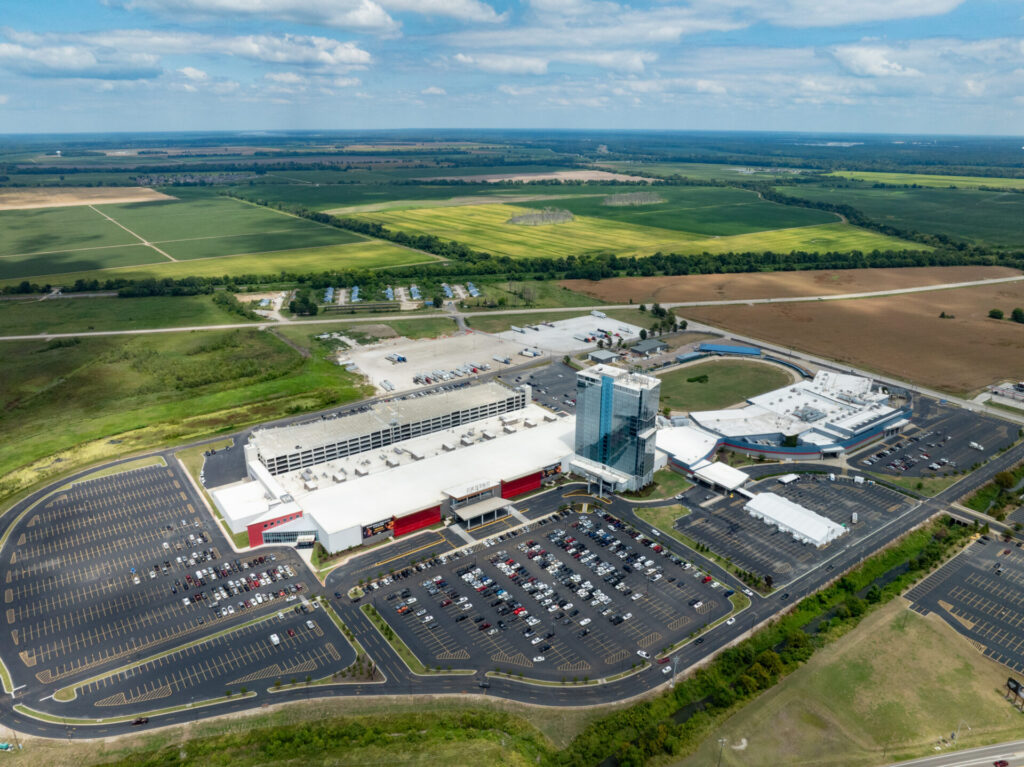
Then there’s Southland Casino Hotel in West Memphis, Arkansas.
A monolith rising from the flat Arkansas floodplain, Southland shimmers like a desert mirage. It’s massive, glimmering with slot-machine glow and haloed by LED-bathed ceilings—a sensory overload in a town that otherwise feels like a truck stop, a pass-through, a place Memphians cross the Mississippi River to reach so they can buy medical-grade cannabis. The sheer scale of the place—its cavernous gaming floors, its steakhouse and bars and glittering stages—feels improbable in this part of the country. It’s only one of three casinos in Arkansas and one of a few casinos in the Greater Memphis Metro tri-state area of Arkansas, Mississippi, and Tennessee.
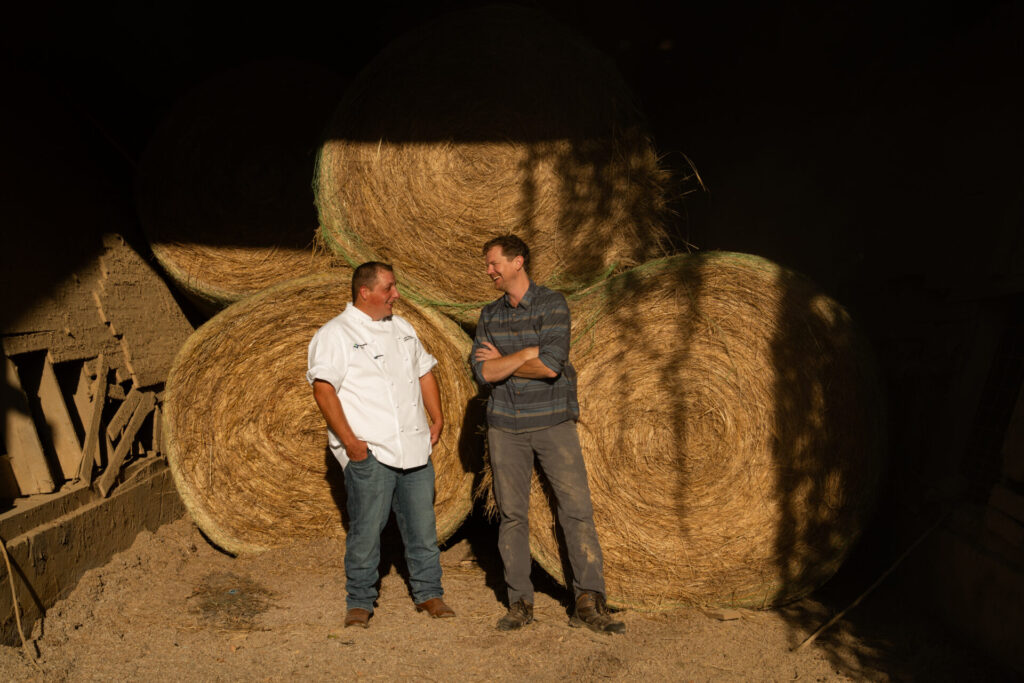
I met Josh Marling inside the private dining room of Ignite Steakhouse—one of seven restaurants tucked inside Southland’s colossal complex. The room was surrounded by glass, sleek and cool, a quiet chamber tucked between the flash and hum of slot machines. As soon as we sat down, he offered me water and a rundown of the night’s prep list, toggling between stories of farm visits and fryer configurations. Marling was the executive chef at the time but has since been promoted. He now oversees all food and beverage at gaming locations for Delaware North, a large hospitality and food-service company. He is still based out of Southland Casino. You could see it in his eyes—he wanted to make dining at Southland something to brag about.
It’s no coincidence that Marling, who grew up near a greyhound track in Bridgeport, Ohio, now finds himself in West Memphis, at a casino born from one. Southland opened in 1956 as a dog racing venue, the only one of its kind in Arkansas at the time. It carried on a regional tradition of greyhound tracks like the Riverside Kennel Club, drawing crowds with the thrill of the chase. Over the decades, it evolved—first as an electronic gaming facility, and in 2019, to a full-fledged casino with traditional table games and slot machines. Dog racing ended in 2022, and now the site of the once-humble track is a towering palace of cards, coins, and culinary ambition. That ambition wasn’t Marling’s alone. He would soon find an ally in Marshall Bartlett, a Mississippi hog and cattle farmer equally determined to push Southern food further, even within the walls of this massive gambling hall.
That wager, it seems, is paying off—literally. It draws enormous crowds from the area, especially because casinos are illegal in Tennessee. In 2023, Arkansas’s casinos posted record total gaming wins, with Southland leading the pack. The West Memphis venue generated over $300 million in gaming revenue—up 13 percent from the previous year—surpassing its two in-state rivals and reinforcing its place as a major economic driver in the region. In a state that saw nearly $687 million in combined wins, Southland’s dominance is no small feat.
Marling has spent nearly a decade transforming Southland’s food program into something singular, something rooted. Where other casinos lean into illusion—masking inferior ingredients under flashy sauces, contrived and outdated haute cuisine, or gimmicky “international” labels—Marling leans into place.
Trained in a modest culinary school, Marling’s early years in the industry were spent scrubbing dishes and pulling 100-hour weeks in massive casino kitchens. That grind honed his resolve. When he arrived at Southland, the property was worn down—small kitchens, tight buffets, dated infrastructure. But Marling saw opportunity.
“I always thought I knew how to cook until I came to this property and moved to this area,” he says. “But I got a completely different understanding of food. In the North, you boil things. In the South, we smoke things. And here, we learn soul.” Marling led a top-to-bottom redesign of the kitchens, guided by the Kaizen method—a continuous improvement philosophy borrowed from Japanese manufacturing. “If you’re walking twenty steps to a cooler to get to a range, there’s gotta be an easier way,” he explained. Now, every station is designed for efficiency. Fryers are connected to oil filtration systems. Food waste is minimized. Cleaning crews handle deep sanitations so line cooks can focus on the food.
"In the North, you boil things. In the South, we smoke things."
His approach sets its hook in transparency. “All of our coolers have glass windows. We don’t hide anything,” he says. Nowhere is that clearer than at The Kitchens buffet, an open-kitchen concept where food is cooked just feet from the line, reducing waste and increasing freshness. “Not sitting in a hotbox,” he says. “You’re watching chicken go from raw to plated in fourteen minutes.”
A plate at The Kitchens might hold smoked pork jowl simmered into greens. At The Fry House, Mississippi-farmed catfish are fried golden-brown and served with hushpuppies still steaming. All-you-can-eat crab legs are pulled in batches from giant steam vats, and at Ignite, steaks and chops swarm out of the swinging doors as seafood towers make their way to tables. Cuts many chefs might dismiss as “secondary” become destination-worthy dishes. All around, the atria-like dining rooms hum with the steady din of diners coming and going.
But Southland’s restaurants have been virtually untouched by local food criticism. After Jennifer Biggs, a veteran critic for the Memphis Commercial Appeal and then the Daily Memphian, died in 2023, I assumed de facto responsibility as the Daily Memphian’s food critic. Admittedly, I skipped over this place entirely in my coverage of the Memphis metro hospitality scene. My aforementioned biases got the best of me. And that was foolish. I didn’t eat here until after my first interview with Marling. There’s nothing here trying to reinvent the wheel. Everything’s positioned approachably to the layman Southern diner. But the food is good. Really good. Much better than you’d ever expect at a casino in middle America. And it’s because the ingredients themselves are good and treated with respect, regardless of price or perceived opulence. The Home Place Pastures chop is as succulent and well-seasoned as the buffet collards and Delta Grind grits.
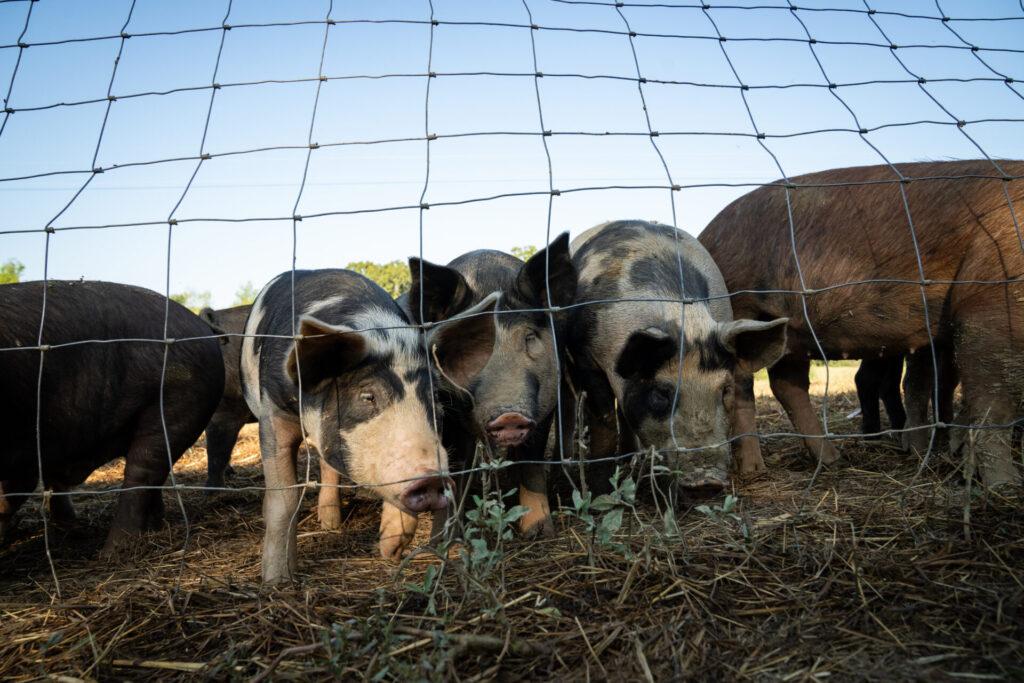
Marling’s commitment to whole-hog cookery found a natural partner in Marshall Bartlett, a fifth-generation farmer and founder of Home Place Pastures in Como, Mississippi. Their partnership began with a missed call—and almost a missed opportunity. “I called probably six, eight times,” Marling recalled. “He finally answered on a delivery run to New Orleans. I said, ‘I think you have a great story. Can we figure out how to do this?’”
Bartlett was skeptical. “I thought he just wanted cheap stuff, high volume. I was wrong,” the farmer admitted. After a farm visit, where Marling witnessed piglets being castrated and farrowed, the two began collaborating closely. Marling bought the less-glamorous cuts most chefs avoid—pig’s feet, pig ears, beef and pork cheeks—and used them creatively across Southland’s multiple restaurants.
That wholesale commitment, in tandem with a swarm of new direct-to-consumer accounts, helped keep Home Place afloat during the pandemic. As restaurants shuttered, Bartlett lost 90 percent of his revenue in just forty-eight hours, after the initial 2020 lockdown. “I was sitting in my office thinking it was over,” he says. “Then the phone started ringing.” Panic-buying drove demand for meat. Grocery stores were ransacked. Bartlett’s team repurposed bulk cuts into retail shares to meet the desperate demand. Grocery stores were stripped bare, and customers rushed to buy direct from farms. In hindsight, the national “meat shortage” was driven as much by bottlenecks and profit motives at industrial suppliers as by actual scarcity. But for Home Place, the crisis was real: phones rang off the hook, and every cut—no matter how unglamorous—found a buyer.
Marling kept the orders coming. “He helped me keep twenty-five people employed,” Bartlett says.
“We paid out a million in payroll, another 1.75 million to local producers. That’s real economic impact,” Marling says.
I first discovered Home Place Pastures in 2019, when a friend invited me and my future wife to drive five hours north into Mississippi for something called the Hill Country Boucherie and Blues Picnic—an annual hog roast and music party held on the farm. I was living in New Orleans and had just begun cooking professionally. That weekend changed my perception of food and agriculture forever.
I was new to the South, and witnessing such a holistic, humane, and joyful approach to raising and preparing food left a deep impression on me. Bartlett treats his land like an ecosystem, raising animals alongside perennial native grasses. I walked the land, saw the animals, and broke bread with strangers who felt like kin by nightfall. That experience forged a bond I still carry today—not only with the farm but with the very idea of what Southern food can mean. You can feel the energy in the good tilth that coats the wild fields. It’s alive. Fecund.
The Boucherie itself is a culmination of ideals shared across Southern foodways. Each year, chefs from across the South and Southeast converge on the farm to craft dishes from lesser-loved cuts—pig ears, beef hearts, pork feet—transformed into expressions of culinary imagination. It’s part cook-off, part homecoming, part revival. Last year, after Bartlett announced the winning dish—Memphis-based Secret Smash Society’s masterful take on braised oxtail—he took a moment before the crowd to call out Marling. With genuine gratitude, he thanked the casino chef for keeping Home Place afloat during Covid, for showing up year after year to contribute to the soul of the Boucherie, and for breathing new life into produce born in the South.
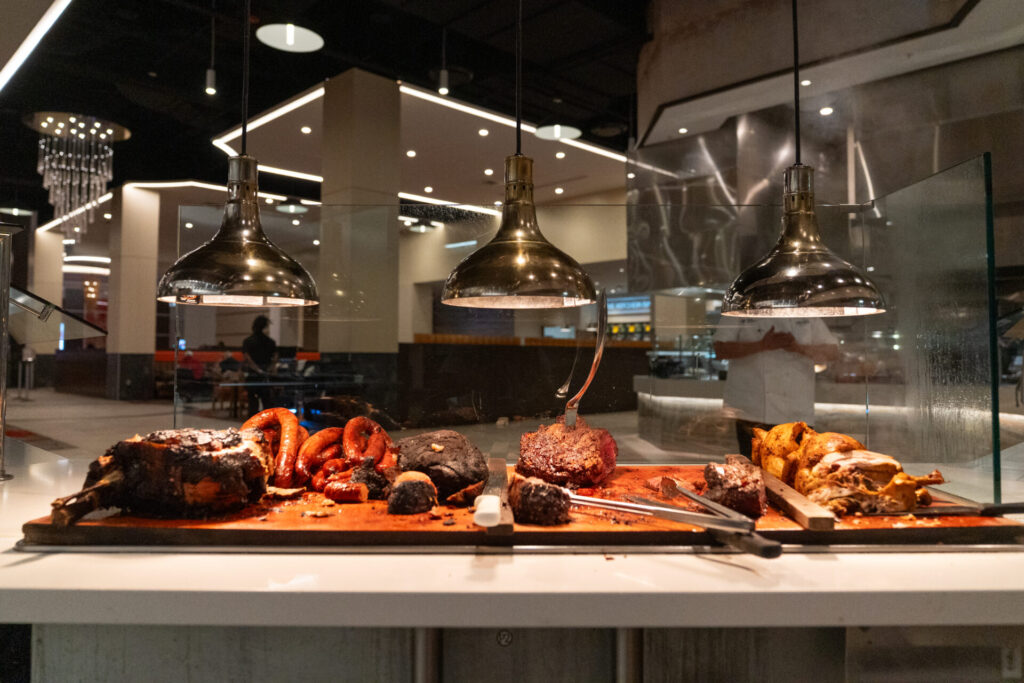
Today, Southland’s sourcing web stretches across the region. Riley Family Farms—from nearby Holly Springs, Mississippi—brings pastured chickens. Fenster Farms—Mason, Tennessee—supplies hydroponic lettuce. Bluff City Fungi in South Memphis delivers fresh mushrooms. Bonnie Blue Farm—Waynesboro, Tennessee—provided goat cheese until a recent contract change. “If I ask a farmer to grow Boston Bibb forever, they’ll lose interest,” Marling says. “So, I rotate crops, work with the seasons. Keeps them engaged. Keeps us honest.”
Even the wood burned in Southland’s grills has a story. “The original grill in the old building was charcoal. So when we moved to this side, I wanted something local,” Marling explained. “Now we get pecan wood and lump charcoal from the Ozarks. It’s essence. It’s flavor.”
There’s also an emphasis on waste reduction. The kitchen boasts less than one percent waste thanks to a strategy of portioning and immediate service. Unused but prepared food, along with surplus ingredients, are donated to community organizations, and the culinary team supports local shelters with kitchen overhauls and staff training.
Marling applies the same care to his staff as he does to sourcing. He’s structured kitchens so line cooks can focus on food rather than custodial work, and sous chefs are given autonomy to manage their own teams. The goal, he says, is to make space for creativity and even joy—conditions that can be rare in the high-pressure world of casino dining.
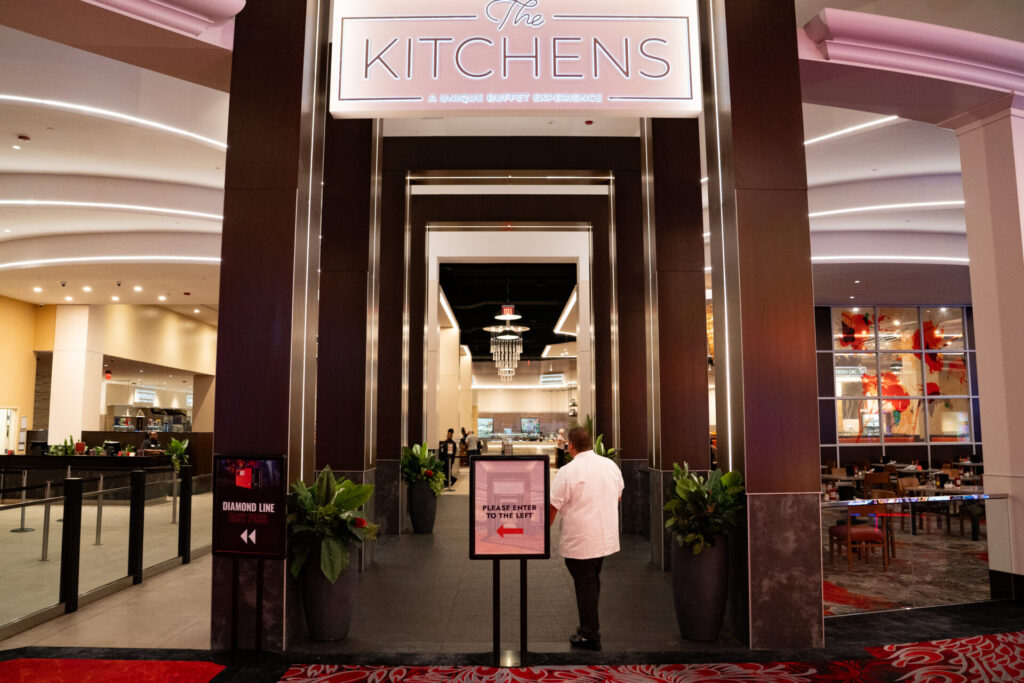
Marling’s long game is sustainability through succession. “My goal is to train the person who takes my job,” he says. “When they can say, ‘I got this, Chef,’ that’s success.”
And Bartlett? He’s still on that same patch of land his family has worked for five generations. “I grew up on row crops—cotton, soybeans, corn. It was commodity farming. But I wasn’t interested in poisoning the land, sending everything overseas,” he says. “This is different. This is closing the loop. This is connection to place.”
"This is different. This is closing the loop. This is connection to place."
When Covid nearly wiped them out, that connection saved them. “People started calling off the hook. They’d heard we had ground beef. We unpacked everything and overnight became a retail shop,” Bartlett says. “It was surreal. But it proved something. It proved local systems matter.”
There’s something profound in the juxtaposition—Southland’s constant neon buzz against Home Place’s still, humid expanse. But deeper still is the connective tissue: two men with wildly different businesses, both committed to a food system that honors origin and process. One supplies the raw beauty of the South’s agricultural potential; the other proves that even in the high-volume machine of a casino, that beauty can be preserved, celebrated, and served.
We live in a world growing more fractured by the day—digitally, socially, politically. And yet, what sustains us is the same: the food we share, the care we show, the stories we pass down through kitchens and fields. When we lose connection to our food, we lose connection to our people. But in the Midsouth, a corporate casino and a family farm are betting on each other, on their teams, and on a food system that honors the land and the people it feeds.
Joshua Carlucci is a writer and journalist from Los Banos, California. A cook by trade, he cut his teeth in James Beard–nominated and Michelin-starred kitchens in California, New Orleans, and New York. He is currently a staff writer at StarChefs.
SIGN UP FOR THE DIGEST TO RECEIVE GRAVY IN YOUR INBOX.