
Excerpts from Recipes from the American South
by Michael W. Twitty
In Michael W. Twitty’s fourth and latest book, Recipes from the American South, the Southern food expert presents us with something deceptively straightforward but exceedingly complex: a primer on the signature recipes of the region.
But what comprises the region? Does it sprawl from the plains of west Texas to the shore of Ocean City, Maryland? Does it stretch from the waters of Key West to the Ohio River? As Twitty writes in his introduction, “no state or area can provide the breadth of the Southern story or fully set the Southern table.” With this in mind, the chef and writer presents us with a welcome table of classic dishes highlighting regional ingredients and regionally specific ways of preparing them. We thought a tiny selection of the recipes might inspire a Thanksgiving meal for your relatives and guests, whether they are visiting from St. Louis or Orlando. —Rosalind Bentley
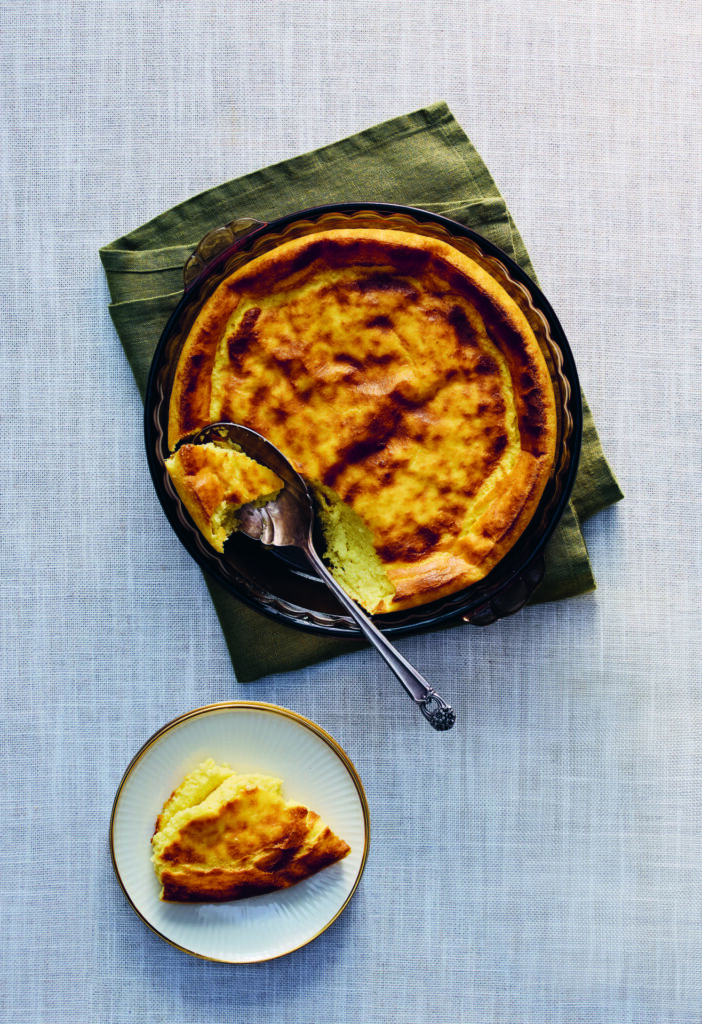
Spoonbread
Spoonbread, or batter bread, is a custardy side dish born in the Chesapeake Bay region in the earliest cultural collisions between Native American and British. The dish spread west as Southerners migrated out of Maryland and Virginia, into the Southern midlands of Kentucky, Tennessee, Missouri, and northern Arkansas. At Colonial Williamsburg, America’s largest living history museum located in southeastern Virginia, this dish is served with bacon, fried apples, and herring roe, to cater to tourists. In the South Carolina Lowcountry, this dish was alternatively known as “awendaw,” named for a locality in Charleston County.
Prep time: 15 minutes
Cooking time: 50 miutes
Serves: 6
INGREDIENTS
Softened butter or cooking spray, for the baking dish
2 cups (16 fl oz / 470 ml) whole milk
1 cup (120 g) finely ground white cornmeal
2 tablespoons (30 g) unsalted butter, plus more for serving
3 eggs
1 teaspoon fine salt
1 ½ teaspoons sugar
1 teaspoon baking powder
1 cup (8 fl oz / 240 ml) buttermilk
DIRECTIONS
1 Preheat the oven to 375°F (190°C/Gas Mark 5). Grease a 9 x 13 inch (23 x 33 cm) oval baking dish.
2 In a medium saucepan, bring the milk to a gentle simmer over medium heat. Gradually whisk in the cornmeal, stirring constantly to prevent lumps. Continue to cook until the mixture thickens, about 5 minutes. Remove the saucepan from the heat and stir in the butter, allowing it to melt into the mixture.
3 In a bowl, whisk together the eggs. Temper the eggs by slowly adding a small amount of the hot cornmeal mixture, whisking constantly. Gradually add the tempered eggs back into the saucepan, whisking to combine.
4 Add the salt, sugar, baking powder, and buttermilk to the mixture, stirring until smooth. Pour the batter into the prepared baking dish.
5 Bake for 35–40 minutes, until the top of the spoonbread is golden brown and a toothpick inserted into the center comes out clean.
6 Let cool slightly before serving. Serve with plenty of butter.
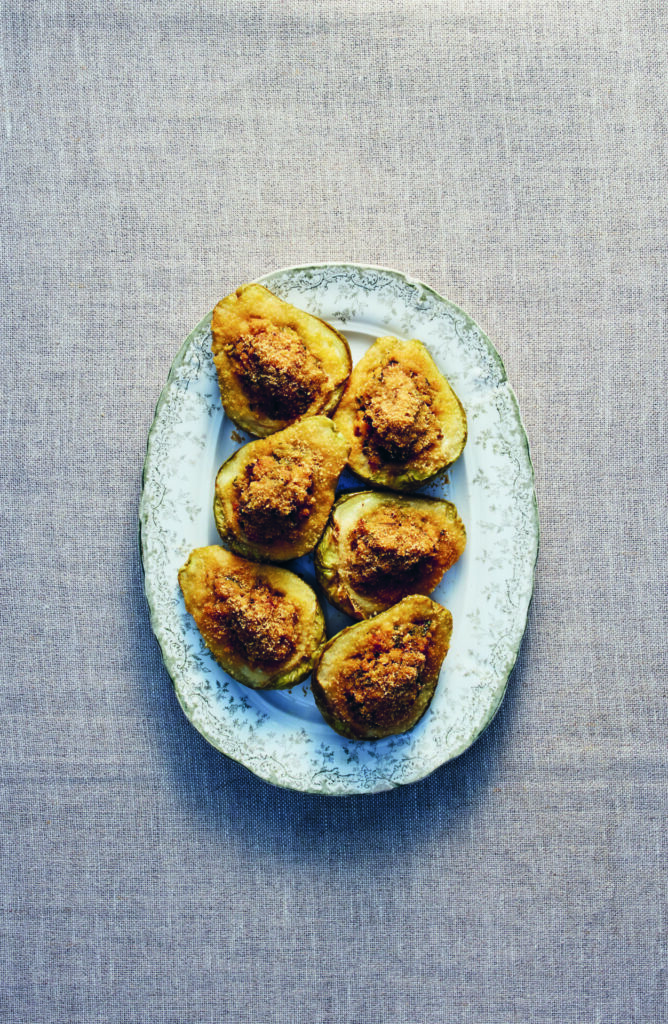
Shrimp Stuffed Mirlitons
The tropical squash known in south Louisiana as mirliton can commonly be found in food markets catering to Latin American and Afro-Caribbean communities, where it is often labeled as chayote and christophene. It used to be a common garden vegetable in south Louisiana and parts of the Gulf Coast, and it was a beloved element of the old French Market in New Orleans. This dish links Louisiana with its other relatives in the cultures and cuisines of the Caribbean basin and Latin America, where the African Atlantic also incorporated indigenous foods into a new Afri-Creole cuisine. This is an adaptation of the recipe from the 1971 Time-Life cookbook American Cooking: Creole and Acadian by Peter S. Feibleman to remind a new audience of its tasty importance.
Prep time: 45 minutes
Cooking time: 1 hour 35 minutes
Serves: 10
INGREDIENTS
4 mirlitons, chayotes, or christophenes (8 oz/225 g each)
½ lb (225 g) large shrimp (prawns), peeled and deveined
1 ½ teaspoons fine salt
1 teaspoon sugar
1 cup (140 g) chopped thick-cut bacon (streaky)
13 tablespoons (6 ½ oz/185 g) unsalted butter
½ cup (80 g) diced onion
½ cup (75 g) diced green bell pepper
½ teaspoon Creole Seasoning (recipe in book)
2 cloves garlic, minced
½ teaspoon freshly ground black pepper
½ teaspoon sweet paprika
¼ teaspoon dried thyme
¼ teaspoon dried oregano
1 teaspoon Louisiana-style hot sauce, such as Tabasco, or hot pepper vinegar
2 tablespoons chopped fresh flat-leaf parsley
½ teaspoon chile flakes (optional)
Softened butter, for the pan
1 cup (56 g) fresh bread crumbs, from French or Italian bread
DIRECTIONS
1 Bring a large pot of water to boil for the mirlitons (enough water so they will be completely submerged).
2 Carefully drop the mirlitons and cook, uncovered, until they are soft enough to pierce with a knife, about 45 minutes.
3 Meanwhile, in a bowl, combine the shrimp (prawns), 1 teaspoon of the salt, the sugar, and enough cool water to cover. Let sit until the salt and sugar dissolve, about 10 minutes.
4 Line a plate with paper towels and set near the stove. In a large frying pan, cook the bacon over medium heat until crispy, about 10 minutes. Use a slotted spoon to remove the bacon to the paper towels. Drain most of the bacon fat from the pan, leaving about 1 tablespoon.
5 In the same pan, melt 1 tablespoon of the butter over medium-high heat. Add the onion and bell pepper and sauté until the vegetables are softened, 3–4 minutes. Season with Creole seasoning. Stir in the garlic and cook until fragrant, about 1 minute.
6 Drain the shrimp, add to the pan, and season with the remaining ½ teaspoon salt, the black pepper, paprika, thyme, oregano, hot sauce, parsley, and chile flakes (if using). Cook the shrimp until pink and cooked through, 2–3 minutes per side. When cool enough to handle, chop in a food processor or by hand.
7 Preheat the oven to 375°F (190°C/Gas Mark 5). Grease a sheet pan with some softened butter.
8 When cool, drain the mirlitons and halve them lengthwise, remove the seeds, and hollow out to make shells around ¼ inch (6mm) thick, setting aside the pulp. Invert the shells to drain any excess liquid. Set the shells open side up in the sheet pan.
9 In a blender or food processor, puree the mirliton pulp until smooth. On the stovetop or in the microwave, melt 4 tablespoons (60 g) of the butter and set aside.
10 In a 12-inch (30 cm) cast-iron skillet, cook the mirliton puree over medium heat until almost dry, about 15 minutes.
11 Add the remaining 8 tablespoons (115 g) butter to the skillet, then stir in the shrimp mixture.
12 Dividing evenly, spoon the shrimp filling into the mirliton shells and top each with bread crumbs. Drizzle the melted butter over the crumbs.
13 Bake the shells until the filling is warmed through, about 30 minutes.
14 Serve hot.
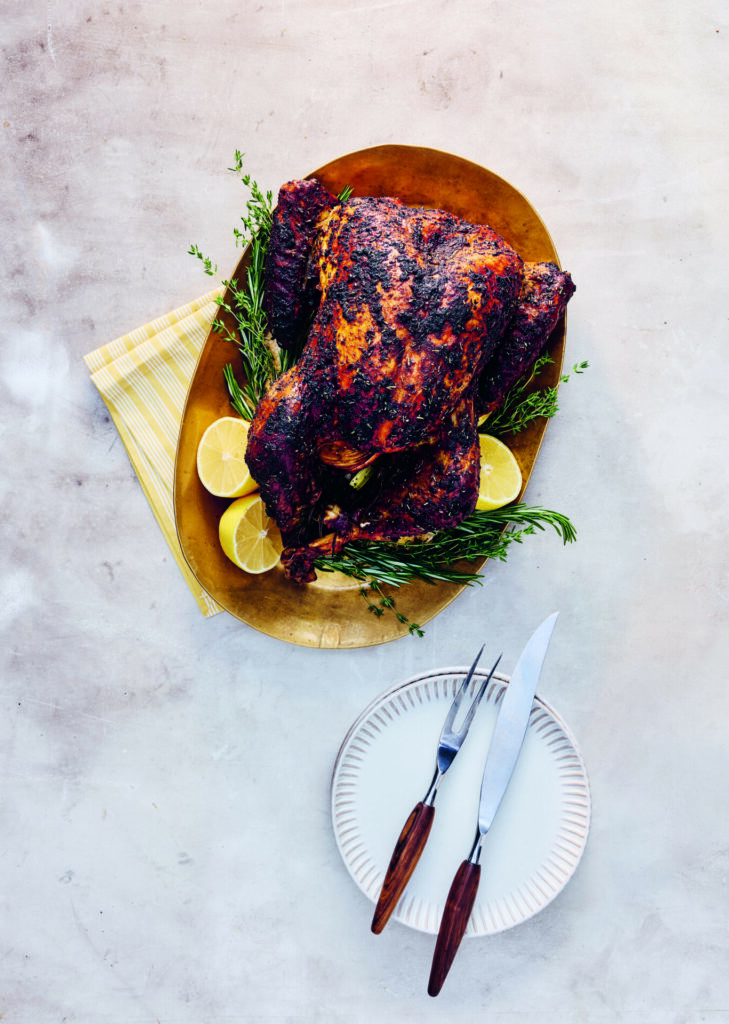
Roast Turkey
Southern Thanksgiving tables often feature cornbread dressing, macaroni and cheese, potato salad, sweet potato pie, or Cinnamon Baked Cushaw (recipe in book), and turkeys that have been roasted, smoked, or, popularly deep-fried, along with any regional or ethnic treats specific to family tradition. This is an old-fashioned Southern, highly seasoned roast turkey that is perfect for a large occasion or holiday dinner.
Prep time: 35 minutes
Cooking time: 3 hours
Serves: 10
INGREDIENTS
1 whole turkey (12-14 lb/5.4-6.3 kg), thawed if frozen
House Seasoning (recipe in book) or fine salt
Freshly ground coarse black pepper
8 tablespoons (4 oz/115 g) unsalted butter, melted
1 tablespoon garlic powder
1 tablespoon onion powder
1 tablespoon sweet paprika
1 tablespoon Poultry Seasoning (recipe in book)
1 tablespoon dried rosemary
1 tablespoon rubbed sage
1 lemon, quartered
1 Vidalia onion, quartered
1 celery stalk, chopped
2 gloves garlic, peeled but whole
4 sprigs fresh rosemary
4 sprigs fresh thyme
2 cups (16 fl oz/470 ml) chicken or turkey stock
DIRECTIONS
1 Preheat the oven to 500°F (260°C/Gas Mark 10). Set a wire rack in a large roasting pan.
2 Remove the giblets and neck from inside the turkey cavity. Rinse the turkey under cold water and pat dry with paper towels. Season the cavity of the turkey generously with House Seasoning and black pepper to taste.
3 In a small bowl, mix together the melted butter, garlic powder, onion powder, paprika, Poultry Seasoning, rosemary, and sage.
4 Place the turkey breast-side up on the rack. Stuff the turkey cavity with the lemon, onion, celery, garlic cloves, rosemary sprigs, and thyme sprigs. Tie the legs of the turkey together with kitchen twine and tuck the wing tips under the body of the turkey. Brush the outside of the turkey with half of the seasoned butter mixture. Reserve the remaining butter mixture for basting. Pour the chicken or turkey stock into the bottom of the roasting pan.
5 Roast the turkey, allowing the bird to get nice and brown, for 30 minutes. Baste, then reduce the oven temperature to 325°F (160°C/Gas Mark 3) and loosely drape with parchment paper. Remember to baste every 30 minutes with the reserved butter mixture and pan juices, until the internal temperature reaches 165°F (74°C) in the thickest part of the thigh and the juices run clear, 2 ½–3 hours.
6 Once cooked through, remove the turkey from the oven and let it rest for at least 20–30 minutes before carving.
STORAGE
Store airtight in the refrigerator for up to 4 days.
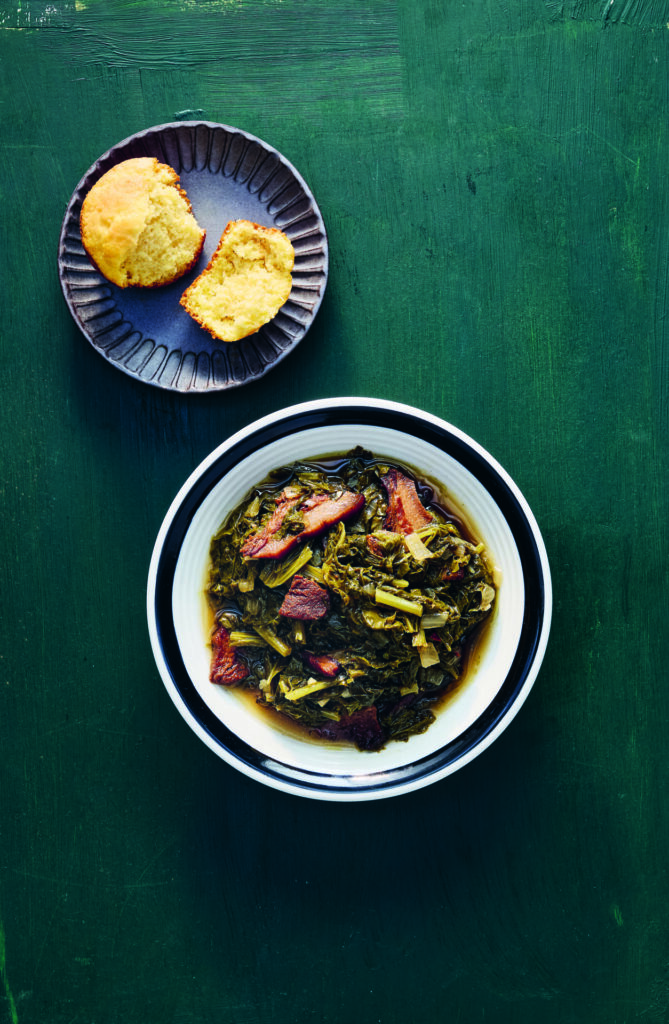
Smoked Hog Jowl with Greens
For many Southerners, especially in the Upper South and Southern highlands, smoked hog jowl cooked with greens is a New Year’s dish consumed for good luck. Southern-style hog jowl and turnip greens are best enjoyed with Skillet Cornbread (recipe in book) or a side of Black-Eyed Peas (recipe in book). Use the cornbread to mop up the pot likker.
Prep time: 20 minutes
Cooking time: 2 hours
Serves: 6
INGREDIENTS
1 lb (450 g) smoked hog jowl, rinsed, dried, and cut into strips ¼ inch (6mm) wide
1 large onion, finely chopped
2 cloves garlic, minced
2 cups (16 fl oz / 470 ml) chicken stock
2 lb (910 g) fresh turnip or mustard greens, washed and chopped
1 teaspoon fine salt or House Seasoning (recipe in book)
1 teaspoon freshly ground black pepper
½ teaspoon chile flakes
2 tablespoons apple cider vinegar
1 tablespoon light brown sugar
DIRECTIONS
1 Set a large soup pot or Dutch oven (casserole dish) over medium heat and add the hog jowl slices. Cook until the hog jowl renders and the slices and crispy and browned, 10–15 minutes. Remove the hog jowl pieces from the pot and set them aside, leaving the rendered fat in the pot.
2 Add the onion to the pot with the rendered fat and sauté over medium heat until translucent and fragrant, about 5 minutes.
3 Stir in the garlic and cook for an additional 2 minutes, ensuring the garlic does not burn. Add 3 cups (24 fl oz/ 710 ml) water and the chicken stock and bring to a boil over high heat. Reduce the heat to medium-low, add the greens to the pot, and stir to ensure they are fully submerged in the liquid. Season the greens with salt, black pepper, and chile flakes and stir well to incorporate. Cover the pot with a tight-fitting lid and simmer the greens, stirring occasionally, until dark and tender, about 1 hour.
4 Return the crispy hog jowl pieces to the pot with the simmering greens. Stir in the vinegar and brown sugar, adjusting the seasoning to taste. Continue to simmer the greens and hot jowl for an additional 30 minutes, allowing the flavors to come together.
5 Once the turnip greens are tender, remove the pot from the heat and let it rest for 10–15 minutes.
6 To serve, use a slotted spoon to transfer the turnip greens and hog jowl to a serving platter, leaving most of the pot likker in the pot. Serve the pot likker separately for mopping up with cornbread.
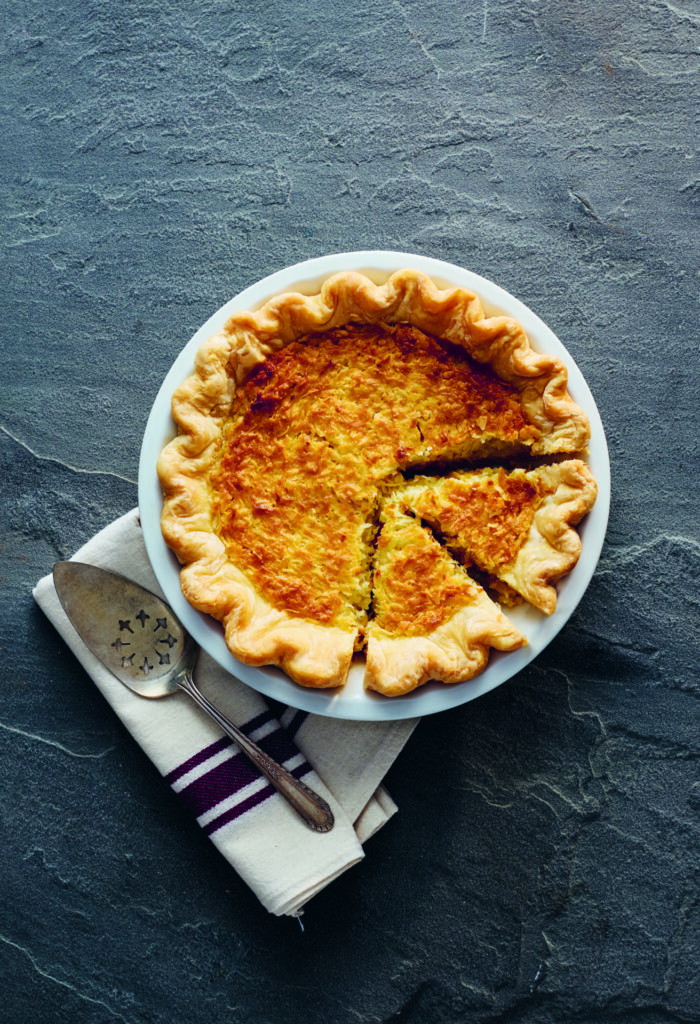
Coconut Custard Pie
Coconut appears more frequently in Southern food, thanks to the connection the South has with the Caribbean. Coconuts have invariably been naturalized in a few Southern states—Florida, Georgia, North Carolina, and South Carolina. Historically though, coconuts were brought to the South on ships from West Africa and the Caribbean. Because of their role in the gastronomic heritage of the African Atlantic, coconut-based sweets and desserts, ranging from pies to cakes and ambrosia to candies, formed a culinary bridge from West and Central Africa to the Caribbean and Latin America, arching upward to the American South.
Prep time: 20 minutes
Cooking time: 45–55 minutes
Serves: 8
INGREDIENTS
Pastry for a 9-inch (23 cm) single-crust pie, homemade (recipe in book) or store bought
1 cup (200g) sugar
1 tablespoon all-purpose (plain) flour
¼ teaspoon fine salt
¾ cup (6 fl oz/180 ml) whole milk
8 tablespoons (4 oz/115 g) unsalted butter, melted
3 eggs, beaten
1 teaspoon pure vanilla extract
1 ¼ (125 g) sweetened shredded (desiccated) coconut
DIRECTIONS
1 Preheat the oven to 325°F (165°C/Gas Mark 3). Line a 9-inch (23 cm) pie pan with the pie pastry trim, and crimp the edges.
2 In a large bowl, whisk together the sugar, flour, and salt. Add the milk, melted butter, eggs, and vanilla and whisk to incorporate everything. Use a spatula to stir in the coconut. Pour the filling into the pie shell (pastry case).
3 Bake for 45–55 minutes, until the filling is firm, puffing up, and golden brown.
4 Transfer to a wire rack to cool completely.
STORAGE
Cover with plastic wrap and store in the refrigerator for up to 5 days.
Excerpted from Recipes from the American South © 2025 by Michael W. Twitty. Photography © 2025 by Nico Schinco. Reproduced by permission of Phaidon. All rights reserved.
SIGN UP FOR THE DIGEST TO RECEIVE GRAVY IN YOUR INBOX.