
In the Zone As the climate warms, shifting growing zones offer possibilities both tantalizing and disquieting.
by Megan Mayhew Bergman
There is a week, each spring, when our local organic farm reopens in southern Vermont.
I’m drawn to the permaculture: young blueberry bushes, thorny raspberry stalks. Every year I walk to a potted peach tree and think: Do I dare?
I was born in Gaffney, South Carolina—known for its iconic peach water tower and its peach production, which once exceeded the entire state of Georgia’s. Growing a peach tree on my Vermont farm has long been a homesick dream. As the state shifts farther into garden zones 5a and 5b, having been 4b for most of my time here, growing peaches feels like less of a gamble than it once did.
I scan cold-hardy varieties: reliance, snow beauty. I think of the pies and salads I could make with fresh peaches. Though people have grown peaches in Vermont for years—albeit with frequent heartbreak—I feel a certain mix of melancholy and joy about the increasing opportunity for fruit trees in these rapidly warming northern woods.
In the 1870s, Harvard, which still operated an agricultural college, sought to establish an arboretum and enlisted renowned landscape architect Frederick Law Olmsted to design what would become a “museum of trees.” Olmstead worked on the project for two decades with its first director, Charles Sargent. The Arnold Arboretum, as it came to be called, now stretches across 281 acres in Boston and maintains over 16,000 plants.
In 1927, within the arboretum’s carefully curated landscape, botanist Alfred Rehder pioneered America’s first garden-zone designations based on the “lowest mean temperature of the coldest month.” He hoped to help gardeners better select plants which could survive in their regions.
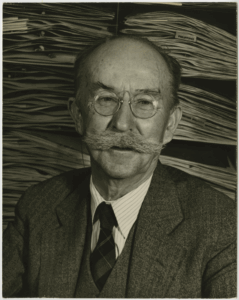
Rehder’s maps divided the country into eight temperature zones, providing a systematic approach to understanding plant hardiness. Rehder’s seminal work, Manual of Cultivated Trees and Shrubs Hardy in North America, became an essential guide for growers, outlining the minimum and maximum geographical ranges in which various plants could thrive.
“These early designations gave people an idea of the plants that could grow and survive in a certain area,” Rodney Eason, director of horticulture and landscape at Arnold Arboretum, says. “But they didn’t provide the idiosyncrasies of an environmental niche. Surviving is not always thriving.”
Eason notes that night temperatures, humidity, and heat tolerance can vary within regions, even now. Plants must still endure microclimates within garden zones, such as areas with exposure to salt water, shade, and sun—all which can vary based on topography. Leafy salad greens and broccoli, for example, don’t love long stretches of high heat, and their success may vary neighbor to neighbor depending on sun exposure. Apple trees are often planted on sloping mountainsides and hilltops for better drainage and exposure to the chill necessary for fruiting—between 500 and 1,000 hours of temperatures below 45 degrees Fahrenheit to break dormancy and begin a new cycle.
Rehder likely drew on climate and plant research for his initial map, including Wladimir Köppen’s “The Thermal Zones of Earth” from 1884 and the 1907 International Conference on Plant Hardiness and Acclimatization. However, Rehder’s own knowledge was Boston-based, and the earliest garden-zone maps lacked nuance. Rehder wasn’t familiar with the American South and classified most of the Deep South, Texas, and Florida collectively as “the subtropical and warm-temperate regions.”
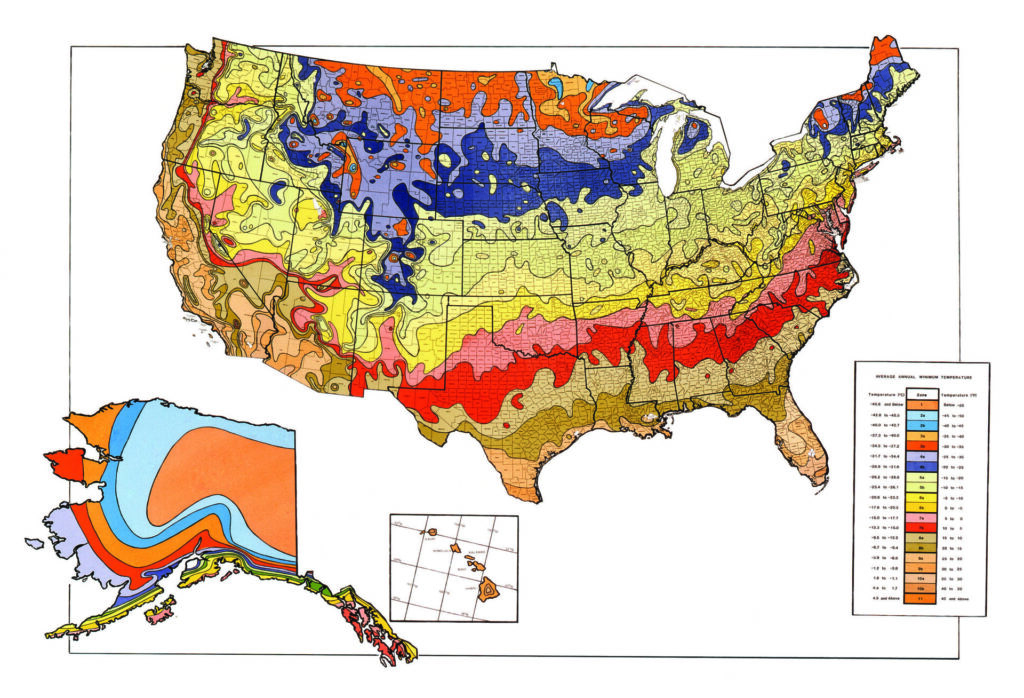
Over time, improved data access refined garden-zone classifications. In 1938, the Arboretum published Donald Wyman’s updates to Rehder’s work using USDA climate data. Subsequent map revisions for the contiguous states followed over the next three decades. A 1990 update expanded the map to include Canada, Alaska, Hawaii, and Mexico, while the 2012 revision introduced tropical zones for Hawaii and Puerto Rico.
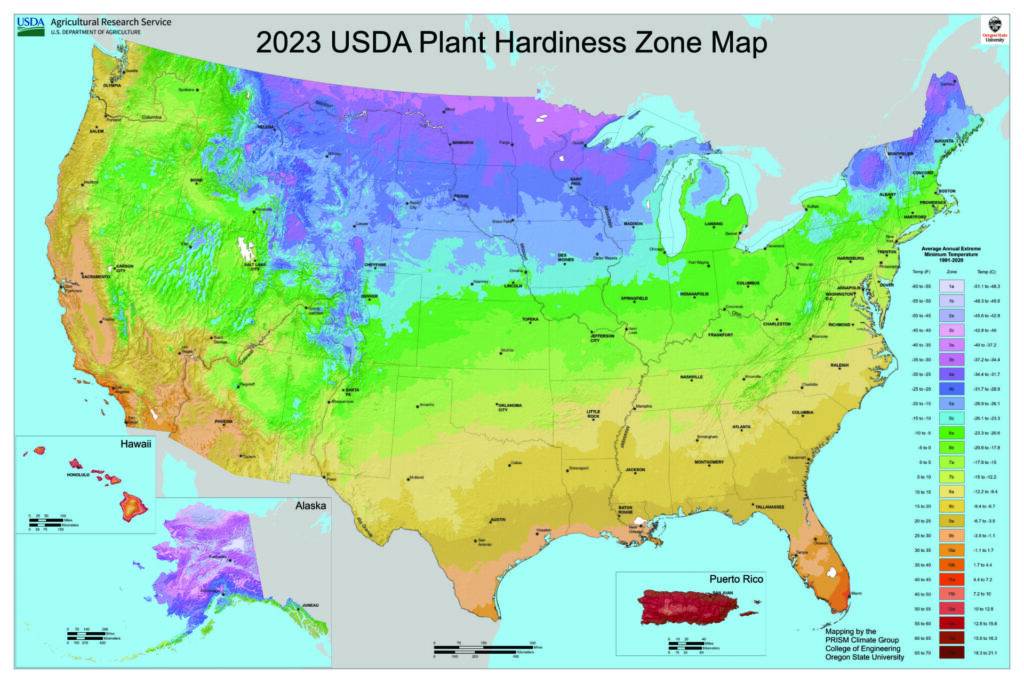
Rehder’s first map divided the United States into eight simple zones; later maps became color-coded, swirling bands of blues, oranges, and yellows. The most recent map divides the country into thirteen zones, with further “a” (northern) and “b” (southern) subzones within each. Each of the thirteen zones indicates a ten-degree Fahrenheit range, with zone 1 being coldest, and 13 the warmest. Gardeners planting near boundary lines might make leaps of faith: Can they grow persimmons? Should they bring the rosemary in for the winter?
Gardeners planting near the boundary between two zones might make leaps of faith: Can they grow persimmons? Should they bring the rosemary in for the winter?
Today, zone designations rely on increasingly precise temperature data. When Rehder published his manual in 1927, atmospheric carbon dioxide levels measured around 306.2 parts per million. As of March 2025, scientists estimate that figure has risen to 427.77 parts per million, notably warming the Earth’s atmosphere. The higher the parts per million, the warmer the planet. As the climate shifts and warms, growers must continually adapt to new environmental realities. They might plant peaches in Vermont, try out a second round of cucumbers mid-June to take advantage of a longer Southern growing season, or find themselves fighting an increase in subtropical citrus pests.
In November 2023, USDA scientists released the latest garden-zone map, revealing that nearly half of the United States had shifted to the next warmer half-zone, indicating a temperature increase of up to five degrees Fahrenheit in those regions.
Rising temperatures and more frequent extreme weather events will require new technologies and farming techniques to manage intensifying heat stress. While opportunities for different crops may emerge, the stakes are especially high for small family farms, which face greater financial and logistical challenges in adjusting to a rapidly changing climate. Some small, multigenerational orchards may find that a once-thriving fruit tree no longer experiences enough “chill” days to induce fruiting. Another small farm may find that budgets are too tight to pivot to growing a new variety or to invest in new technology to make such a pivot possible.
Global warming is not a uniform phenomenon. While Earth’s average temperature is rising, certain regions like the Arctic are warming more rapidly. Ice cover, latitude, sea level, human activity, and weather patterns can create variance.
The Southeast is experiencing some of the most dramatic shifts in garden zones, with several areas now transitioning from temperate to tropical classifications. Temperate zones typically have four distinct seasons, while tropical zones, like Hawaii and Florida, tend to remain warm year-round.
In the past, periodic cold snaps helped limit the spread of tropical plants and animals, but as heat intensifies, these species are moving into increasingly subtropical states like Florida, Louisiana, Texas, Alabama, and Mississippi.
For example, tropical mangroves are expanding northward from their typical regions of Louisiana, Texas, and south Florida—creeping farther along the Gulf of Mexico and up the Atlantic coastline, and are expected to gradually displace temperate salt marshes in states like Georgia. While this movement may create new habitat for threatened species like sea turtles and manatees, it also invites more destructive invasive species of both plants and animals. The Southern pine beetle, Burmese pythons, fire-prone buffelgrass, and disease-carrying mosquitoes—capable of spreading West Nile Virus and Eastern Equine Encephalitis—are among the many organisms which will thrive in new tropical zones.
Some farmers see potential in these changes, as warming temperatures allow for the cultivation of new crops. In southern Arkansas, for instance, growers are beginning to experiment with mandarin oranges and kumquats, crops previously unsuited to the region. The warmest regions of Texas can experiment with growing tangerines. A few farmers in North Carolina are considering more tropical options like sesame and taro, as temperatures warm and the growing season lengthens.
However, a longer growing season does not always translate to better yields. Heat stress threatens crops that rely on cooler temperatures, such as broccoli, radishes, carrots, and kale. Major staples of Southern agriculture—cotton, corn, peanuts, rice, and soybeans—have already shown signs of declining yields due to excessive heat.
For example, a one-degree Celsius increase in maximum temperature can reduce cotton yields by approximately 10 percent, a significant impact for Mississippi, where cotton is one of the largest cash crops. Soybeans, North Carolina’s leading agricultural product, have shown resilience in the face of extreme weather, but high heat can disrupt soil moisture and reduce germination rates. Meanwhile, Georgia’s peanut industry, valued at more than $2 billion annually, is generally drought tolerant, yet ongoing research is examining how rising temperatures might increase the presence of harmful natural chemicals like aflatoxins, which thrive in hotter conditions.
“Farmers aren’t fully experiencing the impact of shifting garden zones yet,” Meg Darnell of Georgia Organics says, “but they will soon.” Darnell notes that orchards of citrus, peach, and other fruit-bearing trees are already on the front lines of this transformation.
“Basically,” Darnell adds, “we’re having longer, warmer seasons, and we have to pivot and grow what makes sense.” While much of the adaptation is still being explored in research and academic settings, Darnell believes these studies will soon shape on-the-ground farming practices, guiding growers toward crops that can withstand the realities of a hotter climate.
Researchers in Georgia are developing varieties of peach like the liberty joy, which can produce fruit with fewer required “chill” days in the winter season and better resist the rot and pests which come with warmer weather. Seed catalogues already promote heat-tolerant varieties of fruits and vegetables. For instance, growers in Florida are encouraged to plant varieties of tomatoes engineered to withstand high temperatures, which can affect color and ripeness. These varieties have names like Everglades, heatmaster II, tropic, and summer set.
Darnell says that farmers will initially adapt to new growing zones by diversifying their crops and investing in efficient irrigation practices to decrease the risk of water shortages, which become more frequent in drought conditions. Some farmers might utilize “climate-proof” varieties of plants, or experiment with nitrogen management and vertical farming. Future technology invites an era of precision agriculture which leverages GPS-guided tractors, immediate weather data, and more detailed soil analysis—expensive adaptations which won’t be easily affordable for the average family farm.
While these advances will help, they can’t fully protect farmers, particularly smaller ones, from radical climate changes.
The primary challenge with garden-zone designations in this era is that the zones can’t predict how plants and crops will respond to increasingly erratic and extreme weather.
Florida’s citrus industry illustrates the problems Southern growers face as tropical conditions push northward. The warming climate has accelerated citrus greening, a bacterial infection spread by the Asian citrus psyllid, which has slashed Florida’s citrus production by 75 percent while more than doubling production costs. Warmer temperatures create ideal conditions for both the psyllid and the devastating bacteria it carries, increasing infection rates and reducing fruit quality. At the same time, Florida’s citrus growers must navigate both worsening storms and irregular rainfall with soils unable to hold water easily. Florida’s citrus growers have been forced to adapt rapidly or abandon their groves.
“Our language has begun to shift,” Darnell explains. “Our overarching goal right now is farmer prosperity. Our next round of planning will likely be focused on resilience. We are planning around extreme weather events, like drought. There’s either too much rain or not enough.”
For Darnell, resilience work often looks like farmer education and soil-improvement projects. Her team instructs Georgia’s organic farmers to use cover crops, which shield and enrich soil. They also advise farmers to employ crop-rotation systems and to plant perennials with longer roots, which help reduce the risk that topsoil will wash away during a major rain event.
During Georgia’s Winter Storm Elliott in December 2022, farmers endured three days of below-freezing temperatures. Fifty-seven farms applied for aid as they lost overwintering crops, strawberries, root crops, fruit bushes, and flowers. “It was pure crop loss,” Darnell explains.
When we spoke this spring, her team had just wrapped up Hurricane Helene support. In the wake of that disaster, 40 percent of assistance applicants asked for aid with both crop and infrastructure damage. Growers lost trees, livestock, fencing, and diversified vegetables. “Extreme weather events don’t spare one type of farm over another,” Darnell said.
Dr. Jennifer Taylor began Lola’s Organic Farm in Glenwood, Georgia, in 2009. Since then, the small-scale, agroecology-certified organic farm has faced a warming garden zone and multiple extreme weather events. The farm’s agroecological focus means that the Lola’s team thinks about the way social, ecological, and local economic factors combine to impact equity, health, and food systems.
“We focus on resilience strategies,” Taylor tells me. “We’ve learned from extreme weather that this way of looking at farming becomes important if you want to come out on the plus side in the harvest.”
Lola’s now fine-tunes their selection of varieties for the farm and chooses those that both suit the garden zone but also can tolerate and withstand changes in temperature. They grow fruits, vegetables and more niche plants like ginger and turmeric. “We look for varieties which do well in sandy loam soil in Georgia’s coastal plain,” Taylor says, “but also those which are drought tolerant and can produce under rainy conditions.”
“Hurricane Helene was a challenge,” she explains. “The impacts came straight through our town and we lost some forest area—forty- to fifty-year-old trees came down. Now we’re re-examining the forest in the redesign and finding ways to turn the story about this damage—this vast loss—into new growing strategies.” For instance, she is considering how blueberry bushes might work in the altered forest.
“Resilience is a mindset,” Taylor says. “We think that we have to view the work we’re doing on the farm as promoting well-being. This looks like healthy soil, healthy food, and positive outcomes for the community.”
“We want our farmers to ask themselves: How do you set up your business in ways that aren’t vulnerable to the same hit? How can you diversify?” Darnell says. “Most small farms already operate at such a tight margin that one extreme weather event can shut the entire farm down, and that’s not hyperbole.”
“We work with small farms which serve CSAs, restaurants, farmer’s markets,” she explained, “not Big Ag.” Darnell says that Covid was eye-opening in terms of what a centralized food system looks like; what its vulnerabilities are. “We’ll be in a dangerous place if too many smaller farms go out. It puts pressure on an already pressurized system,” she said. “Small farms help alleviate the pressure on the environment and local food demands.”
Small farms tend to grow more diverse crops and employ more sustainable methods, resulting in less environmental contamination from heavy pesticide use. Family farms also help create a more resilient food supply, especially for local communities. But potentially expensive adaptations to address new growing conditions and climate pressures—including loss from extreme weather events—put more family farms at risk of shuttering.
When small farms fold, land is often sold for development, changing the nature of towns. When farms close or crops change, the culture around us shifts. Think of Ponchatoula, Louisiana’s Strawberry Festival; Dothan, Alabama’s Peanut Festival; or the Watermelon Carnival in Water Valley, Mississippi. What happens when the food that used to offer us a regional identity changes or becomes less viable?
In Gaffney, South Carolina, where I was born, the locals have hosted a Peach Festival every summer for fifty years. Between 2012 and 2023, the garden zone in Cherokee County shifted from 7b to 8a, reflecting the warmer temperatures that can hamper normal peach growth cycles. Brown rot, peach leaf curl, and peach tree borers threaten orchards. But the 2025 harvest looks promising after a few difficult years, and this summer there will be peach pies and cobblers and bushels of fruit waiting for those of us who count on them. Maybe I will finally plant a peach tree of my own near Vermont’s Green Mountains.
Megan Mayhew Bergman is the Director of Creative Writing and the Director of the Bread Loaf Environmental Writers’ Conference at Middlebury College. Raised in North Carolina, she is a climate journalist and the author of three books.
SIGN UP FOR THE DIGEST TO RECEIVE GRAVY IN YOUR INBOX.