
Stay Golden I’m always ready for another helping at my favorite chain buffet.
by S. Farhan Mustafa
Photos by Andrew Albright
My first trip to Golden Corral was in my hometown of Greenville, North Carolina, in 1992.
The restaurant had just opened and welcomed us in all its new, freshly carpeted glory, its interior the size of a small airplane hangar. As I recall, I crossed the dining room, carrying a tray heaving with warm plates and iced waters while I scanned gaps in the crowd for a six-top to accommodate my family. I was instantly jealous of the happy patrons already returning to their seats, plates piled high and crowned with golden yeast rolls. Later, clutching my plate, I carefully walked the entirety of the buffet, regarding each pan as if it were a work of art. I remember the mountain of fried chicken. The macaroni and cheese that wobbled as I spooned some out onto my plate, letting it mingle with the rice and gravy. The black-eyed peas that tasted only of themselves. I imagined myself as a Southern Scrooge McDuck, swimming through golden fried shrimp and fried okra. I returned to the salad bar for a separate course of sliced cucumbers and black olives, drizzled with tangy ranch dressing. I stuffed honey butter into yeast rolls and dipped them in poultry gravy. That meal became, and remains, a top-five memory for me.
Golden Corral wasn’t my first encounter with Southern food, nor even my first all-you-can-eat buffet, but the overwhelming scale of the experience became my local beacon of Southern hospitality and cuisine. The maximalism of everything—the food, the space, the crowd that filled it—defined a new way to participate in the American dream. It helped that, by then, I was a “healthy eater” who prioritized volume. On a weekend night, then and now, Golden Corral buzzes with an energy akin to the pregame buzz before a Carolina-Duke basketball game. Groups of families and friends are loud and laughing, expectant. The welcoming atmosphere is familiar, even if the individual faces aren’t.
Golden Corral—the food, the space, the crowd that filled it—defined a new way to participate in the American dream.
That feeling of public acceptance built confidence in our Muslim immigrant family. When we were at Golden Corral, we belonged. A buffet is easy to navigate and doesn’t require much interaction or talking. For one price, you can enjoy all the food you want. My family was firmly middle class, so I had an omnipresent sense of budget planning—I wouldn’t dare ask for a Whopper without a coupon. My parents’ fears of accidentally eating pork exhausted me. As I saw it, the buffet made our religious restrictions less embarrassing, less obvious. We could just enjoy our meals, without looks, alongside others who had pork on their plates and worshiped at Baptist churches. Calling a place your own is something you hold onto.
I now live in Seattle, and we have a couple of spots that serve exemplary Southern food. I’ve even found exactly two biscuit places that serve the real deal. But the Golden Corral buffet is what I dream of when I’m homesick for a taste of Southern hospitality.
Buffets aren’t a Southern invention by any means. Herb McDonald is widely credited with launching the first all-you-can-eat buffet in America in the 1940s at the Hotel El Rancho Vegas. Local and then chain buffets opened across America in the following decades.
Of course, the concept of offering lots of dishes at once is centuries old, across global cultures—like the Swedish smörgåsbord, the French buffet (we did adopt their word), or the langar found in Indian Sikh temples since the 1500s. Southern buffets are an evolution of meat-and-threes and cafeterias. As Greek, Lebanese, Chinese, Indian, and Korean immigrants settled across the South, they often opened buffets in smaller towns where corporate chains didn’t operate. They offered foods from their worlds alongside Southern favorites like fried chicken and cornbread. We had a favorite Chinese buffet in Greenville that served some classic Southern foods, but we went there for kung pao chicken, egg rolls, and fried rice.
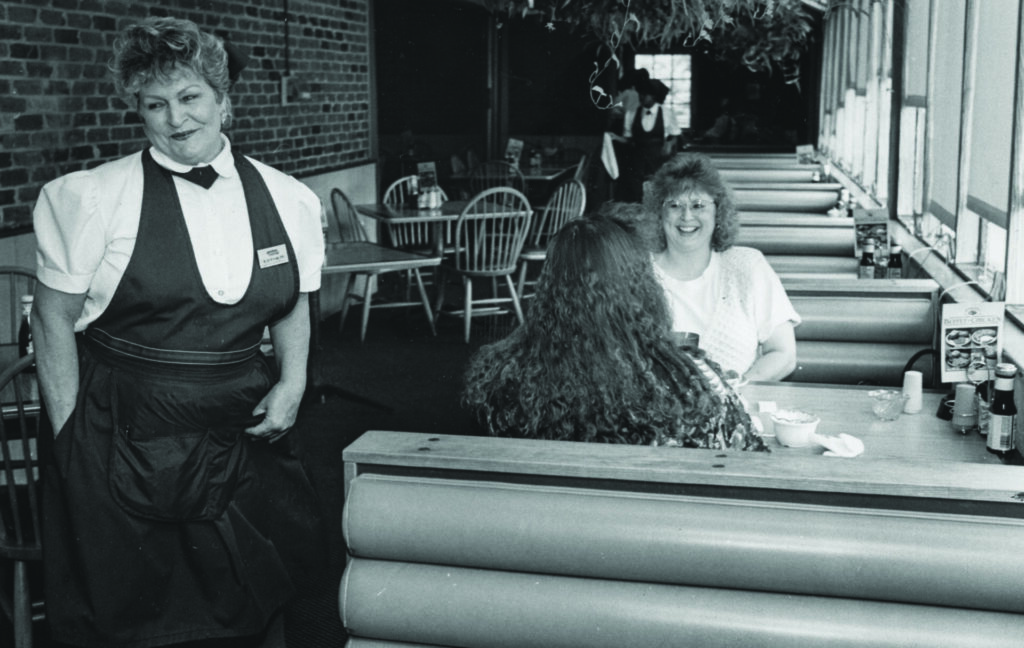
The first Golden Corral, founded by James Maynard and William Carl, opened in 1973 as a family steak house—not a buffet—in Fayetteville, North Carolina. It entered what was already a crowded field of affordable steak houses. There was Western Sizzlin’ out of Augusta, Georgia; Ryan’s Steakhouse; and Greenville, North Carolina’s own Western Family Steakhouse, which later became Quincy’s. These budget-friendly steak houses began by serving an all-American menu centered around steak and potatoes, as familiar as a James Taylor song. Later, they added a salad bar. Eventually, facing declining red meat consumption and increasingly diverse dietary demands, Golden Corral adopted the all-you-can-eat buffet-and-grill format in the early 1990s.
From there, Golden Corral rapidly expanded, first to other Southern states–Virginia and Texas–then to parts of the country where collard greens, macaroni and cheese, and cornbread weren’t articles of faith. Its competitors also adopted buffet formats, but ultimately, the Corral won out. Golden Corral is now the nation’s leading buffet-and-grill chain, with over 350 locations currently in operation. The company has endured highs and lows over the years—its reputation took a hit when it was linked to a 2012 norovirus outbreak in Wyoming, but it has also earned praise for raising nearly $19 million for disabled veterans.
When Golden Corral opened in Greenville, it felt monumental, similar to when the local Walmart opened in 1990. It hit right at the moment when I was becoming more curious about the world of Southern food around me and my place in it.
Golden Corral opened in my hometown of Greenville, North Carolina, right at the moment when I was becoming more curious about the world of Southern food around me and my place in it.
Golden Corral is where I could observe a hundred families I didn’t get to see at our mosque or Diwali gatherings. I glimpsed the lives of kids I saw at school or Little League games or piano recitals. Eating with so many familiar strangers felt like a bonding ritual. I could try all the Southern dishes we didn’t eat at home, all at once. Golden Corral is where I learned Southerners like okra, too—fried or with tomatoes. Where I could serve myself a scoop of the converted rice I only saw at school lunch and drown it in beef and poultry gravies. On a tip from a server, I learned to take a yeast roll, jam a lengthwise hole into it with a serrated knife, and fill the void with honey butter. My method has never changed.
In the summers, my dad knew that my brothers and I would professionally landscape the yard in an hour if he rewarded us with cold sweet tea and a warm buffet plate. As college students, we’d break our Ramadan fasts at Golden Corral. Once, my little brother ate so much that he didn’t realize a piece of steak was still lodged in his throat until the next day. We held my older brother’s surprise sixteenth birthday party in the private party room, a real social status move. A close friend hosting his twelfth birthday at Golden Corral ranted to me about a guest who ate only a single chicken leg, an egregious misuse of the seven-dollar buffet price. I shared his budgeting outrage, though I had to concede it was a perfect drumstick.
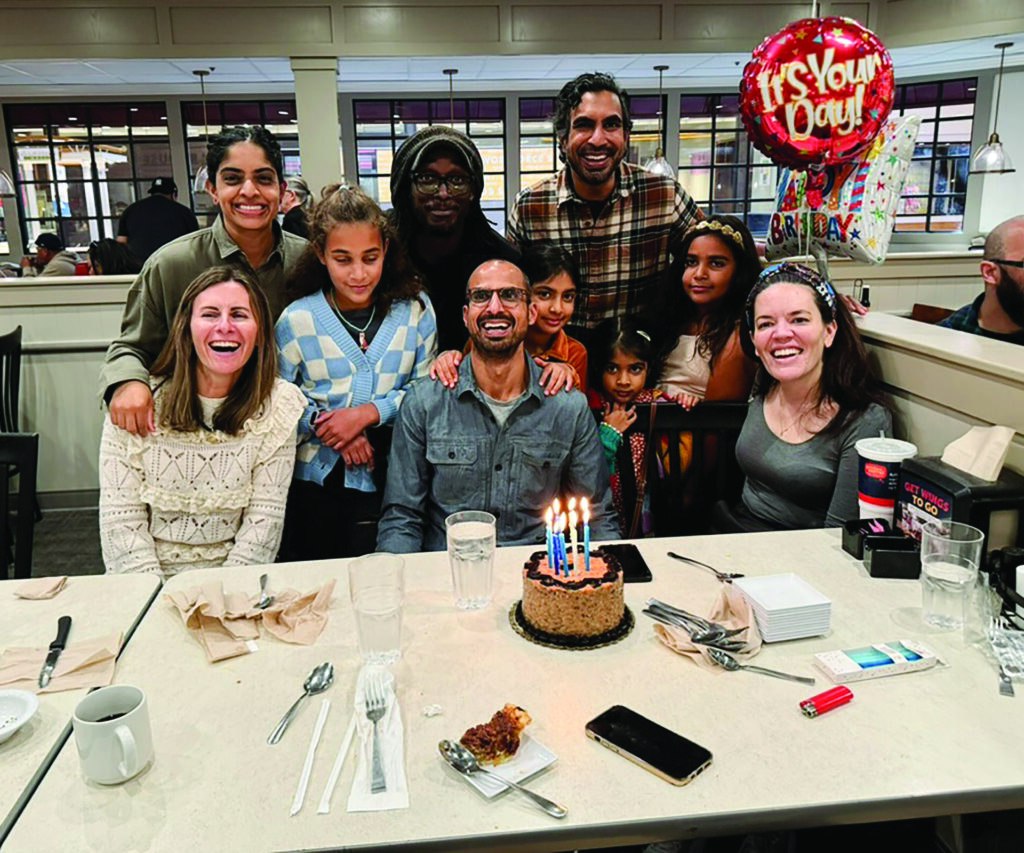
Last September, a group of friends and family on the West Coast surprised me with a birthday lunch at Golden Corral. The closest location to Seattle is in Puyallup, Washington, about forty-five minutes away. This outpost, attached to a shopping mall, was much smaller than the North Carolina locations I remembered. Unfortunately, so was the buffet. While nearly all the major buffet items are the same across locations nationwide, the franchise model leaves room for local preferences. Even so, I had expectations. They were not met. I didn’t see a single pan of Southern greens or black-eyed peas. The yeast rolls, while shiny, were hard and dull-tasting. The closest I came to the Greenville buffet of my memory was the fried chicken. It was passable, but the pieces were too big for the proper skin-to-meat ratio.
My fellow diners, though, seemed satisfied. I was trotting to the buffet when another customer, his plate loaded, smiled at me and said, “Does it get any better than this?” I stopped in my tracks and melted like honey butter. He understood, like I did, why we’re all really here. Later, noticing the birthday balloons tied to my chair, the waitstaff stood me up while the entire restaurant serenaded me. Though usually shy, I raised my arms and clapped my hands in triumph.
A month later, I visited my family in North Carolina. My cousins and I went to a stunning Golden Corral in Raleigh. I considered that eating at a non-Southern Golden Corral might be like watching the Carolina-Duke basketball game on television in a town that’s not in North Carolina. The excitement is real, but you’re far from home and you know it. Walking into that Raleigh location felt like having courtside tickets to the game.
That Saturday evening, everything was brighter, bigger, and better. All the hits, all the classics were there: turnip greens, black-eyed peas, plump fried shrimp, fish baked with care, tender rice, fried okra just sparkling with cornmeal. The fried chicken drumsticks brought me back to the first one I had in 1992: smaller pieces with the perfect balance of skin and meat. Puffs of curling steam escaped from the yeast rolls as I pinched them open. I want to say something like, As I glanced over diners’ plates, I saw more familiar combinations, another sign I was truly home, but that’s not remotely true. I wasn’t paying attention beyond my own plate.
S. Farhan Mustafa is a James Beard Award–winning food and culture writer based in Seattle, Washington. His work has appeared in Gravy, Bitter Southerner, and Texas Monthly.
SIGN UP FOR THE DIGEST TO RECEIVE GRAVY IN YOUR INBOX.