
A Tough Row to Hoe Small and midsized farms face serious challenges. Still, argues a Tennessee farm advocate, they’re worth saving.
by Brooks Lamb
Photos by Kathleen Greeson
Jess Wilson farms on forty acres in Monteagle, Tennessee.
She and her husband, Nate Wilson, have cobbled their land together, buying different parcels at different times. Throughout their farming careers, they have grown a variety of fruits and vegetables. They’ve kept bees and milked goats.
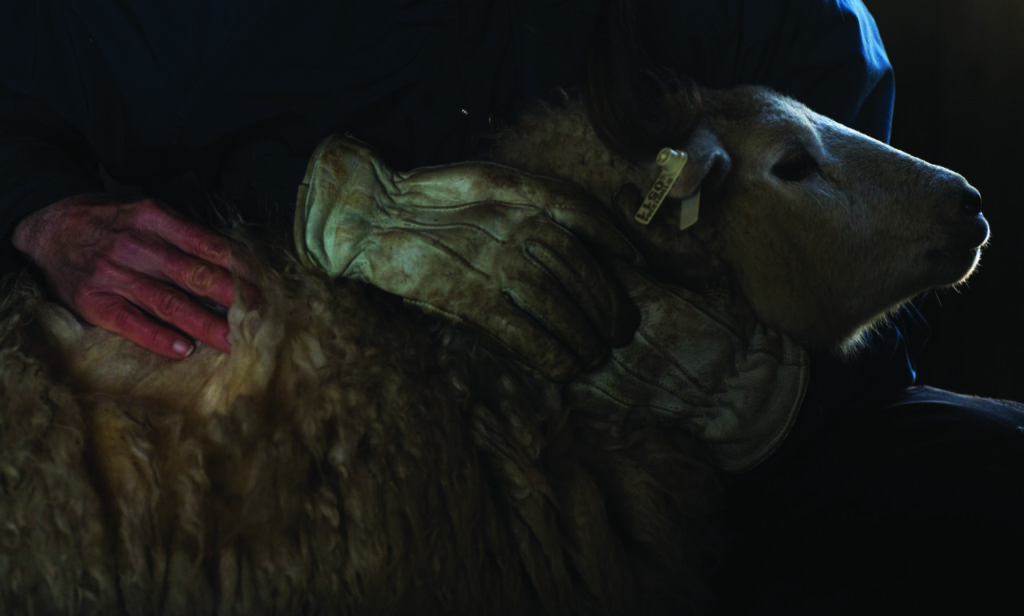
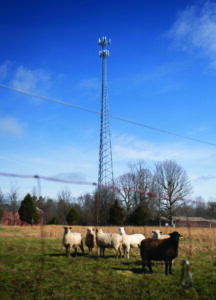
Nowadays, they focus mostly on tending a small herd of sheep for wool, meat, and specialty breeding stock. They use regenerative grazing practices, which support the health of their soil, forage, and flock. Their three children pitch in on the bigger jobs when they can.
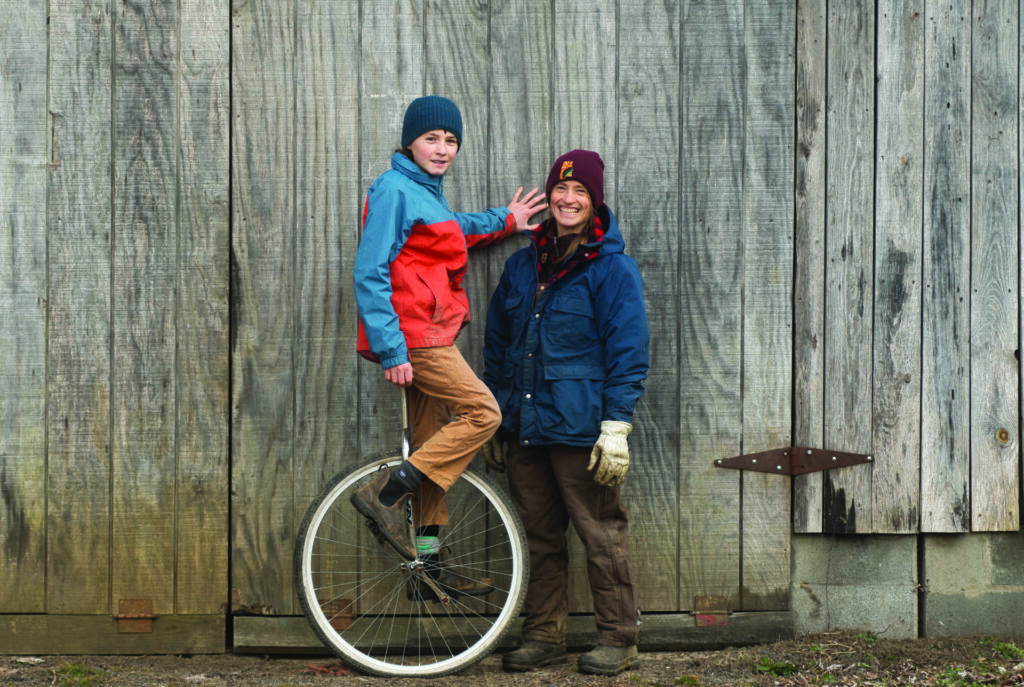
“The kids help with shearing if they’re in town, and when they were little, they were super helpful with lots of projects on the farm,” Jess said over the phone one morning late last spring, a week or two before her family harvested the hay crop together. “It was important for us that they have great farm experiences.”
Jess grew up on a small dairy farm in upstate New York, and she studied sustainable agriculture at Sterling College in Vermont. She has worked on farms in Colorado, Alabama, and even Scotland. She also serves as the president of Southeast Tennessee Young Farmers Coalition, a local affiliate of a larger national organization. Nate is a forester with extensive stewardship experience, and he currently works off the farm as the acting director of a nearby university’s land management team.
Jess and Nate are seasoned and skilled, capable and committed. They understand how to grow their products, market them, and manage the business. They pay attention to their place and their community, and they care deeply for their land.
They are good farmers in every sense. Yet their farm, like so many others in Tennessee and across the country, is under increasing pressure. “Our current economic system isn’t working for small farms,” Jess says.
The latest USDA Census of Agriculture, released last year, suggests that she’s right. Between 2017 and 2022, Tennessee saw a decline of nearly 7,000 farms. That translates to a loss of roughly ten percent of the state’s farms in just five years.
That statistic alone is concerning. But what should be more alarming to producers and consumers alike is the kinds of farms that are disappearing. About 98 percent of the decrease came from farms that are less than 500 acres in size, an imperfectly defined threshold where, at least in Tennessee, farms begin to shift from midsized to large. A variety of factors are causing these farms to fall off, from rising input costs and diminishing profit margins to succession-planning struggles and difficulties retaining employees.
As these farms close or are subsumed into larger operations—according to the same dataset, the state’s largest farms cover a total of more than 600,000 additional acres than they did just a few years ago—it’s tough for new farms to replace them. When compounded with other challenges, such as the difficulties young farmers face in purchasing land and equipment, managing student debt, and covering childcare costs, the next generation isn’t just dealing with a tough row to hoe. They’re struggling to step into the field.
Tennessee lists the word “agriculture” on its state seal, but it is hemorrhaging the farms that underpin its rural economies, ecologies, and communities—its agri-culture. The numbers show that this is not a sentimental statement. It’s a fact.

“There’s been this pervasive myth that you can just get out there on the land and make it as a farmer on your own, you know?” Jess Wilson says. “It’s really hard to do that. We can’t do that all on our own as small, individual farms.”
For those familiar with agricultural issues, or for those who have seen and felt the changes firsthand, these statistics and statements won’t come as a shock. They follow a general “get big or get out” trend that has defined American agriculture for over half a century. Systemic forces encourage farms to become larger by acquiring more and more acreage. The market prizes so-called efficiency above all else, although its accounting often neglects externalities, like environmental and community-level economic damage, that don’t fit neatly into a spreadsheet. Farmers who don’t want to expand—or can’t afford to—are left behind.
But it isn’t just the consolidation of farms and land that pose difficulties for many existing and aspiring farmers. In Tennessee, rural communities also face pressure from real estate development, which is projected to overtake more than a million acres of farmland in the state by 2040. On the outskirts of growing metropolitan areas like Nashville and Chattanooga, Knoxville and Memphis, as well as in more rural communities throughout the state, subdivisions, warehouses, and strip malls are replacing pastures and fields.
So are large-lot tracts and estates, where individuals purchase land not to farm but to build on, look at, and mow. A two-hundred-acre farm might be subdivided into forty 5-acre lots, each with its own house. Some of those parcels may still be considered agricultural for tax purposes, netting significant savings for the homeowner. But often, the land is no longer in production in a meaningful sense.
That’s not to villainize people who live on these parcels—and it certainly doesn’t capture what some farmers, such as vegetable and other specialty crop producers, can do on just a handful of acres—but it points toward a land-use planning problem. Growth isn’t a bad thing. Many rural communities need to grow, or else they risk withering. But when they do, it should be strategic and intentional. We need to find balance and consider the land and its bounty, not just new residences and businesses, when planning for the future.
Natalie Ashker Seevers, who serves as the executive director of the nonprofit Tennessee Local Food, has witnessed this sort of change firsthand in her own community and across the state. “For anybody who has spent time in a rural community—not just driven through it but actually stayed there and watched it—the farmland loss is very apparent,” she says. “It’s in all our faces.”
All these types of development—the traditional sprawl, the low-density residential housing, the city dwellers’ second homes out-of-town, the commercial and industrial expansions—convert acreage, and they also cause a ripple effect that raises the price of other agricultural land to record highs. A quick online search shows that it’s commonplace for a fifty-acre farm with a home in middle Tennessee to list for a million dollars or more. That might sound like a bargain to those who are used to real estate prices in a booming city like Nashville, but imagine an aspiring farmer who is trying to make that math work.
There’s a common perception that young people don’t want to farm because the work is too hard or because agricultural life is unappealing. That’s true for some: Tennessee has seen many multigenerational farms, even “century farms”—those in production for a hundred years or more—cease after parents pass away. But there are lots of young people who do want to farm. Whether they grew up on a farm or in a suburb, they yearn for the chance to root into the land and be part of a rural community.
Right now, most just can’t afford it.
Some in the agricultural and environmental fields in Tennessee believe that farmland conversion, rising land prices, and difficulties with land access for young farmers are reaching crisis levels. They worry that these parallel issues put the future of independent farming and local foodways in jeopardy. Those comments come from liberals, moderates, and conservatives alike, a point of consensus in an otherwise hyperpartisan state.
Tennessee, a popular place to live and do business, feels these dual challenges of consolidation and conversion acutely. But it’s not alone. Rural communities across the South and the country are experiencing these same pressures. Projections from American Farmland Trust, where I work, suggest that, due to real estate development, the United States is on pace to compromise more than eighteen million acres of farmland by 2040. Estimates suggest that we have been losing about 2,000 acres of agricultural land per day in recent years.
For context, a football field is about 1.3 acres. Across the country, we’re converting more than 1,500 football fields’ worth of farm- and ranchland every twenty-four hours. That loss is most concentrated in the South, with Texas, North Carolina, Tennessee, and Georgia all ranking in the top five for projected farmland conversion.
According to the Census of Agriculture, the United States saw an overall decrease of 140,000 farms, or about a 7 percent decline, from 2017 to 2022. There are currently about 1.9 million farms in the United States, down from 6.8 million less than a century ago. Once again, smaller-scale farms make up most of the recent decline. Nationwide, roughly 81 percent of the decrease between 2017 and 2022 came from farms that are smaller than 500 acres, a clear signal of struggle. Notably, that doesn’t even include farms just above the 500-acre threshold, which may be considered small or midsized in geographies like the Midwest, the Mississippi Delta, or the Great Plains, where bigger acreages are the norm.
“The numbers speak for themselves,” says Seevers, who works closely with small farmers in her role at Tennessee Local Food and has watched them fight to stay afloat. “For many of the farmers in my network, scaling up either isn’t feasible or doesn’t make financial sense.”
With the fall of these farms, communities also see the closure of schools, churches, and hospitals. Small businesses sometimes shutter. The effects reverberate throughout rural and semi-rural areas, especially in the many places where aging farmers aren’t being replaced by younger ones. These are just a few of the casualties that come from over-embracing industrialism and “efficiency.”
The national number of “new and beginning” farmers, or people who have been farming for ten years or fewer, actually increased from 2017 to 2022. That’s good news. It suggests renewed energy in the farming community. Yet the average age of a new and beginning farmer is nearly fifty, driven in part by the number of people who turn to farming in retirement or as a second career. There’s nothing wrong with starting a farm later in life, of course. But the average-age statistic again indicates that it’s tough for young people to get started in agriculture. They don’t have capital saved up from a first career. They likely don’t have major assets to liquidate to fund their farm purchase. Fewer than 9 percent of farmers and ranchers in the United States are younger than thirty-five.
In her work with the Southeast Tennessee Young Farmers Coalition, Jess Wilson says, “We work hard to address land access for aspiring farmers, but sometimes we ask ourselves, ‘What are we doing? Are we setting people up for failure?’”
“If they can afford and access land, great,” she continues, mentioning that her organization will support them with information and guidance toward those goals. “But what if they can’t actually make it work?”
Those same questions recently gave her pause when a local elementary school asked her to come talk about farming as a career. She loves her work, but she worries that the path she and Nate took might be even less viable in another twenty years. How in good faith could she encourage those kids to become farmers?
These statistics and, more importantly, their implications for the people and places they represent, are unsettling. But advocates like Wilson and Seevers argue that it isn’t productive to cast a constant doom-and-gloom shadow. We need to be honest about the struggles farmers face, but we shouldn’t dwell on them.
There are tools and strategies that could create a better, fairer, and more sustainable agriculture, one that offers more opportunity to smaller and midsized farms and moves toward land conservation rather than land conversion. Courageous, sensible changes could help cultivate an agriculture that gives young people an authentic chance at success and addresses land access challenges directly, that helps aging farmers retire with confidence and dignity, and that values stewardship and locality.
On the federal level, that might mean creating an Office of Small Farms within the USDA to ensure that smaller-scale farmers have better access to government programs so that they’re less likely to be left behind. For too long, public support for agriculture has disproportionately gone to the biggest and wealthiest farm operations. While there has been some momentum for this new office in recent years, its creation seems unlikely in the current political environment.
For states, it might mean creating or expanding programs that fund permanent farmland protection. When done well, compensating farmers to conserve their land and keep it in agricultural production can stem farmland loss, enhance local economic viability, and make land more affordable for the next generation.
In full transparency, I am currently advocating for this sort of legislation in my home state of Tennessee. In January 2025, state Senator Jack Johnson of Franklin introduced legislation that would create a farmland preservation fund. Such a program would pay qualifying farm families to place a conservation easement on their land, ensuring it will remain a farm permanently. Governor Bill Lee mentioned this legislation in his February State of the State address, calling it a priority and saying, “It’s time that we support Tennessee farmers by finally passing [this bill].” While the policy landscape can shift at any moment—and amendments can radically change the content of a bill—the outlook appears promising. At the time of publication, the bill had just cleared the Senate Energy, Agriculture, and Natural Resources Committee, with several senators speaking passionately in its favor. Tennessee political leaders understand the need to advocate on behalf of farms and farmers, and they’re taking up the charge.
States could also address land access head-on by adopting or enhancing farmlink programs, which connect landowners with people who want to farm. With meaningful financial and staff capacity, these programs work. New York state offers an example of what a thriving farmlink program with wraparound services can do for both aspiring and retiring farmers.
County governments could support these efforts, too, by thoughtfully planning for the future of agriculture in their communities, pursuing their own land-linking efforts, and hiring dedicated staff to lead local agricultural economic initiatives to complement what extension programs and government conservation professionals are already doing.
Action must occur outside the government sphere as well. Nonprofit organizations like Seevers’ Tennessee Local Food and Wilson’s Southeast Tennessee Young Farmers Coalition are pushing for change, bringing farmers and community members together, and supporting those in the agricultural community who need it most. Many of their local and state-level counterparts across the South and the country are doing the same. When coupled with the resources, knowledge, and leadership capabilities of national organizations and generous funders, the nongovernmental sphere offers promise.
Whatever actions are taken—whether at the national, state, or local levels; whether public or private; whether policies or programs or, better yet, a combination of the two—we must first recognize that the current system is flawed.
“This laissez-faire approach to letting the market sort it out doesn’t work if we don’t all have the same access to land, to equipment, to information,” says Wilson with a sad laugh. “Policymakers need to acknowledge that if we want communities with small farms, and we want to see young entrepreneurs start farms and be successful, then we actually have to prioritize that. Because right now, it’s pretty much impossible.”
This reprioritization could make some stakeholders, especially those who are thriving in the current system, bristle. But other larger-scale farmers might welcome these changes. After all, some of them have expanded not because of greed or ambition but because of a system that demands it. They are playing the game by the rules in place. They’re trying to support their families and businesses. If downsizing was a more legitimate economic option, some larger farmers might be inclined to reduce their scale, their capital intensiveness, and their stress levels to farm on less expansive acreages. That would let them come back into closer contact with the land and soil, to return to the work that calls many people to farming in the first place.
No matter our geographies, professions, or interests, we should pay attention to what’s happening with American agriculture. The fate of farming affects everyone who eats—that is, all of us.
Our current trajectory poses a threat to local and regional food systems. If cooks and consumers want farm-to-table restaurants and ingredients, for instance, a movement that offers so much promise for both producers and consumers, we need far more local farms and farmers to provide them. If we’re not actively supporting these farms, we could lose access to some of the dishes and ingredients that we cherish: locally raised beef and farm-fresh eggs; heirloom vegetables and local honey; fresh greens and beans and fruits and herbs.
Other repercussions of our current system are ecological. While public lands are important, some of our most significant wildlife habitats are found on private working lands, in fencerows and woods and lush pastures. Unlike developed areas, these landscapes and soils also help filter water that enters our creeks and rivers, and they mitigate the damage from floods that have hammered so many Southern communities in recent years. When these places are paved over for development, or when their fencerows and woods are pushed down to make room for ever-larger fields, we sacrifice these benefits.
Other impacts are economic. Agriculture is the foundation of many rural economies. When farms are replaced with bedroom communities where people sleep but rarely work, dine, or shop—or when dozens of farms are replaced by one large, industrial operation—the financial health of communities can waver.
According to Jess Wilson, we need to decide if we are collectively comfortable with the consequences of our current course. “If we’re only going to have hobby farms and then large industrial agriculture, which is where it seems like where we’re headed, we either need to say, ‘Yep, that’s what it’s going to look like…’”
“Or,” she continued, with a mixture of tenacity and hope, “we need to make some changes so that we’re prioritizing the kind of agriculture we want.”
Brooks Lamb is the author of Love for the Land: Lessons from Farmers Who Persist in Place. He works with American Farmland Trust and teaches a class on agriculture and food at Rhodes College. A Memphis resident, he remains involved with his family’s farm in rural Tennessee.
SIGN UP FOR THE DIGEST TO RECEIVE GRAVY IN YOUR INBOX.