
Pa’ Que Sepan Ana Castro brings Mexican seafood to New Orleans with her audacious Acamaya.
by Gustavo Arellano
photos by James Collier/Paprika Studios

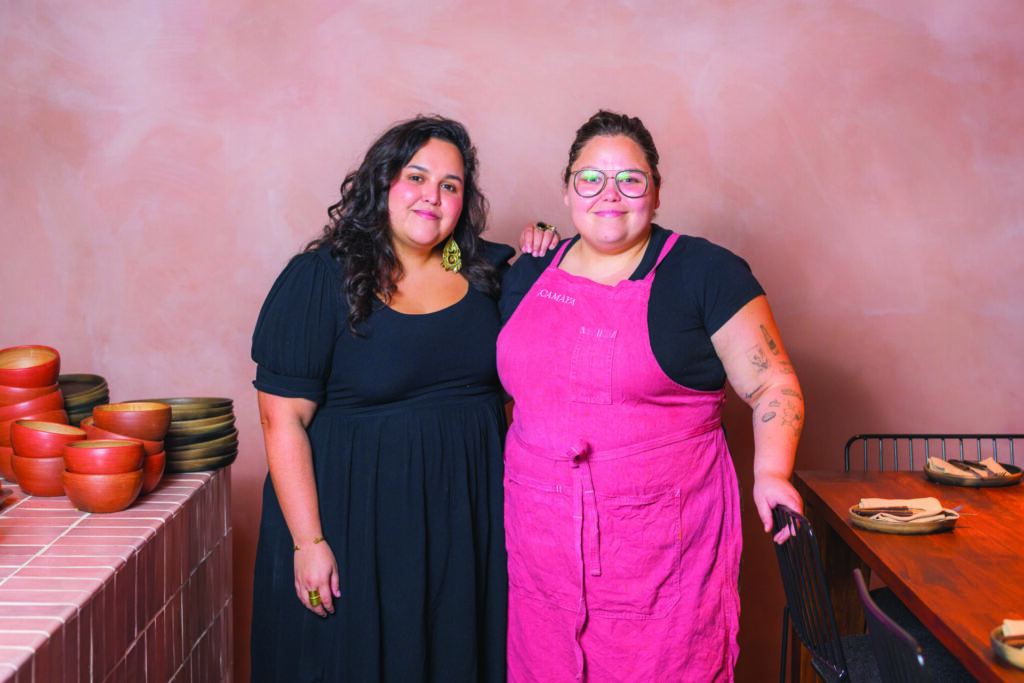
Ana Castro and her team at Acamaya, a Mexican seafood restaurant in the Bywater district of New Orleans, sat at a wooden table for family meal an hour before opening for Monday service.
“Thank you for a fantastic week,” said Castro, chef and co-owner, along with her sister, Lydia, who sat across the table. “First week off the books. Many more to come.”
The small, elegant spot opened in July to acclaim and crowds. On the evening I visited, it wasn’t as busy as the week prior—the better to appreciate the audacious challenge the Castro sisters have before them.
In the United States, Mexican marisquerías—seafood restaurants—are still mostly concentrated in barrios and considered macho realms, where the waitresses wear high skirts and low-cut blouses, the beers come in buckets, and the music leans toward hailing the drug trade. In New Orleans, Mexican eateries still rely heavily on tourist favorites like tacos, burritos, and nachos and seem to think that Frida Kahlo or Day of the Dead motifs are required by law.
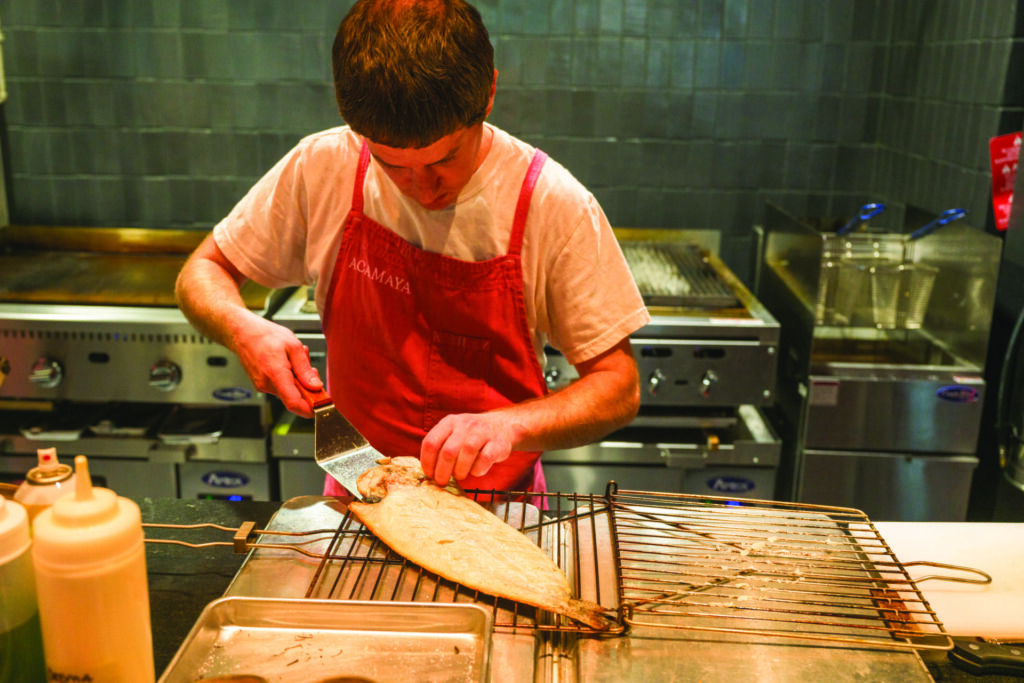
Acamaya has none of that. Shades of coral color everything from the breezeblocks that divide the bar and dining room to the chefs’ and servers’ aprons, subtly evoking pre-Columbian Mexico. The atmosphere is relaxed and egalitarian—when I visited, Ana was working on the line in Acamaya’s open kitchen, while Lydia led diners to their tables when she wasn’t accepting congratulations from friends.
In a city where seafood is gospel, Acamaya is a needed reminder that the Gulf of Mexico feeds two countries that too often see each other as adversaries instead of kin. This call to family is emblematic in the restaurant’s name (the Mexican Spanish word for a type of crawfish) and on its menu, with dishes that nod to both the South and Mexico.
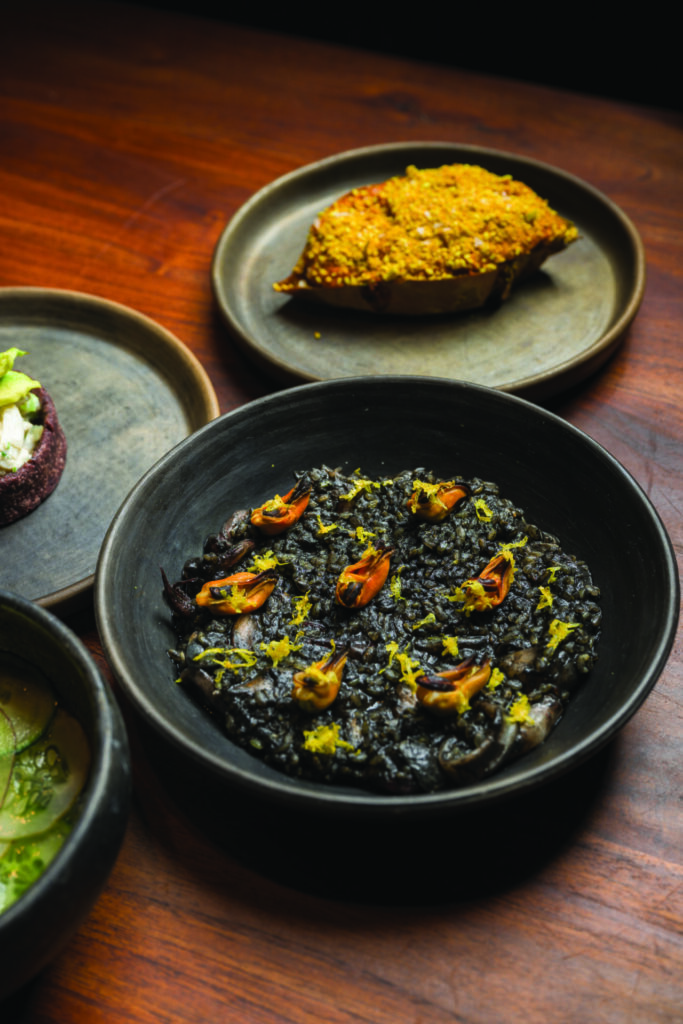
Turmeric, peanut mole, and lime juice enlivened my appetizer of a sweet potato, evoking both soul cooking and a backyard carne asada. Castro’s aguachile, a tart dish of seafood and cucumber slices marinated in chilled lime juice that’s native to the Pacific coastal state of Sinaloa, used succulent Gulf shrimp and was as refreshing as the air-conditioning that kept out the muggy afternoon. She topped the heirloom blue corn sope with crab sourced from Higgins Seafood in Lafitte and finished it with a dollop of mayo and chiltepín, a fiery peewee pepper associated with the state of Sonora. These dishes were delicious preludes to my main course: arroz negro studded with mussels and squid. Acamaya substituted the squid ink with a purée of huitlacoche, which Americans have long dismissed as corn smut but which Mexicans value for its truffle-like flavor.
Not enough mariscos spots in the United States attempt to engage with non-Mexican diners. For Acamaya to do so in a city with a longstanding seafood tradition instead of a Latino-dominant one was bold, I told Ana.
“Nos estamos divirtiendo,” she told me while waiting to expo a dish. We’re having fun.
“¡Ahí vas!” I told her. You’re getting there!
She stopped and smiled. “Ahí voy.” I’m getting there.
I dined with the sisters the following evening at Pêche Seafood Grill, a favorite of theirs. They’re both gregarious, but Ana, thirty-five, is more of the free spirit.
“¿Quién me atrapelló, güey?” she joked when we sat down. Who ran me over, man? Business had dramatically picked up after I’d left.
Ana, who is thirty-five, and Lydia, thirty-one, were born in South Texas but grew up in Mexico City. Ana was always obsessed by “the feminine energy of the kitchen,” which she learned from watching her grandmother and aunts. “It was empowering,” she she says. She went to culinary school, then apprenticed and staged in India and Mexico City before moving to New York at twenty-four to work in Michelin-starred kitchens. The culture, Ana says, was often toxic.
“One time, she called me and said, ‘Someone threw a cutting board at me,’” Lydia said.
“I killed a show lobster by accident,” Ana admitted, before telling me the whole, sordid story which involved a bicycle trip through Manhattan.
“I told her, ‘What are you doing with your life?’” Lydia continued. She suggested her older sister join her in New Orleans, where Lydia had settled after graduating from the University of New Orleans with a degree in business administration and a minor in restaurant management.
The Crescent City had appealed to the family ever since their father took them on vacations when they were growing up.
“It was always, Bourbon Street! French Quarter!” Lydia remembered with a laugh. “Mexicans have always been intrigued by New Orleans. It’s the people. It’s the music. It’s the culture.”
“The people here are like Mexicans,” Ana added.
I laughed in agreement. When I wrote in this column about my cousin marrying our childhood friend at St. Louis Cathedral in 2019, I remember how at ease a bunch of Mexicans from Southern California felt in the Big Easy. The friendliness, the layers of history, and the sense of an endless, moveable feast were immediately familiar to all of us.
“I think you found your space here,” Lydia told her sister.
“Oh yeah, my pace,” Ana replied. People say, ‘Come over to my house,’ and they mean it.”
The two ended up working at Coquette, a popular Southern restaurant in the Garden District. Ana rose to sous chef and scored a James Beard nomination for Rising Star Chef, and Lydia went from server to administrator. But Ana yearned to cook Mexican food again. “When I’m cooking it, I’m at ease,” she said. “There’s nothing forced.”
She started featuring some dishes at pandemic pop-ups, then opened a restaurant, Lengua Madre, in 2021 with Coquette owner Michael Stoltzfus. It immediately earned accolades: Ana was named a Food & Wine Best New Chef and was a James Beard Award finalist for Best Chef: South. New York Times food writer Brett Anderson featured Lengua Madre in the paper’s 2021 list of the best American restaurants, praising it as a “a prix-fixe place with the approachable air of a neighborhood café.”
“She wasn’t endeavoring, as far as I could tell, to convince diners that Mexican cuisine was worthy of a fancy chef’s attention,” Anderson told me. “That was a given. This was the food of a New Orleans chef who happens to be Mexican. It’s a subtle but powerful difference from the previous local norm.”
The sisters stepped away from Lengua Madre at the end of 2023 because “there was no path to ownership,” Ana said. The concept for Acamaya came from her wanting to take on the challenge of presenting New Orleans with a seafood tradition rooted in the same Gulf waters as its own
Most of the Lengua Madre staff—servers and cooks alike—departed with the Castros. The sisters took a few of them down to Mexico City and Oaxaca for two weeks earlier this year to better understand their vision for Acamaya.
“Pa’ que sepan,” Ana said. It’s a phrase that literally translates as “So that they may know,” but it’s more profound in Mexican Spanish—an almost sacred challenge to absorb and respect what you encounter.
The sisters know they can’t expect the same level of culinary or cultural knowledge from every diner. The menu has a glossary to describe ingredients that might be unfamiliar, like chochoyotes, which are masa dumplings. Still, they face a learning curve with some customers.
“A couple walked in and looked at the menu,” Lydia said as we finished our dinner. “They stared at me with confused looks. They said, ‘This isn’t Mexican food.’”
“It is,” Lydia assured them, explaining that she and Ana were Mexicans cooking coastal Mexican food. “No, this food is more Spanish,” the couple replied, before leaving because, Lydia recalled, “they said, ‘we just wanted some cheap tacos.’”
“We cannot expect to please everyone,” she concluded. “Nadie es monedita de oro [No one is a gold coin]. And that’s okay.”
Ana was more magnanimous. “I try to do a lot of bridge-building in my food. We have common ground. But I also don’t want to be part of whitewashing my culture.”
The sisters’ ambitions don’t end with Acamaya. They want to open a mezcal bar, a café, even a retail tortillería. “At Acamaya, I’m in the spirit of sharing,” she said. “My biggest joy in life is being Mexican, and I just want to share it with everyone.”
Pa’ que sepan.
Gustavo Arellano is a columnist for both the Los Angeles Times and Gravy.
SIGN UP FOR THE DIGEST TO RECEIVE GRAVY IN YOUR INBOX.