What it Means to Gather A conversation with Ashanté M. Reese
by Rosalind Bentley
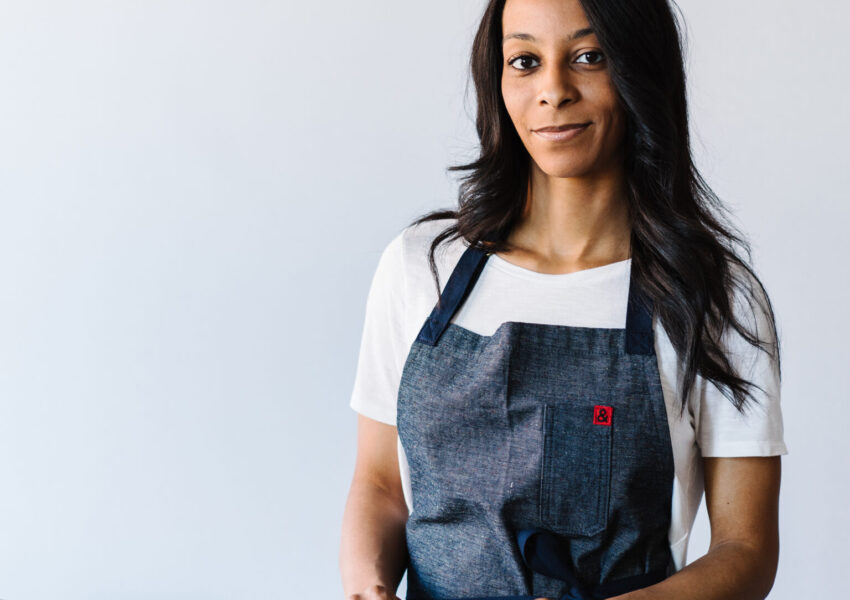
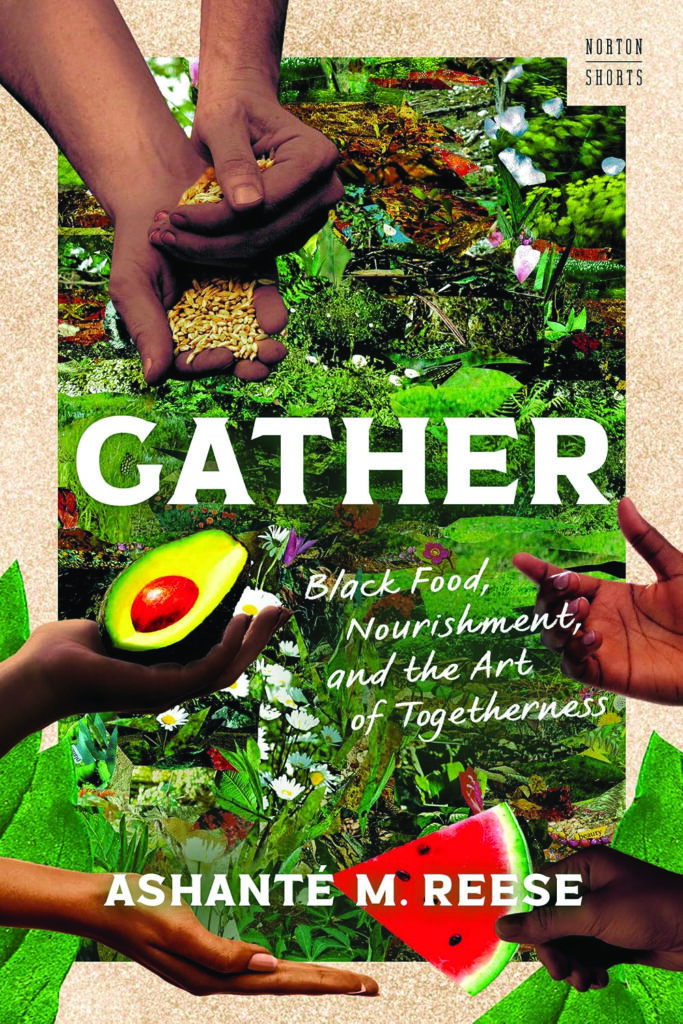
In her latest book, Gather: Black Food, Nourishment, and the Art of Togetherness, anthropologist and The University of Texas at Austin professor Dr. Ashanté M. Reese set out to answer the question: What can we learn from how Black people gather around food?
That question recalls a set of expected dishes and situations: a perfectly composed potato salad presented at a family reunion; a warm sweet potato pie laid upon a repast table; a paper bag full of backyard tomatoes placed on a neighbor’s porch. The food is nourishing, but in the context of a community, both the giving and receiving are radical acts of care. Reese argues that those acts of care are essential ingredients for building resiliency and communal strength.
So, the East Texas native takes us to a community garden carved into the front lawn of Pleasant Hope Baptist Church in Baltimore, where both fresh produce and lessons in self-sufficiency and empowerment grow in abundance. She introduces us to a Memphis chef who channeled her grief over the police-involved killing of a young unarmed Black man into a citywide repast. We travel to Austin, where mutual aid is rendered through bottles of water and granola bars during tumultuous student protests. And of course, we dance and listen to the O’Jays at a family reunion outside of Nashville, where you don’t have to be blood kin to belong.
Here, Gravy deputy editor Rosalind Bentley talks with Reese about the importance of showing up for each other with intention and how good food can sustain a people and potentially build a movement. And why, at least for her, okra is not on the list of good food.
Rosalind Bentley: Let’s talk about how you settled on your four primary examples of gathering: gardens, family reunions, funeral repasts, and mutual aid.
Ashanté M. Reese: I think of reunions as one of the quintessential examples of kinship. I use kinship intentionally because, in some ways—or at least this has been true for me—it actually doesn’t matter if you’re biologically kin to each other. A reunion is an invitation, and if someone has extended you that invitation, then at least for that day or that weekend, you’re welcome here. That level of hospitality is very interesting.… Have you ever gone to a family reunion where you run out of food?
RB: No!
AMR: Exactly. Never. And so, this idea of abundance, of sharing one’s resources, of there’s enough for everyone, there’s a seat at the table for you: All of that felt clear to me around reunion.
And the other is repast. It’s such a magical tradition. Somebody rings the alarm. Cupboards open, plates and bowls and casserole dishes and cakes and pies—they’re coming from everywhere. Then there’s somebody who can’t cook, so let’s take them out of the out of the kitchen and station them somewhere else. A repertoire of movements is set into motion. It’s both the recognition of caring for other people and the vulnerability in recognizing that your time is coming at some point.
I also I wanted to get at the idea that once people start breaking out this food—everyone’s eating, everyone’s talking—sadness also makes space for memory. And for storytelling and for joy. And I do believe that nothing changes in this world without the story.
RB: And gardens and mutual aid?
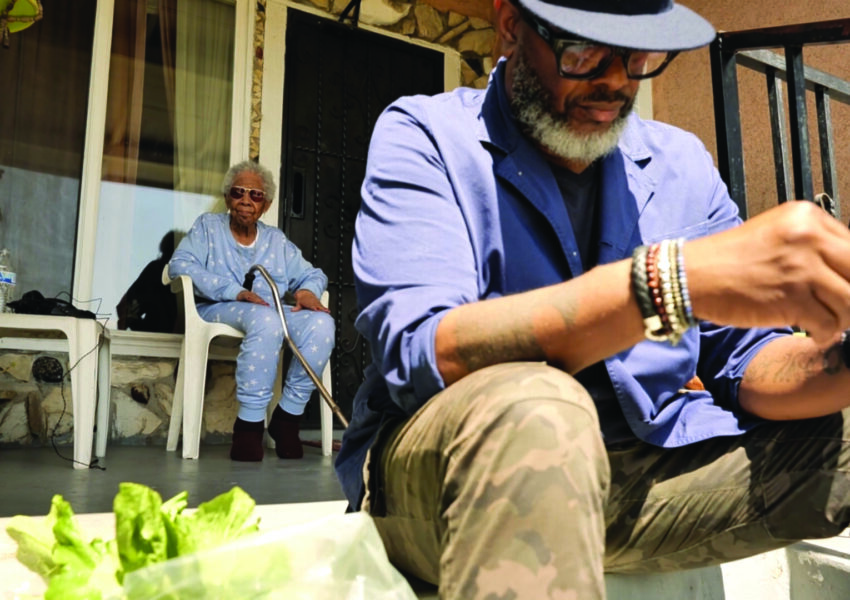
AMR: Gardens, you know, are a literal connection to food. I wanted to write about Rev. Heber Brown of Pleasant Hope Baptist Church in Baltimore because I’ve been fascinated with his work for ten-plus years now, and because it’s a great example of gardens being more than just a place where people grow things. They can literally be the starting place for growing a movement. And mutual aid—that’s the chapter that’s kind of the least about food in some ways, because we’re not necessarily gathering around food, but the need for food in these contexts helps to mobilize a multiracial group of folks who were really trying to trust Black women’s leadership.
RB: You start the book with this idea of nourishment—and nourishment in its broadest sense, beyond the mac and cheese and the collards on the table. But there’s one word that appears even more than “nourishment” in the book, and that word is “care.” How do you see the two as related or one and the same?
AMR: That’s so funny! Now I want to go count how often “care” shows up!
I think nourishment is not a solo act, and I think this is where care comes in. We are nourished by the things that we consume, but we are also nourished by the connections we make and maintain. Care is something that we can actualize and enable and practice outside of the things that we know about capitalist systems…that aren’t about markets, and they’re not necessarily about money either.
Like in the family reunion chapter…. Even when people can’t pay their family reunion dues, they’re not turned away. Being together, getting that joy or that nourishment of being together, is more important than the money. So, care is, how do we show up for people? And how do we show up for people in ways that don’t make them feel like they owe us something in return?
RB: Shirley Sherrod, civil rights icon and community land trust pioneer from southwest Georgia, spoke at the Black Urban Gardeners conference in Atlanta a few years back. And she said, respectfully and with reverence, that community gardens are admirable and can be helpful, but they can’t provide for communities over the long haul because of their scale. I thought about this when reading the gardening chapter and about the work of Rev. Brown, who worked with his congregation and church elders to start a small garden in the church front yard in the hope it might help feed the surrounding neighborhood. Can you talk about this idea of scale and how we view success?
AMR: I think she’s right in that community gardens don’t solve the large-scale problem of hunger. But do you know what a garden does do? It is a practice ground. It is a meeting space. It is a place where people grow things more than food. They grow their imaginations, they grow their capacity. They learn things.… Heber Brown talked about Mama Maxine teaching him how to plant things. He learns how to grow things from someone in his congregation, and now he leads a national network of over 250 Black churches that are committed to growing things on some of the only Black-owned land in many communities, which is church lawns. If the goal is to say, “We’re going to plant all these community gardens and that ends hunger,” well, that’s a mismatch. That’s a crisis of scale. That’s not going to work. But if you’re saying that the intent of growing these gardens is to help people think about how to be better stewards of land, how to be in better community with each other, how to think about it how Heber does: “Okay, we’re growing this food. Do we have to sell it in the same way that a supermarket does, or can we price this differently, or can we just give it away?”
All of those things are meaningful. There are places where we can practice growing justice, and that’s the scale I want to be at.
RB: You spoke earlier about repasts and mutual aid. Reading the example of Chef Tam [Tamra Patterson] in Memphis and her response after the police-involved killing of Tyre Nichols in her city in 2023 really took my breath away. This idea of food as a community balm, a repast not just for an individual family experiencing loss but a community. Could you talk a little bit more about this, and have you seen this happen elsewhere?
AMR: Part of the reason I wanted to use that example is I had never seen anything like it. I had never seen someone in this context say, “I’m going to organize. I’m going to take it upon myself to organize a citywide repast.” What made that so significant is the context in which this is happening. This happens in Memphis, but nationwide, at this point, Black folks are just fatigued with the amount of police murders. Then to see a Black woman chef who’s a mother of a Black son herself be like, “I’m going to take this grief that I feel about what’s happening nationwide and in my city, and channel it.” She did not start off with this idea that she was organizing anybody else. But the moment that she says, “This is what I’m going to do,” it opened up something for these other, almost exclusively White businesses and restaurants, and they said, “We can help.”
For me, there’s a message for people here that, you don’t have to be feeling the exact same type of grief. But A, you do need to trust other people’s leadership. And B, once someone says, “I’m going to do a thing,” that is a moment for you to be like, “Maybe I can…support what is already happening.”
RB: One last question for you. You are very clear in this book that you do not like okra, but you don’t say why. What is wrong with okra?
AMR: So much is wrong with okra. It’s just bad. And it’s okay that other people love it, but I’m never going to get over the texture…. I’m sorry. Please don’t take my Black card, but it’s just—it’s never gonna do it for me.
Gather is out on April 14, 2026, from W. W. Norton. Visit blackgathering.net to explore interview materials, photos, recipes, and more from Reese’s research. Reese said her intention is for the archive to be ever-growing. “There are more lessons there than are in the book,” she said. “The book is just the beginning.”
Rosalind Bentley is Gravy’s deputy editor.
SIGN UP FOR THE DIGEST TO RECEIVE GRAVY IN YOUR INBOX.