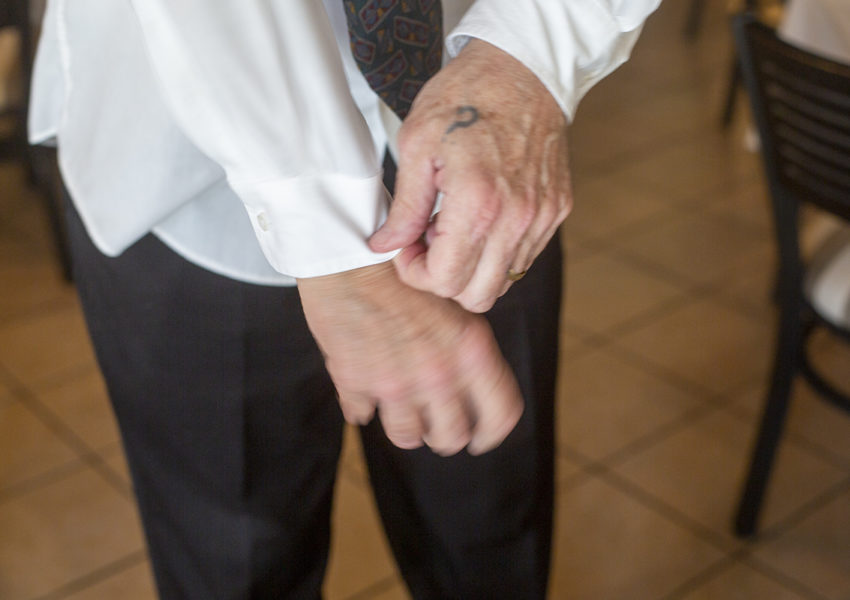

The Right Stuff In northwestern Louisiana, a stuffed-shrimp scion rolls with the punches.
By Chris Jay
Chapeaux Chapman’s mind was made up.
All morning long, the thirty-three-year-old chef and owner of Orlandeaux’s Cross Lake Café in Shreveport, Louisiana, had been mulling over a situation involving an employee that he’d hired a few weeks earlier—a rough-around-the-edges twenty-three-year-old named Jerry, the son of another kitchen worker named Jerry. Since the younger Jerry didn’t use the suffix “Jr.,” everyone in the restaurant quickly took to calling the father-son duo Big Jerry and Little Jerry. Chapeaux assigned Little Jerry to the deep fryer, the busiest station in the kitchen of a restaurant known for fried seafood. The young man was still struggling to adapt to the pressures of his new job when Big Jerry approached Chapeaux, hat in hand.
“My son’s not a cook,” the older man said firmly. “You need to put him on dishes.”
“Mr. Jerry, he’s a troubled kid. Give him a chance,” Chapeaux pleaded. “You were once there. You never know what he can do.”
Chapeaux promised Big Jerry that he’d consider the suggestion, but something about the idea of reassigning the young man didn’t feel right.
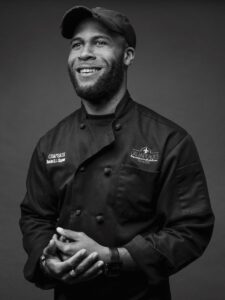
With his square jaw, broad shoulders, and slight but athletic build, Chapeaux could be a welterweight boxer. His brow is often furrowed with concern for a line cook who hasn’t shown up yet, a batch of tartar sauce that needs to be made, or the details of an upcoming party in the restaurant’s perpetually booked second-floor ballroom. Since Chapeaux converted from Protestantism to Catholicism in 2017—a step that he took in order to feel closer to his Cane River Creole ancestors—a silver St. Christopher medallion has dangled from a thin chain around his neck. He almost always wears a fitted New Orleans Saints ball cap which, when turned backwards, signals to members of his seventy-person staff that he is hyperfocused on whatever task is at hand.
Chapeaux spent the October morning paying vendors and running payroll before climbing a rickety ladder onto the gabled rooftop of Orlandeaux’s to hang Christmas lights. He paused briefly to watch some of the year’s first white pelicans arriving on Cross Lake. They come each fall, hundreds at a time, an incredible sight. A Black family with two young children stood on the point in front of Orlandeaux’s, looking out at the water and the birds.
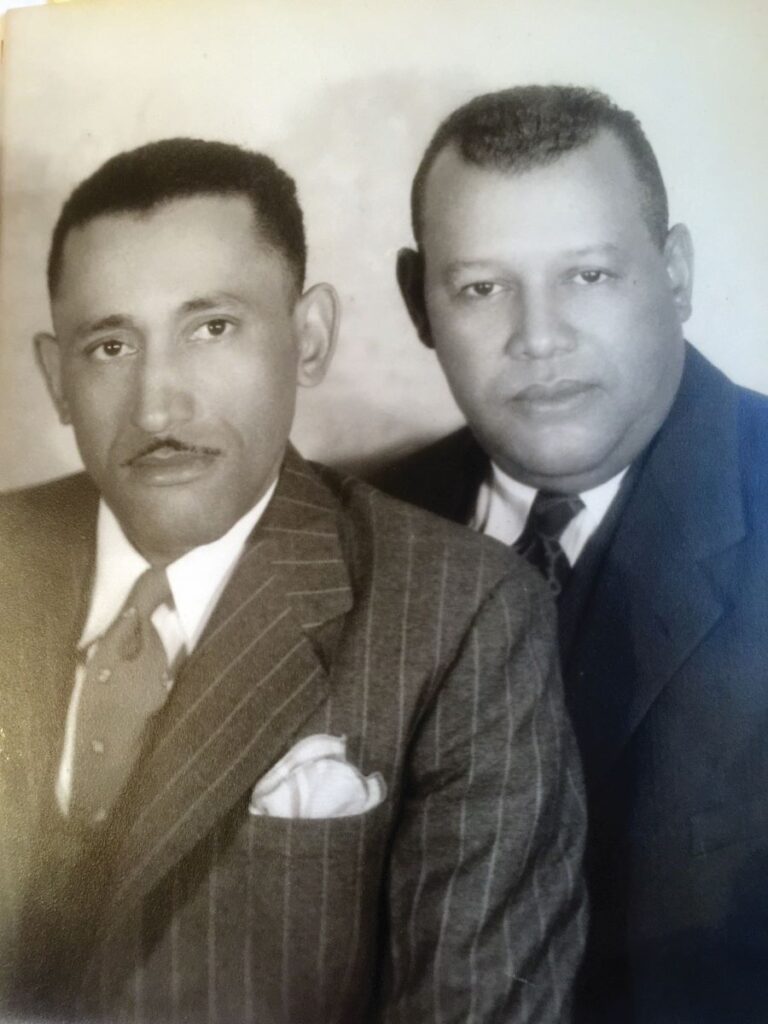
For many years, the building beneath Chapeaux’s feet housed a whites-only restaurant called Smith’s Cross Lake Inn. Long after the official end of segregation, Smith’s clientele remained nearly all white; its waitstaff all Black. Chapeaux’s paternal grandfather, Willie “Brother” Chapman, cooked at Smith’s in the 1950s while also cooking at his family’s restaurant, Freeman & Harris Café. One of the first things Chapeaux did after purchasing the sprawling lakefront restaurant in 2021 was to hang an oversized portrait of Brother, who passed away in 2003, in the restaurant’s foyer. Brother smiles out from the fading photo, ebullient, as if the photographer captured him mid-laugh.
Throughout the morning, Chapeaux considered Big Jerry’s request, but he knew all along that he would not reassign Little Jerry to a less-challenging station. Perhaps, Chapeaux thought, the young man had entreated his father to request the change. Maybe a challenge was just what Little Jerry needed. The tough part would be delivering his verdict to Big Jerry.
Big Jerry is a stuffed shrimp roller at Orlandeaux’s, which places him among an elite inner circle of employees who are entrusted to produce the restaurant’s most popular menu item. Chapeaux’s great-grandfather, Arthur “Scrap” Chapman, taught Big Jerry to roll before Chapeaux was born. It would be tough for Chapeaux to say “no” to someone who’d rolled stuffed shrimp for his great-grandfather, but he would find a way. Chapeaux navigates the complicated hierarchy of Shreveport stuffed shrimp every day of his life.
“I’m going to stick him on the fire,” Chapeaux would later tell Big Jerry. “I’m gonna tell him when to drop [the fry basket]. I’m gonna tell him when to pick it up.” Little Jerry might be overwhelmed at first, but Chapeaux trusted he’d get the hang of it.
To roll—a term of art in Shreveport restaurants like Orlandeaux’s—is to clean and butterfly large shrimp, stuff them with a Creole-style crabmeat dressing, chill them, dredge them in a thick, spicy batter made from crumbled cornbread, and shape them into oblong torpedoes using a cupped palm. After an egg wash and a dunk in the deep fryer, they emerge looking more like corn dogs than fried shrimp. Stuffed shrimp rollers are respected not only because rolling is a lengthy and difficult process, but also because the practice has traditionally been passed down from one generation of stuffed shrimp cooks to the next. Not just anyone can become a roller; for more than half a century, it has been seen as an honor to be taught. At least that’s how it used to be.
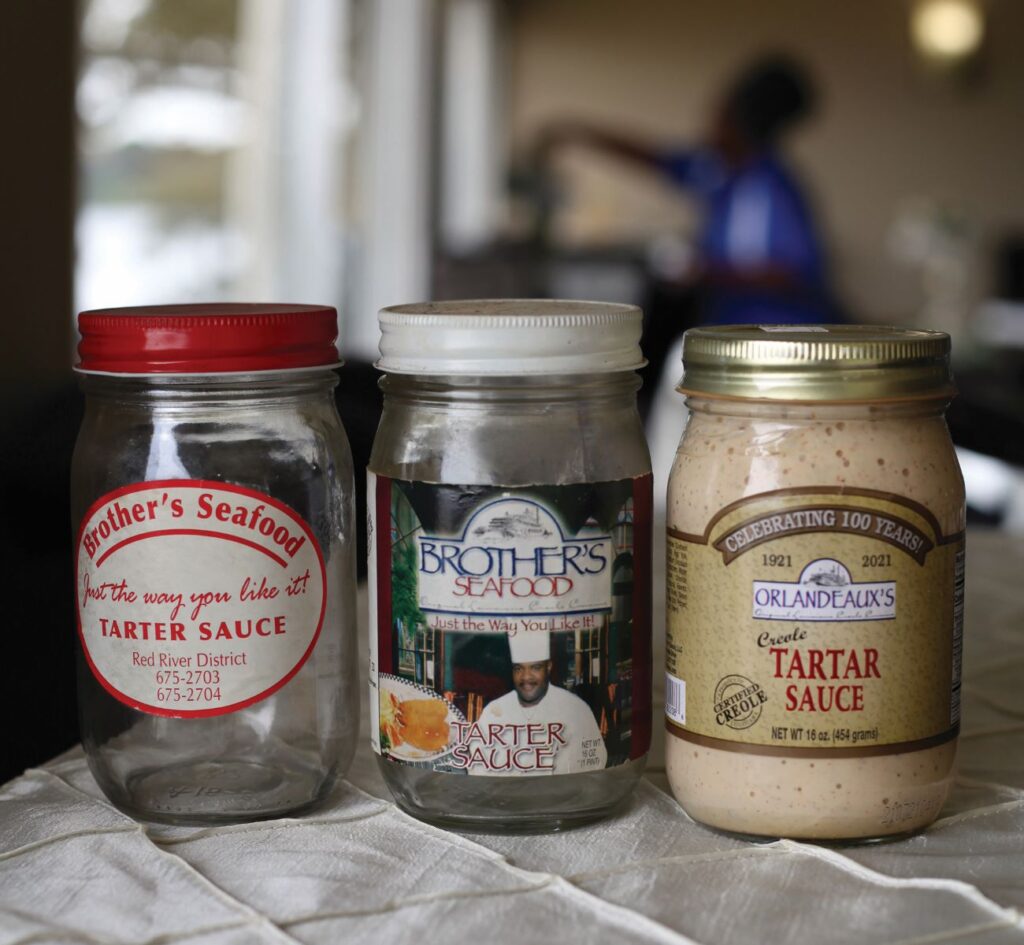
Chapeaux recently saw something that shook him up: An anonymous user posted a video to YouTube showing how to roll stuffed shrimp using his family’s techniques. Chapeaux’s late father, Orlando Chapman—a towering, mustachioed man who was known to sport an old-fashioned chef’s toque while cooking—always told him that only family members should be allowed to see the rolling process from start to finish. Chef Orlando, as he was known, would go so far as to clear the kitchen of his restaurant, Brother’s Seafood, whenever he settled in to roll stuffed shrimp or to make the restaurant’s tartar sauce, a beloved condiment more akin to New Orleans–style remoulade. Now anyone with an internet connection could see how it was done.
“I tell people all the time: You can have the exact recipe, the exact procedure, but it’ll never taste the same [as ours],” Chapeaux said, anger and betrayal audible in his voice.
Was he worried that other restaurants would watch the video and attempt to duplicate his family’s recipe and process?
It’s not even just other restaurants, Chapeaux said. “There’s a dozen people who are, right now, making this style of stuffed shrimp at their houses and selling them on the streets of Shreveport. And their claim to fame is that my father or my grandfather taught them how.”
He pointed to a platter of four golden-brown stuffed shrimp on the table in front of him. They almost seemed to glow.
“This is gold to people,” he said.
By the time stuffed shrimp appeared on the menu of Freeman & Harris Café in the late 1950s, the restaurant named for two of Chapeaux Chapman’s ancestors had been in business for more than thirty years. It was founded in the early 1920s by Van B. Freeman Jr., who was soon joined in the endeavor by first cousin Jack Harris. Both men moved from the rural community of Campti, Louisiana, to the then-booming city of Shreveport, seventy miles to the north, sometime between 1910 and 1920. Their move was part of a demographic shift taking place in cities across America during the early years of the Great Migration, when many people of color moved out of the South altogether and others relocated from the countryside to urban centers in search of happier, safer lives.
The first home of Freeman & Harris Café was a tiny stall on “the Avenue,” a bustling district of minority-owned businesses on the western edge of downtown Shreveport. Along the Avenue, which stretched for five large city blocks, Shreveport’s marginalized populations could patronize doctors, lawyers, grocers, and barbers by day and could dance, drink, and dine by night. In addition to numerous Black-owned entertainment venues, a Black-owned newspaper, The Shreveport Sun, made its headquarters on the Avenue. Artists like Jelly Roll Morton and Count Basie were among the touring entertainers who performed next door to Freeman & Harris Café among the rooftop gardens of the Calanthean Temple, a four-story office building owned by a Black women’s organization called The Grand Court Order of Calanthe. The city’s first Chinese restaurant, Canton Café, was located on the Avenue, as well as the first few locations of a long-running, Jewish-owned chain of liquor stores called Cuban Liquor. Business at Freeman & Harris was brisk, and the café eventually outgrew its small, shared storefront on the Avenue. In 1936 the restaurant moved into a larger space in the historically Black neighborhood of Allendale, where it would function as a central hub of social life for sixty years.
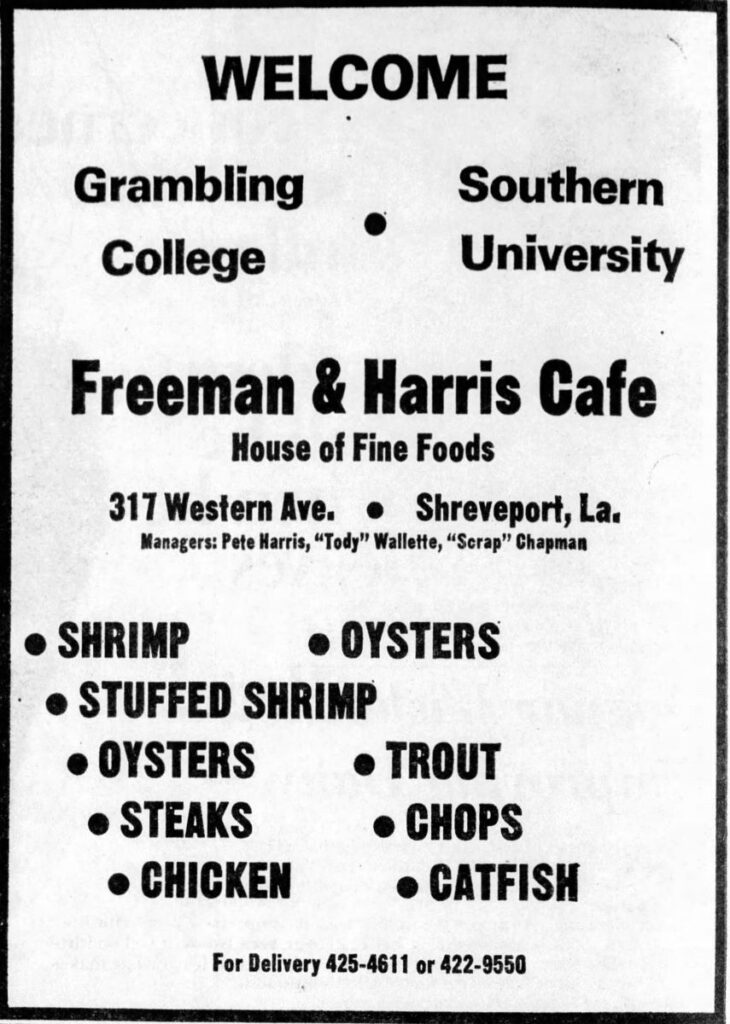
Van B. Freeman Jr. passed away in 1947. Jack Harris continued to run Freeman & Harris Café with the help of three younger relatives, all of whom had worked in the family business: Harris’ nephews Arthur “Scrap” Chapman and Pete Harris, and Freeman’s nephew Wilmer “Tody” Wallette. The youthful influence brought changes to Freeman & Harris Café in the years that followed. Some of those changes were small but meaningful adjustments, such as manager Pete Harris’ decision to change the restaurant’s slogan from “House of Good Foods” to “House of Fine Foods” in 1957, telegraphing a more sophisticated sensibility. Other were more dramatic.
The boldest of these reforms, according to local lore and written histories of Shreveport, was that Freeman & Harris Café began seating white customers and Black customers together in the same dining room in the fifties, making it the city’s first integrated restaurant. Whether or not this is true, it has been repeated often enough to find its way into history books. In his book Shreveport, local historian Eric Brock wrote that “Freeman & Harris Café became the first to offer equal seating to white customers as well as [B]lacks.” The idea that a Black-owned restaurant could “offer equal seating to white customers” in the Jim Crow South inverts the racist dynamic being addressed by the Civil Rights Movement and desegregation: white-owned businesses refusing equal service to Black patrons. No laws ever governed where white diners could or could not eat. Freeman & Harris Café would not have had legal standing to refuse service to white customers, but that hasn’t prevented the local spread of the belief that Freeman & Harris Café integrated its dining room a decade prior to the passage of the Civil Rights Act of 1964.
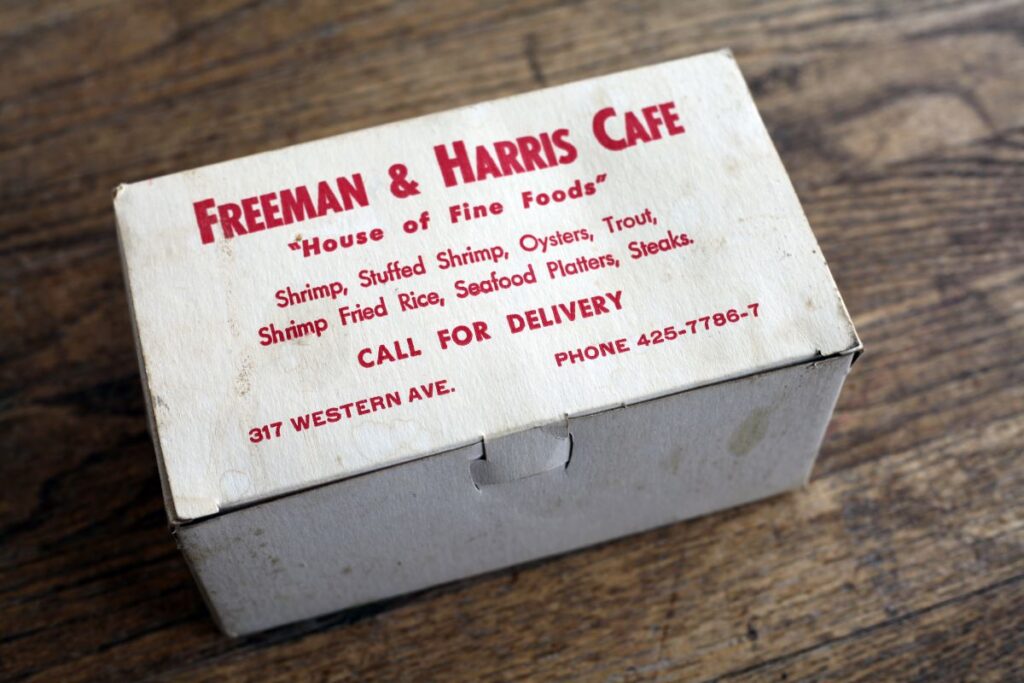
Freeman & Harris Café’s signature stuffed shrimp likely debuted during the holiday season of 1958, when weekly advertisements for the restaurant in The Shreveport Sun first mentioned the new house specialty. There are several competing accounts of the recipe’s origin and creators. One version of events proposes that longtime restaurant manager Pete Harris brought the idea for the dish back from a vacation in Galveston, enlisting kitchen leadership to help recreate what he’d eaten at a Black-owned seafood restaurant there called Jambalaya Café. Pete Harris did not cook, so the effort to reverse-engineer Jambalaya Café’s stuffed shrimp—which began appearing in Galveston newspaper ads in the early 1950s—would have been collaborative by necessity. Another account suggests that the recipe was singlehandedly created by longtime Freeman & Harris cook Eddie Hughes. Still other versions credit second-generation co-owner Tody Wallette or Chapeaux’s grandfather Brother Chapman with inventing the dish.
One thing is certain: Stuffed shrimp was a hit. As decades passed and awareness of this local delicacy grew, several well-known Freeman & Harris Café chefs departed to open their own competing restaurants. Following the 1976 death of Tody Wallette, who had raised him as a father, Eddie Hughes parted ways with Freeman & Harris Café to open Eddie’s Restaurant in 1978. Connie Robinson, a longtime stuffed shrimp roller for Freeman & Harris, went on to open C & C Café. The 1992 death of Pete Harris triggered the departure of several key Freeman & Harris Café staffers, who opened Pete Harris Café as a tribute to their mentor in 1993. Chapeaux’s father, Orlando Chapman, cooked at Pete Harris Café until he departed to open Brother’s Seafood following Brother Chapman’s death in 2003. In this way, what began as the house specialty of a single Shreveport restaurant proliferated into a citywide food tradition. Chapeaux sees Orlandeaux’s as a direct descendant of Freeman & Harris Café, and himself as its fifth-generation keeper of the flame.

It was 10:55 a.m. when Chapeaux climbed down from the roof in full view of the large crowd that milled about waiting for him to unlock the restaurant’s front door. Chapeaux does not allow anyone else to unlock the door; it is a ritual he keeps for himself. As he made his way through the crowd, many customers greeted Chapeaux by name or ribbed him for hanging his own Christmas lights instead of having an employee do it. Every move he makes at the restaurant is public, and even his most insignificant choices are likely to attract commentary. Stone-faced, Chapeaux turned his Saints cap backwards and slipped the key into the lock. As the first of three Friday lunch crowds shuffled past Brother Chapman’s portrait into the sunny, sprawling dining room, they were met by the scents that have followed five generations of Chapman men home from work late at night, six nights a week: catfish bubbling in clean oil, sweet cornbread rising in the ovens, blue-crab meat simmering in a secret mirepoix.
Maybe Chapeaux recognized Little Jerry’s plight. The awkward twenty-three-year-old had been dropped suddenly, like a basket of stuffed shrimp into hot oil, into the fragile clockwork of a busy restaurant kitchen with a century-long reputation to uphold. Maybe Chapeaux thought back to that horrible day—Tuesday, September 24, 2013—when he suddenly became the sole steward of the family business. That afternoon, while Chapeaux was attending a training session in Dallas, his forty-nine-year-old father suffered a fatal heart attack while boating on Cross Lake. When he received the news, Chapeaux was a twenty-four-year-old oilfield engineer who had not yet learned the ropes of the family business. He thought there was still plenty of time. Maybe Chapeaux refused Big Jerry’s request because he wished that someone had come along and forced him into the kitchen alongside his own father before it was too late.
“I’m thirty-three now, and I’ve got people who work here for us who are double or even triple my age,” Chapeaux said. “They saw me when I was a kid, running around the place, and as a teenager playing around when my dad wasn’t looking. Now I’m in this role of having to tell them what to do and how to do it. It can be challenging for them sometimes to call me ‘Boss.’”
When he feels overwhelmed by the more challenging aspects of his new role, Chapeaux calls on four generations of Chapman men who were called “Boss” before him. When he requires confidence in the kitchen, Chapeaux leans on his grandfather Brother. For the strength to address employee behavior, he turns to the spirit of his father, Chef Orlando, a notoriously vigilant taskmaster. When he needs to deal with a disorderly or combative guest in the restaurant’s bar, he summons the spirit of the man he called “Paw-Paw Scrap,” who was given his nickname due to a raw talent for brawling.
“I don’t act like that on a normal basis, in my regular persona,” Chapeaux said. “But when I have to be stern and put somebody out, I’m Scrap. He comes through.”
People don’t change when they’re comfortable. People change when someone sticks them on the fire and leaves them there. They may panic, squirm, and cry out for relief. They may curse their new burdens, but they have to be left there on the fire in order to become the person they are meant to be. They may not know what they’re doing at first, but once they’ve done it more and more, they understand.
After many years in Shreveport, Chris Jay now lives in Round Rock, Texas. He is a new father and an enthusiastic thrifter.
Top photo by Chris Jay
SIGN UP FOR THE DIGEST TO RECEIVE GRAVY IN YOUR INBOX.