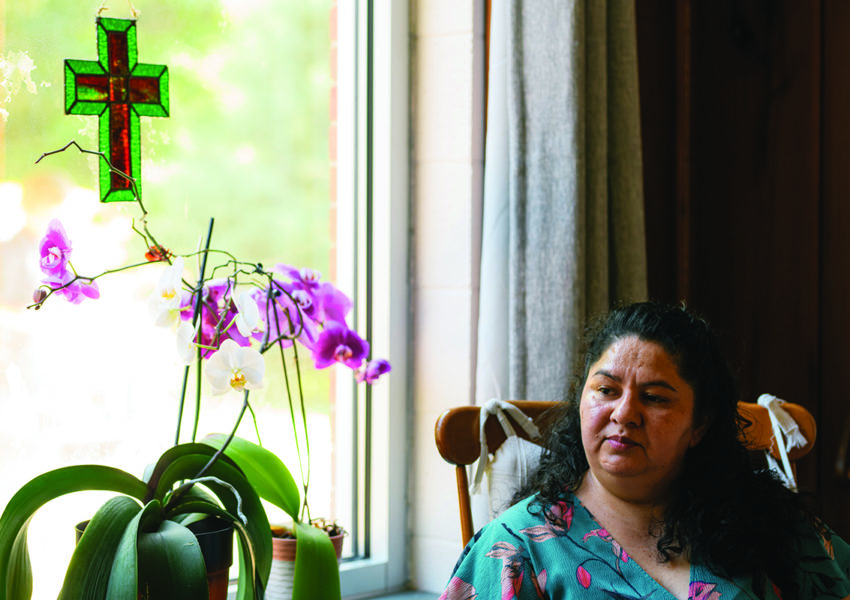

The Kindness of Strangers A meal couldn’t bring back a father detained by immigration authorities. But arroz con pollo brought some small comfort.
by André Gallant
I planned to fix a dish I’d never made for a family I’d never met. Arroz con pollo—a simple, familiar meal—would comfort the kids, their mom said. They were having one of the worst days of their lives. My cooking, if it pleased them, could soothe their wounds.
Hours earlier, as I prepared tomato sandwiches for my wife and daughter, a fellow activist in the Athens, Georgia, immigrant rights movement texted me about Elena (not her real name), her two children, and what happened to her husband in the predawn gloom just that morning.
Pounding and yelling had come from outside the duplex. A request for a warrant came from the occupants inside. A boot stomped through a door panel. A crowbar cracked open the door and blinding flashlight flooded in. Immigration and Customs Enforcement (ICE) agents, standing on the threshold, demanded the father, Luis, exit the house. A few months ago, he’d been arrested during a traffic stop one county over. Elena refused to let him go without a warrant, but the men wouldn’t leave and their kids were crying. So they gave in. Dad disappeared in an unmarked sports-utility vehicle.
I relayed the details to my wife, Jo, as I scraped the mayonnaise jar. News of another violent immigration arrest in our city and the family it unsettled wasn’t news at all. This was the third such case that week, but the first story I shared with her. The specifics shook us. They lived nearby. We thought we should reach out. Jo’s manners kicked in. She asked, “Can we bring them dinner?”
Her request connected the grief of a family left behind after an immigration raid to that of the bereaved. Southerners respond to death by filling the bellies of the living. It’s the polite and neighborly thing to do. So why not extend the kindness to los nuevos sureños, the new Southerners who work, learn, and live alongside us, to balm the sort of loss they explicitly feel?
Elena’s husband wasn’t dead, but he wouldn’t be coming back. Within days of the arrest, Luis would be sent to a detention facility in south Georgia. Deportation would follow five months later. Elena would have to carry on as if he’d died. She would need tremendous support in the coming days, weeks, and months. In my mind, food was the least of her concerns. But Jo considered the basics: Providing a hot meal tonight was what we could do.

As a permanent U.S. resident from Canada, I cooked with apprehension across culture for Hondurans. I asked Mexican friends for advice on how to not screw up classic chicken and rice, but their counsel arrived too late. I did my best by marinating the chicken with Maggi seasoning, before browning the meat. I boiled the rice with peas and carrots, then stirred in chopped fresh tomatoes. I held my breath and hoped my rookie attempt would please my Honduran neighbors.
I volunteer with a group called Support for Immigrant Families in Crisis (SIFIC), which aids families impacted by deportation, but I don’t involve myself directly with those affected. They’re universally Spanish speakers. I’m only comfortable chatting in the language. In times of crisis, immigrant families need advocates who can decode English-language documents and judges’ decrees. They need accompaniment in court. My colleagues perform this social work, and I support their efforts as a fundraiser.
The U.S. economy offers working-class immigrants a duplicitous invitation to this country. Through subtle and overt appeals, we ask them to work in our fields, slaughterhouses, and homes. But we force most laboring migrants to enter by illegal means. To then hunt them amounts to gaslighting.
I refuse to treat undocumented migrants as a scourge or rulebreakers. They’re our neighbors. When they’re in pain, we should help. Doing so isn’t always easy. By cooking for Elena and her family, I learned it doesn’t have to be so complicated.
I drove two aluminum pans full of rice and chicken to Elena’s sister’s house that evening. Elena somehow went to work after the arrest, so her sister picked up the kids after school and took them to her house. They’d be staying there until their mom, who no longer felt safe in their old place, found a new home. Through an open door, I heard Elena’s elementary-aged daughter and son playing. I took some comfort in the sound.
The next day, I visited Elena at the duplex. We’d exchanged texts, but this was the first in-person meeting. We talked as she cleaned up, ready to move.
I placed grocery bags filled with milk, fruit, and eggs, bought with money donated by friends, on the kitchen counter. We made plans to move the family’s belongings to a nearby apartment, and I promised SIFIC would help pay for the emergency relocation. Thinking of my own often-picky daughter, I asked Elena if her kids suffered through my arroz con pollo. Oh no, she said. “Qué rico.” It was delicious. They’d eagerly eat leftovers that night.
I’d bring dinner again tomorrow. What would they like? Nothing special, she said. Her kids love spaghetti and meatballs. We hugged goodbye, and I took notice of her pregnant belly, five months along. A future opportunity, I noted, to bring Elena’s family a meal.
André Gallant is the author of A High Low Tide: The Revival of a Southern Oyster, just out in paperback from the University of Georgia Press.