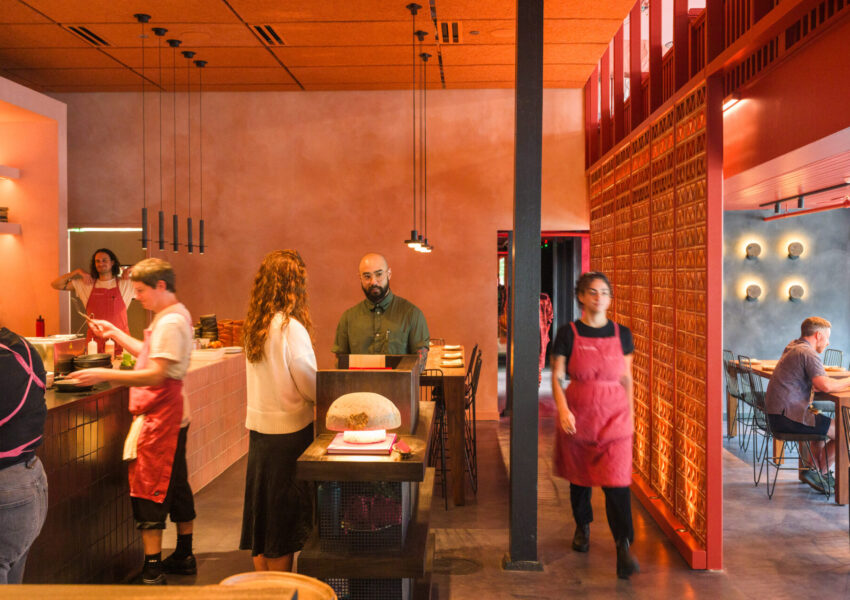
El Sur Latino: From Brownsville to Greenville At Comal 864, chef Dayna Lee brings a taste of the Rio Grande Valley to upstate South Carolina.
by Clinton Colmenares
Photos by Jeremy Fleming
Dayna Lee lays a pound of sliced bacon on the sizzling flat top. Next to the bacon, she squirts a little oil from a squeeze bottle and sets a couple of corn tortillas on top. The Saturday breakfast rush is about to begin.
Lee and her husband, Anthony Marquez, own and operate Comal 864 on Woodside Avenue in Greenville, South Carolina. (864 is a nod to upstate South Carolina’s area code.) The neighborhood, City View, has yet to gentrify in the way that much of Greenville has over the last two decades. You won’t find a micropub or a boutique hotel around here. Within two blocks of the restaurant are a couple of tire shops, a shade tree mechanic, and an aged mobile home park.
Lee didn’t go to culinary school. She never staged or cooked on a line. Before opening Comal 864, her restaurant experience came from years of managing a Texas Roadhouse in her hometown of Brownsville, Texas. But for years she’s nurtured a drive to cook for people in her adopted hometown, motivated as much by a call to service as by culinary passion.
In 2016, Lee and Marquez left Brownsville for Greenville, where Marquez had taken a job as an engineer. At the time, Lee was twenty-four, and her son, Abel, was two. It was her first time outside the Rio Grande Valley, where more than 90 percent of residents are Latino. (Lee’s father was not Latino, but she grew up primarily with her Mexican American mother, stepfather, and grandmother.) Greenville, by contrast, is only 6 percent Latino. She didn’t know anyone. A twenty-hour drive separated her from her family. She found the traffic dizzying and the Blue Ridge foothills disorienting in contrast to the flat landscape of south Texas. She didn’t leave the family’s new apartment for two weeks.
Though Lee learned to cook alongside her grandmother as a child, she didn’t imagine a career in food. When she first began cooking in Greenville, she just wanted Abel to grow up with the smells and flavors of her home—from the homemade tortillas with stewed meat her grandmother packed for her stepfather’s lunch to the pork and raisin tamales the family made together for the holidays.
“The scarcity of our food was what propelled me,” Lee recalls. “I was desperate for a recreation of what I had been eating back home. I wanted to feel that again.”
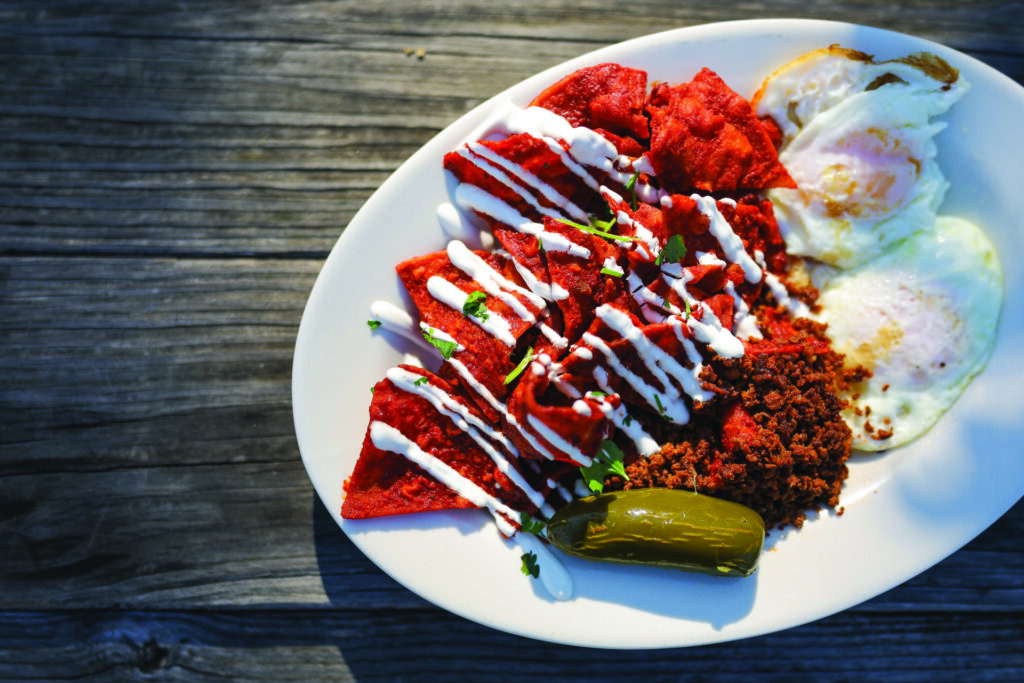
She tried, and failed, to find familiar dishes in Greenville’s restaurants. The food at Mexican restaurants that catered to white patrons tasted bland to her. Other Latino-owned restaurants that served a primarily Latino clientele tended to specialize in Honduran, Salvadoran, or Guatemalan cuisine.
With no recorded family recipes, she cooked from memory. Some dishes turned out awful. She tried them again.
Meanwhile, she took a job that included arranging catering for events. She began handing out leftovers to unhoused people in downtown Greenville. Giving food away became her way of contributing to the community and began helping her find her place in it.
At home, Lee’s cooking improved, becoming recognizable to Anthony and Abel. The flavors and textures were reminiscent of her abuelita’s guisados. In July 2019, she had the notion to make breakfast tacos—eggs and potatoes, eggs and chorizo—and sell them at local breweries on the weekends. At first, she admits, “they were terrible.” But she was determined to improve, and to find out if she could make a business out of selling tacos. The food got better, and within a few months, she was selling $500 worth of tacos in a few hours, four to five days a week.
A regular at one of the breweries, a commercial realtor, called Lee one day. He knew of a small building that would be perfect for her if she wanted to open a restaurant. The place had been a bistro that moved into plusher digs in a converted textile mill down the street. Lee was enjoying the low overhead and fairly easy cash of selling tacos. She wasn’t looking to open a restaurant, but she was also pulled by the opportunity to do more—more cooking and more for her neighbors.
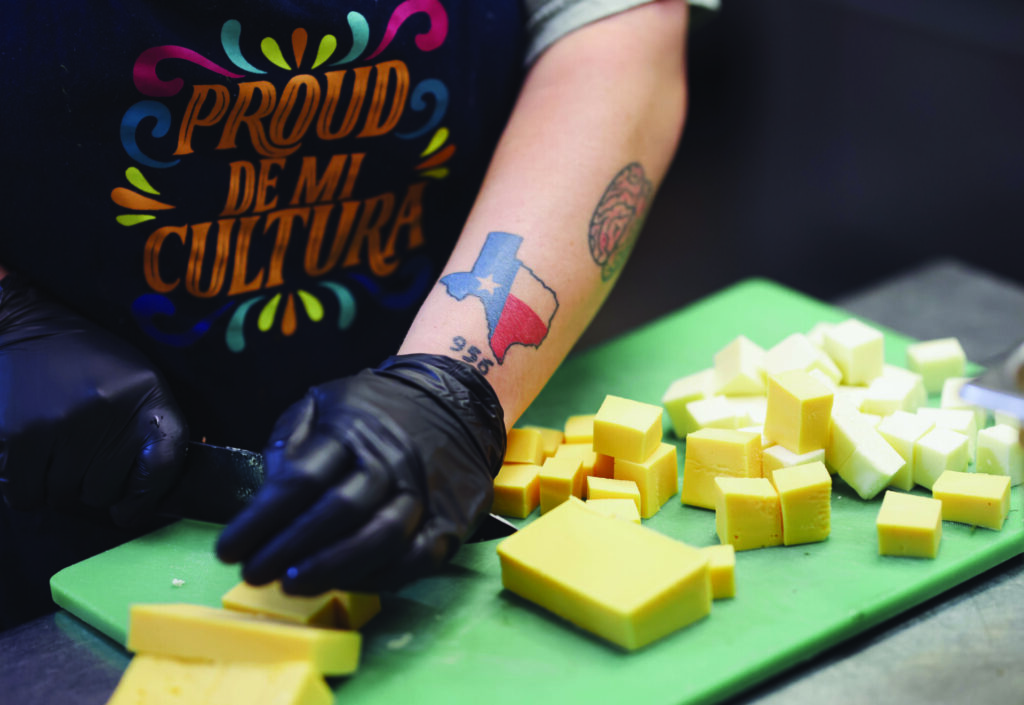
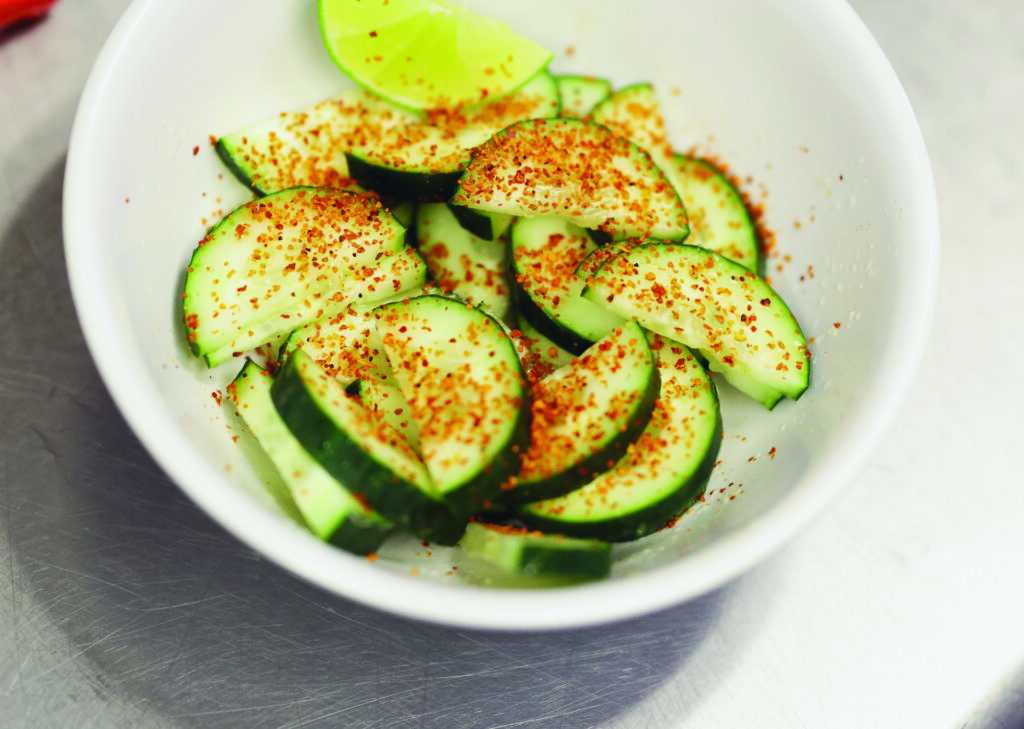
Lee and Marquez signed the lease in September 2021. After months spent scrubbing and prepping the space, they opened Comal 864 that November. Some of the items on Lee’s menu are by now familiar to many, if not most, diners in the US South: quesadillas, tortas, and tacos filled with bistek, chorizo, nopales, chicken, or al pastor pork. Others have a more specific sense of place, revealing Lee’s roots on the Texas-Mexico border. There, she explains, the palate leans tangy, sweet, and sour, punctuated with spicy heat. Pickled pork rinds with watermelon, oranges, or other fruit are a frequent treat. So are hot dogs topped with salsa. At Comal 864, customers can elect to add Hot Cheetos or queso to any torta or burrito, a practice she says is common around Brownsville.
Lee wants her customers to eat well. Even so, she says, “I love food for what it does. I don’t love food because it’s food.” In those early Greenville days, food was a conduit back to Brownsville. With the opening of Comal 864, it became a jumping-off point for community efforts.
Last December, Lee held a coat drive at the restaurant. She regularly leaves items like school supplies and baby wipes on the picnic tables in front of the restaurant, where neighbors can pick up what they need. She sat in a dunking booth during a local pub’s Pride festivities. Every day, Lee says, someone walks in and asks for a free meal. She responds by handing over a heaping plate, no questions asked. She’s trained her staff to do the same. By her count, as of June 2023, Comal 864 had given away at least 3,700 tacos.
This past spring, Lee was invited to cook at Charleston Wine + Food, a popular festival. She met Luis Martinez, an Asheville, North Carolina–based chef consultant and the owner of Tequio Foods, which works with indigenous farmers in Mexico to import heritage ingredients to the United States. “In the last couple of years, the word ‘chef’ has been misused,” Martinez says. “For me, a chef is a leader, someone who is making a change in a community. I feel like what she’s doing is a chef’s role.”
Lee believes Greenville might have accepted her, in part, because of her fair skin. Still, says Evelyn Lugo of the South Carolina Hispanic Chamber of Commerce, the success of Comal 864 will inspire other Latina-owned businesses. “In every single Latin American country, women are more on the second, maybe third level,” says Lugo. “The man is always here [at the top], the women are always at home, cooking, taking care of the kids.”
But Lee?
“Here she is, being the face of her own business,” Lugo says. “Trabajando duro. Really, really, really hard work.”
Lee embraces the challenge. “I’m a good example of tenacity, of being scared but doing it anyways.” Growing up, it was expected that she would one day be a wife and mother—not a business owner or community leader. “So to be able to be a good mom and be a good wife and still do this kick-ass shit, that’s tenacity.”
Back at Comal’s flat top on Saturday morning, Lee spoons eggs onto the sizzling surface then places chorizo on top, so the meat doesn’t burn. It’s a cooking trick she learned, like all the others, by trial and error. She slices a hot dog lengthwise and places it on the grill. After a few minutes, she folds the egg, chorizo, and hot dog into a warm tortilla and hands it across the counter to Marquez. The two of them grew up on this dish, weenie con huevos. It’s a south Texas staple, now at home in Greenville, South Carolina.
Clinton Colmenares grew up in Texas with family roots in Oaxaca, Mexico. He lives in Greenville, South Carolina, and works in communications at Furman University.
SIGN UP FOR THE DIGEST TO RECEIVE GRAVY IN YOUR INBOX.