good ol' chico: sell what is true SFA honors Eddie Hernandez with Lifetime Achievement Award
by Gustavo Arellano
Photos by Bita Honarvar
A Lifetime Achievement Award is a funny thing.
It’s an honor bestowed by peers to acknowledge the honoree’s talent and accomplishments. A testament to a brilliant career, to a legacy that future generations can look to as inspiration.
But it also implies that the winner is at a point in their life where they can reflect—that is, there’s no more reason to look ahead, because their best days have already passed.
Even though I’m just forty-four, I’ve received similar honors from journalism associations in southern California and from my alma mater, Orange Coast College. I’ve always told the audience in my acceptance speeches that, while I’m flattered and humbled by the recognition, I’m not done. When I talked to Eddie Hernandez, winner of the 2023 Southern Foodways Alliance lifetime achievement award, I asked whether he felt the same.
The gravelly-voiced Hernandez laughed.
“I’ll retire when I’m dead,” said the sixty-nine-year-old co-owner of the Taqueria del Sol chain, which he founded in Atlanta in 2000. “But it’s nice that people think of you as doing something with your life.
“I didn’t set [out] to be a leader or a teacher,” he added. “I just wanted to enjoy what I did. As long as you do that, I think you can go to wherever you want to go.”
Hernandez, who was born in the northern Mexican city of Monterrey, has earned all the superlatives that usually come with a lifetime achievement award. His Sur-Mex tacos made him a pioneer; an immediate star at a time when Mexican food in the South consisted of too much yellow cheese, and Latinos were just starting to establish a widespread presence. Hernandez is a role model: an immigrant who came to the United States as a young man with dreams of becoming a rock star in Texas but instead found success in a completely different profession.
He’s a multiplatform star, with a cookbook, appearances on television shows, and six restaurants in Georgia and Tennessee he co-owns with his business partner, Mike Klank. Like any good longtimer, Hernandez loves what he does—and especially where he does it.
“When I came to Georgia in ’87, I felt welcome,” he told me in a phone interview. “It was not the way that it was portrayed to me—that it was racist, it was very white, that they don’t like Latinos…. I was able to mingle with everyone. I never felt displaced.”
To this day, friends of mine who know that I write about the South still can’t believe that the region is home to vibrant Latino communities—and great Mexican food. That’s why Hernandez’s SFA lifetime achievement award made me so happy. He’s the second Latino to earn the honor, after Houston-based chef Hugo Ortega in 2017.
The award doesn’t just mean a thumbs-up to Latino contributions in the South or to the enduring success of a small restaurant chain. It’s an affirmation of a worldview that the rest of the country should take up as gospel.
Hernandez’s story is one of creative adaptation: He took the culinary traditions of his old and new homes and found delicious ways to bring them together.
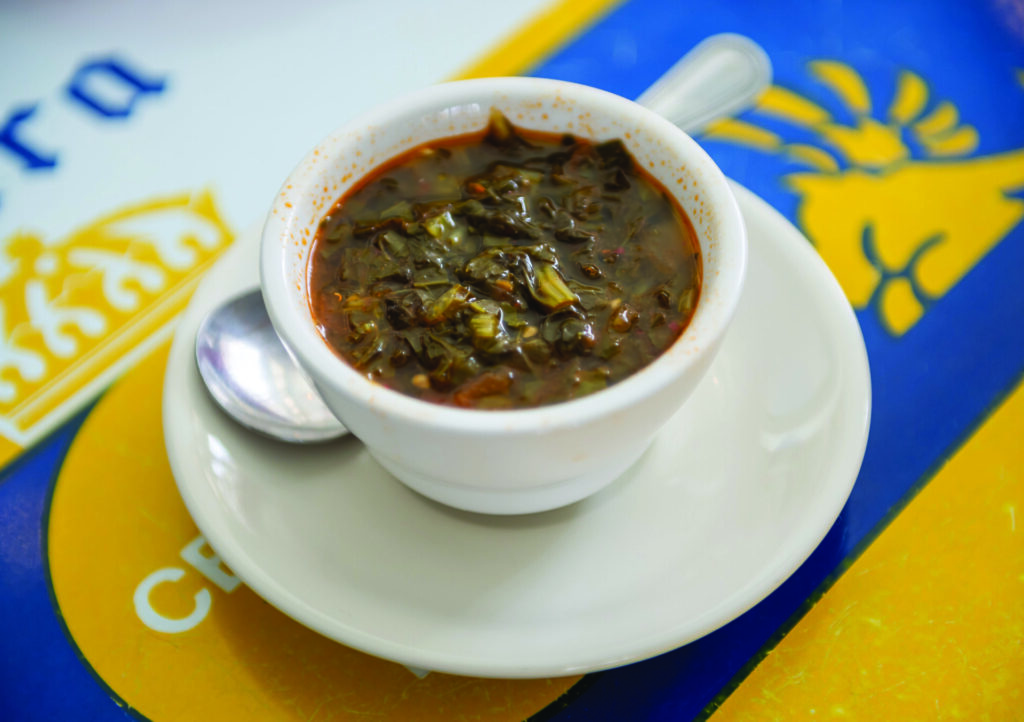
Nothing better exemplifies this than his Sur-Mex origin story. Early in his culinary career, a customer gave Hernandez a bag of turnip greens. He “had no idea what they were, no clue.” But they reminded him of quelites, a catch-all term in Mexico for tender greens served as a side. So Hernandez cooked down the turnip greens into a Mexican-style potlikker, with chicken stock instead of ham hocks and a bunch of tomatoes, garlic, and fiery chiles de árbol thrown in. Where most Southerners would use cornbread for sopping, Hernandez offered tortillas.
“Southerners like it because it’s kinda like they’ve had it,” Hernandez said, describing the first time he served them at Azteca Grill, a restaurant in south Atlanta that he began to work at in 1987. “Same with Mexicans. I integrated two cultures into one dish, and everyone is happy.”
Hernandez described Mexican food in the South at that time as mostly “heart attack recipes. The people who were cooking Mexican food were in it for the money.” He had already started to offer traditional Mexican meals like chiles rellenos and tampiqueña (a combo platter from the Gulf of Mexico region that includes meat, guacamole, black beans, and white cheese). But the success of Azteca Grill’s turnip greens taught Hernandez he could push patrons to try new concepts, as long as there was a baseline where everyone could feel comfortable.
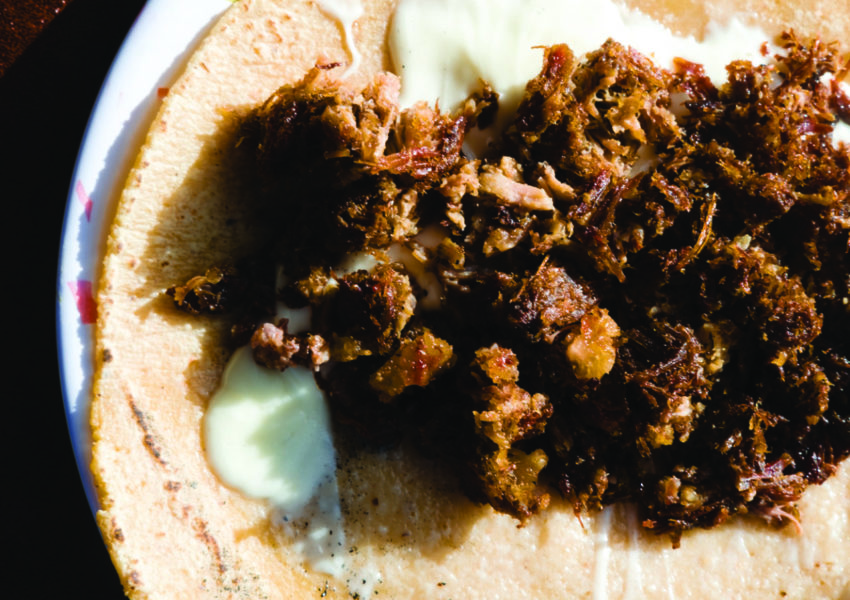
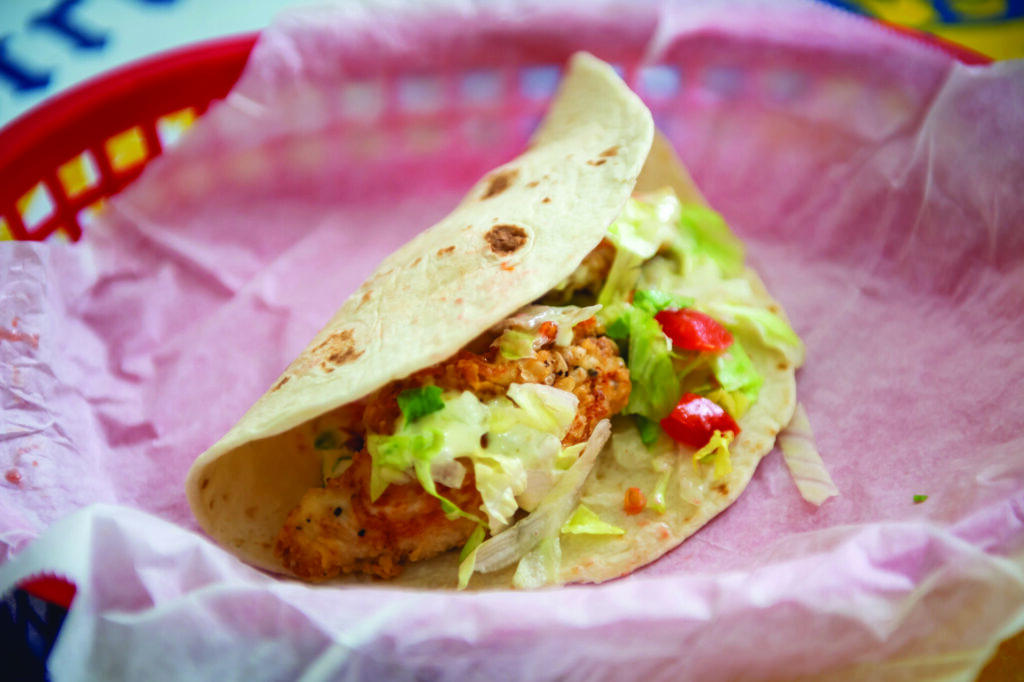
That was the philosophy behind his second breakout dish: fried chicken tacos, which he made famous at Taqueria del Sol.
“All it is is a piece of fried chicken,” Hernandez said. Southern customers “relate to that. They know what the damn thing is, but not with lime cream. Once they tried that, they knew I was good, and they were willing to try anything on the menu, because they knew that I could make it.
“Sell what is true,” he concluded. “Don’t sell a fake idea.”
I’ve eaten Hernandez’s greens and his fried chicken tacos. The veggies are hearty, with enough spice to keep your palate honest but not so much as to overwhelm it. The jalapeño-lime crema on the fried chicken tacos tempers the fattiness. Hernandez’s signature offerings still feel innovative, decades after he developed them.
Even as Hernandez said he has no interest in slowing down, he’s easing into, if not a final act, then definitely a place that allows him to look back yet also forward.
Hernandez has seen the rise of Mexican cuisines in the South in the thirty-six years since he entered the business, and he welcomes it “taking over.” He’s not worried about losing fans to competitors, joking, “I know expensive restaurants in Georgia selling eighteen-dollar tacos. I sell them for three [dollars], and just as good as anything they can do.”
He’s thinking about opening one more restaurant, while also planning a return to music as a producer, because it “has always been my thing.” Hernandez said he feels like “I’m thirty-four. My body tells me I’m not, but I feel like I’m ready for another fifty [years].”
More importantly, he wants to help out the next generation. Shortly before our interview, he attended a meeting to help metro Atlanta Latinos enter the restaurant business.
“I already got my fifteen minutes,” Hernandez said. “I want the ones who are coming up to push forward, so that others can say, ‘I can be one of them.’ I want to encourage the Latin guys who don’t know how cuisine can change your life.
“Just the fact that I started this thing doesn’t make me better than anyone,” he concluded. “Learn from what I did, and make it even more mainstream. The more people want to know how to eat [like I cook], the better everyone is going to be.”
Gustavo Arellano is a columnist for both Gravy and the Los Angeles Times.
SIGN UP FOR THE DIGEST TO RECEIVE GRAVY IN YOUR INBOX.