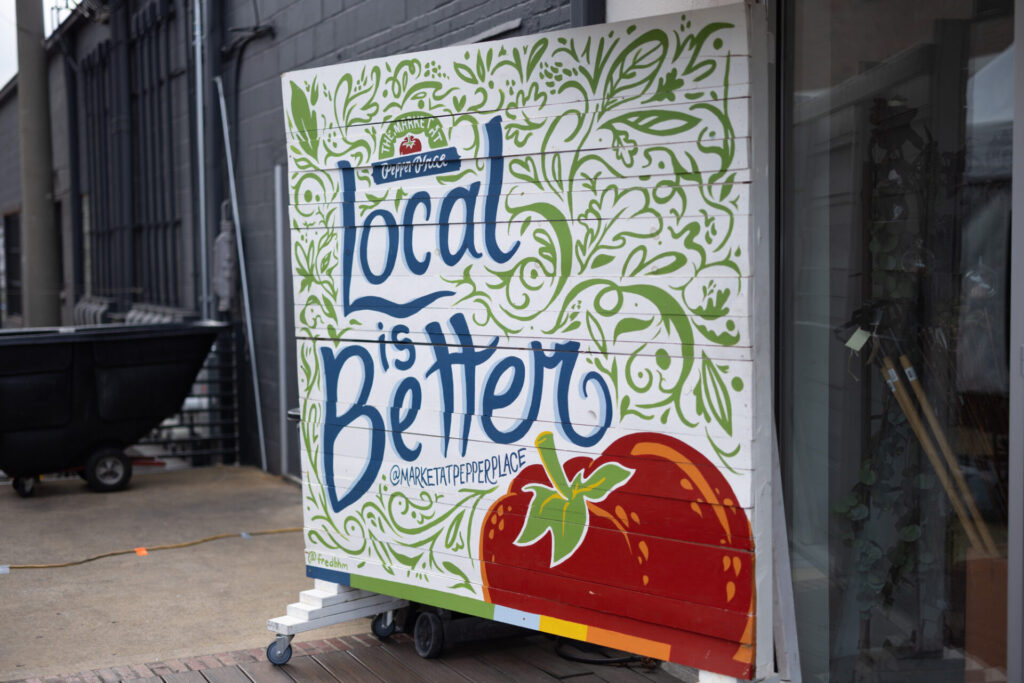

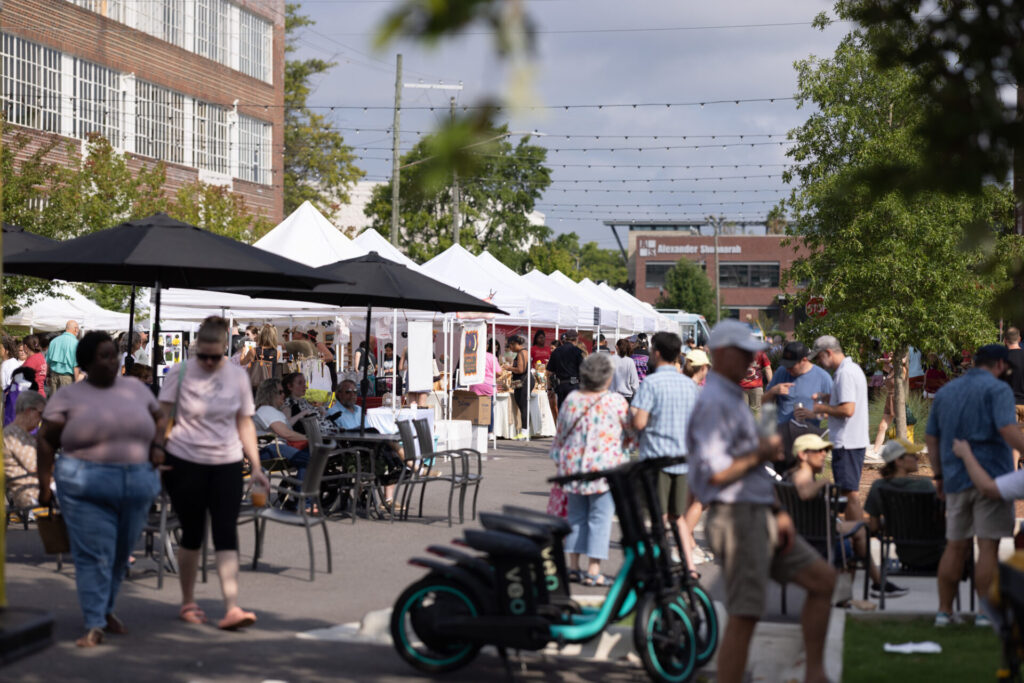
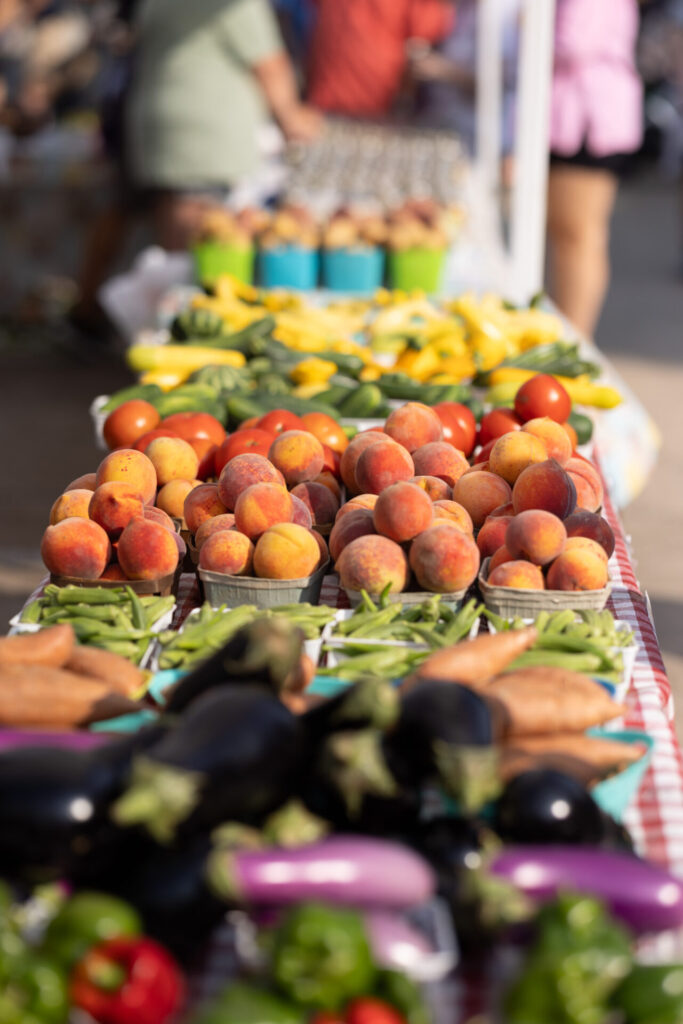
 Since its start in 2000, the Market at Pepper Place connects Alabama farmers, makers, and cooks with locals in Birmingham. Every Saturday morning, over eighty vendors populate the parking lot of the Pepper Place building and 29th Street South. They sell produce, preserves, meat, dairy, and other hand crafted items proudly produced with care in Alabama. Locals flock to the Lakeview District to buy locally grown and made products for sale. It’s a place where people shop, eat, and gather to build community around local food.
A weekly farmer’s market like Pepper Place requires dedicated staff and vendors. Market operations managers set up rows of white vendor tents a little after midnight every Friday night. Vendors travel from towns and cities across Alabama. Farmers with trucks filled with vegetables and meat travel from Cullman and Talladega to arrive at the market by 6:00 AM to set up their tent. “When you get here as a customer, there’s no way you would know that we’ve been here since 5 a.m.,” muses market manager Lisa Beasley. “We have a crew of amazing guys that come here at midnight and start setting out tents and tables, and another group comes in and actually kind of pops the tents out and actually sets everything up the way it needs to be.”
From the very beginning, the market focused on promoting and supporting farmers, cooks, and makers from Birmingham and the surrounding regions within the state. Vendors aren’t just reselling produce or goods. “Everything is Alabama, all the farmers, all the food, all the art,” proclaims Beasley. The emphasis on Alabama grown and made products creates an opportunity for residents to support and build relationships with farmers and artisans growing and making in their backyard. “We might know the manager at a grocery store, and we might know the person at the register, maybe, but we may not know them either. . . But here, you know their names. You know their grandkids’ names. You know that a fence fell, and their pigs got out,” relates vendor Nancey Legg. “So, it’s a really interestingly deep relationship that you have with the market and with the people, whether they’re customers or vendors or whatever.” That opportunity, in turn, creates a rich local food web, connecting urban and rural communities alike.
The market isn’t just a community space. It also serves as a major economic driver for the Lakeview District. “An in-town farmers market can be a multiplier. It can contribute to other businesses around it thriving, as well as, of course, the first and most important business, the farmer, to thrive,” says Cheryl Morgan, an architect, urban planner, and resident of Downtown Birmingham. She has seen that multiplier effect firsthand as a longtime market attendee. “Young professionals, empty nesters, have begun moving back into our Downtown, partly because they have some of these things that are not only important in terms of eating healthier, important in terms of having choice about what you eat, but have given them a sense of community, a destination that is fun, and you know you’re gonna run into somebody you know.” People shop. They mill about. They catch up with old friends and make new ones. Over rows of peaches and pastries, they form and sustain a community.
The Market at Pepper Place Oral History Project will be published in Spring 2026. Follow along to learn more about the farmers, chefs, makers, managers, and volunteers who make the Market at Pepper Place. To learn more about the Market, visit their website.
Special Thanks to Leigh Sloss Cora, Lisa Beasley, and Hannah Henderson for their guidance and support during this project.