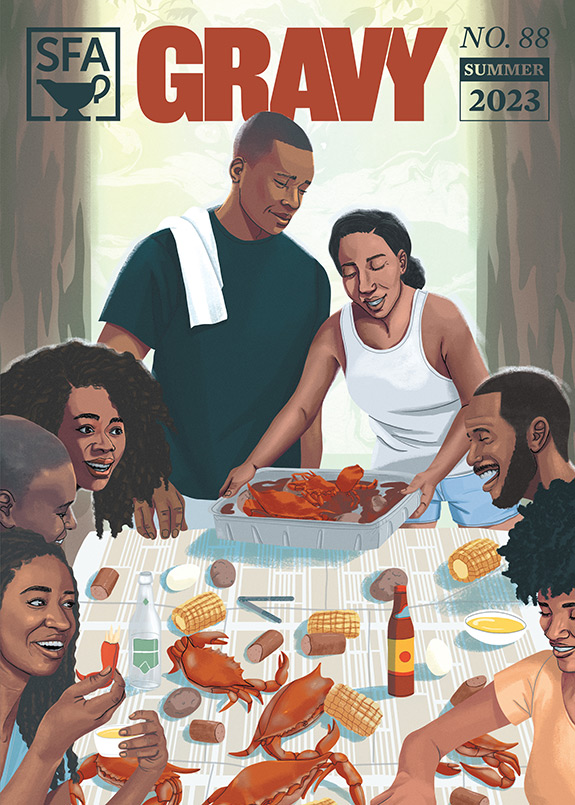

In “A Muddy Future for Louisiana Crawfish,” Gravy reporter Eva Tesfaye traces the aftermath of the summer of 2023, when a severe drought in Louisiana devastated the 2024 crawfish season. The dry soil and extreme heat killed the crawfish while they were still burrowed underground, meaning when farmers flooded their fields in the fall, they found their harvest would be dismal for the spring. That caused both farmers and consumers to suffer. In Louisiana, where crawfish are normally around $3 per pound, prices reached as high as $9 a pound. In Texas, it was even higher, around $12 a pound.
Tesfaye followed this story while it was happening, and it left her with a new question: With climate change bringing more extreme weather, are there ways to protect the state’s beloved mudbugs? To answer that question, she talked to Michael Moreaux, a crawfish farmer experimenting with different agricultural practices to attempt to produce healthy crawfish that can weather anything.
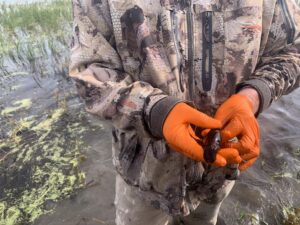
By focusing on the health of his female crawfish, using native grasses to feed them and filtering the water in his ponds, Michael seems to be producing tasty, resilient crawfish. He wants farmers and academics alike to take a look at his work, but the way the crawfish industry is set up makes it difficult for farmers to innovate, and academia doesn’t have enough crawfish specialists to solve all the problems threatening the state’s harvest.
One person interested in Michael’s methods is the young farmer Bruno Sagrera, who is struggling to break into the crawfish industry. Having grown up on a crawfish farm, he believes there are dire problems with the way crawfish are farmed today, but can’t get his family to buy into the practices he wants to try—so he’s on his own.
Both Michael and Bruno want to improve crawfish farming practices so that Louisianans can continue to eat the beloved mudbugs for generations to come.
Eva Tesfaye covers the environment for WWNO’s Coastal Desk. Before joining WWNO, she reported for Harvest Public Media and the Mississippi River Basin Ag and Water Desk. Eva was also a producer for NPR’s daily science podcast, Shortwave. A graduate of Columbia University, she started her journalism career as an NPR Kroc Fellow. She grew up moving around Africa and has lived in Uganda, Rwanda, Sudan, South Africa, and Kenya.