
Feeding Niriko From rice soup to gumbo broth, a son of two cultures learns from his parents’ palates.
by Lolis Eric Elie
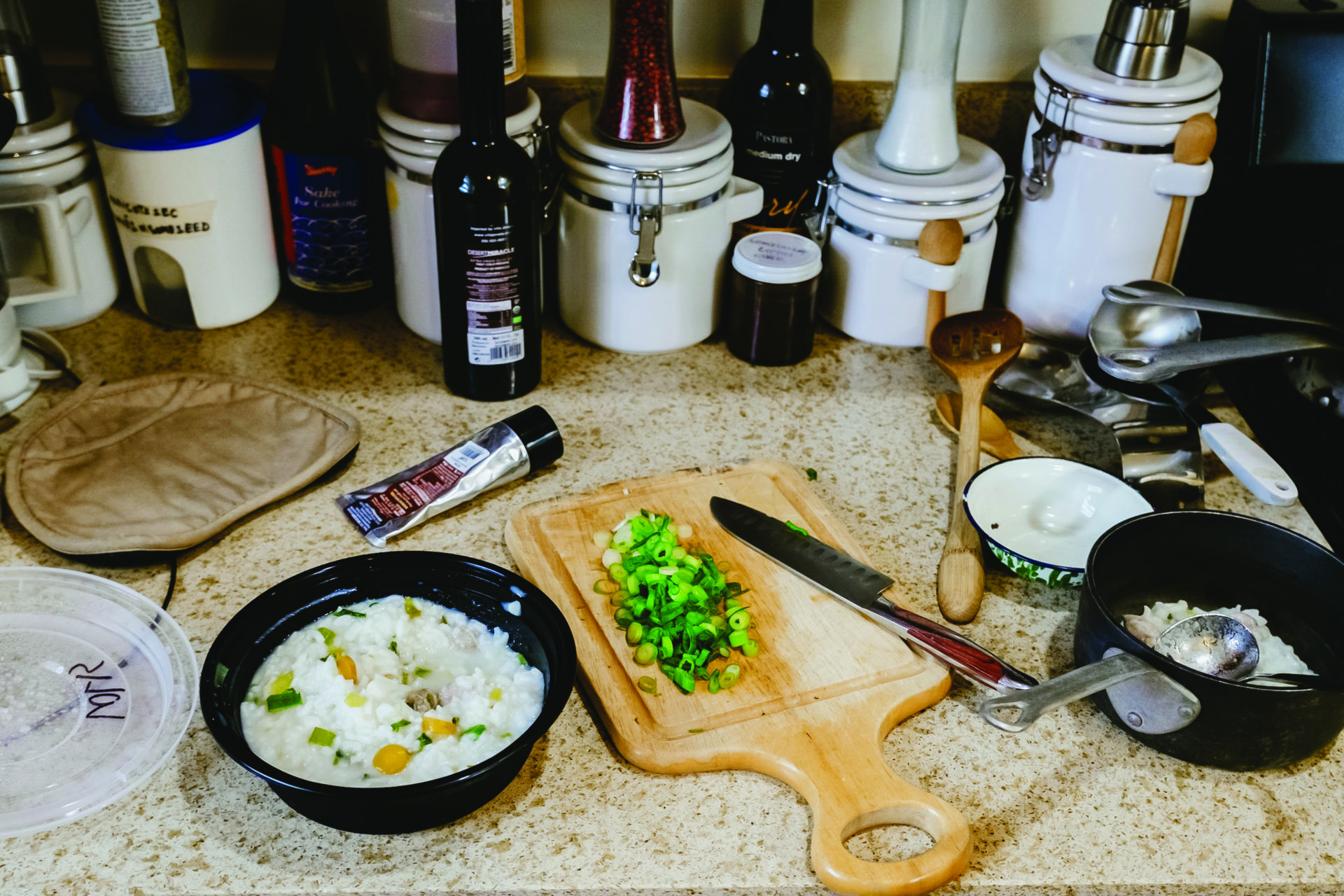
The argument could begin at breakfast, but even I’m not that stupid. As my wife prepares rice soup for my son, I hold my tongue.
In the United States and Western Europe, there is a canon of acceptable breakfast dishes. There are grains, eggs, smoked or cured meats, pastries, and breads. Even in New Orleans, the culinary outlier that gave birth to me, we don’t drift far from American breakfast tradition.
I have long taken the list of acceptable breakfast foods to be a kind of gospel. Somehow it simply made sense that those kinds of foods were most appropriate for breaking the fast and other foods—spicier, heavier foods—were for lunch and dinner. But in many cultures around the world, breakfast consists of the leftovers from the previous night.
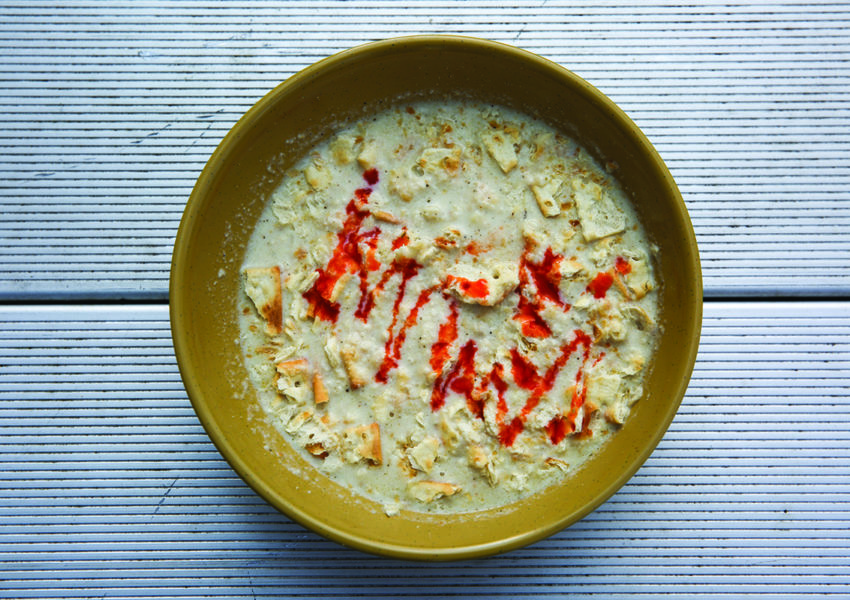
In Madagascar, where both Béa and Niriko, my wife and son, were born, the morning meal should be soft, she tells me. Sosoa, rice that is boiled until it is somewhere between cooked and overcooked, is traditional and served as a soup with little seasoning. Smoked, dried beef is often served alongside the rice soup. When breakfast is not sosoa, (pronounced “sue-SUE-a”), it might consist of a vegetable or noodle soup.
Never does a traditional Malagasy breakfast include pancakes, waffles, oatmeal, or grits—all favorites of mine and my fellow Americans.
As a general proposition, I’m opposed to colonialism, political or culinary. Part and parcel of the decision to marry a woman from the other side of the world was the decision to raise children who would be fluent in both our cultures and languages. I don’t want to impose American culture on anyone. I want Niriko to speak Malagasy with the accent of someone from Tuléar, his mother’s hometown, and I want him to speak English with the beauty of someone from New Orleans.
Similarly, I want him to be a citizen of the culinary world, to move from grits to peanut butter stew to doro wot to duck confit to soup dumplings to sushi without missing a beat.
So I say nothing when my two-year-old son begins his day with his mother’s rice soup or last night’s leftovers. But on other days, I rejoice silently and smile broadly when he gobbles down my made-from-scratch biscuits and waffles.
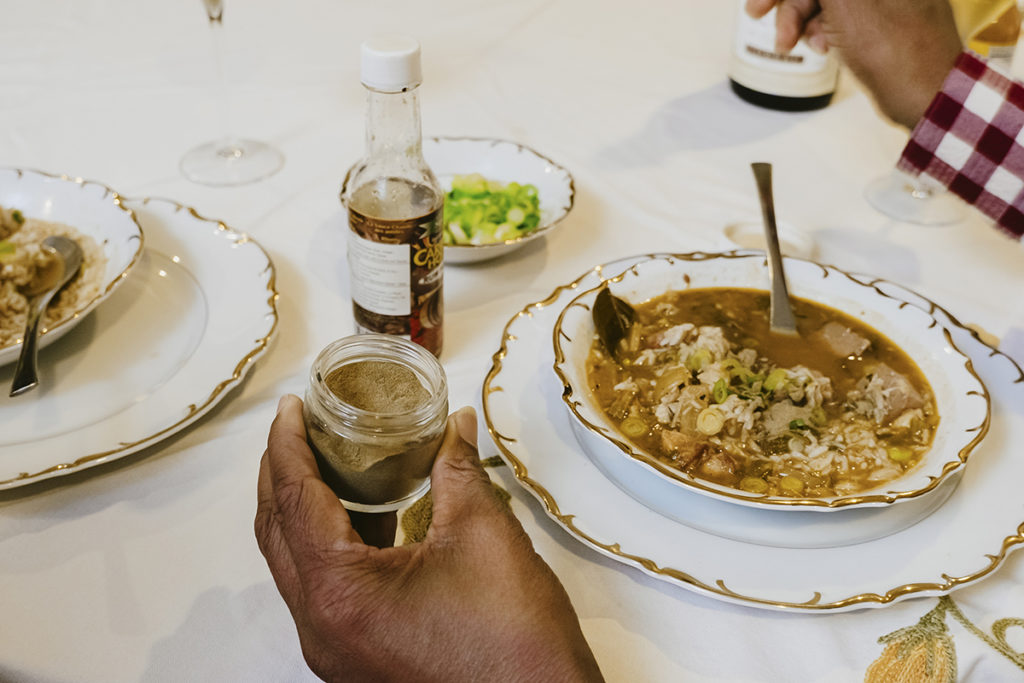
I am lucky that two of the most cherished foods in my world—okra gumbo and slow-smoked barbecue—are favorites among the American foods Béa has come to appreciate. Even before he could effectively chew meat, Niriko was sucking on rib bones and eating gumbo broth and rice. As she handed him bones and fed him broth, his mother was helping to teach him his father’s culture.
As part of my parenting journey, I read Bee Wilson’s excellent First Bite: How We Learn to Eat. It left me optimistic and with the vaguely scientific notion that if I expose my son to a range of flavors early in life, a kind of taste memory will kick in years later and foods of different cultures might taste vaguely and comfortingly familiar. So if you can expose a child to Mexican food before he learns about issues of immigration, or if you can expose a child to Ethiopian food before he learns of last century’s great famine, she or he will develop a taste for the food without regard to the politics.
That’s my plan, if such a thing can be called a plan. Teach my son to love all of the world’s best foods now, and forever banish prejudice from his palate. How hard could it be?
It’s an old truism that you know you’re from Louisiana if you put on the pot of rice and only then decide what you’re going to have for dinner. Whether dinner will be red beans or pork chop etouffée or string beans with pickled pork and Irish potatoes, the rice is a base and a given.
The same could be said of eating in Madagascar—only perhaps more so. The lunch plate is piled high with rice before the crab in coconut milk or the cassava leaf-peanut butter stew is added.
My son has inherited a love of rice. As far as I can tell, he is equally happy with black beans and rice as he is with kimchi fried rice, jambalaya, or biryani. Before the three of us became a household, I had never in all my days bought a fifty-pound bag of rice. I did that for the first time a few months ago. The bag will need to be replaced soon.
Niriko has a similarly catholic love of pasta, whether it be the wheat variety served Italian-style with marinara sauce or the rice variety served in a Vietnamese soup. That bodes well for his potential as a citizen of the twenty-first century culinary world. But his preferences keep changing, making it impossible to predict his future taste with any confidence.
He used to love sweet potatoes, and it gave his grandmother great joy to feed them to him. Then he apparently stopped liking them and would turn his head away when they were offered.
But a few months later, armed with his new climbing skills, he clambered from the stool to the kitchen counter and munched on the very sweet tubers he’d rejected when they were offered to him an hour before. Though he seems to prefer his waffles and biscuits without syrup or jelly, he did enjoy eating plain sugar right out of the sugar bowl after first clandestinely mounting the table to gain access.

At times, it seemed that the one thing our son would not eat, even when accompanied by rice, was green vegetables. Our workaround was to sneak some spinach or kale in his fruit smoothies, and he seemed to enjoy them when they were disguised in this way.
Then one day at the supermarket, when Béa and I were focused on choosing the next item to add to our cart, we turned around and found that our son had pulled a sprig of green onion from the bunch. He was happily munching on it as if pungent raw scallions were a special species of candy.
At that point, I realized with a mix of pride and disappointment that my son would be his own culinary person. All of our efforts to mold and shape him would end up as mere suggestions to be accepted or discarded as his evolving palate sees fit. He’s free to change as much as he wants. As long as he always loves gumbo, I won’t write him out of my will.

Lolis Eric Elie is a Los Angeles-based journalist, documentary filmmaker, and writer for series such as Treme, Greenleaf, and The Man in the High Castle.